
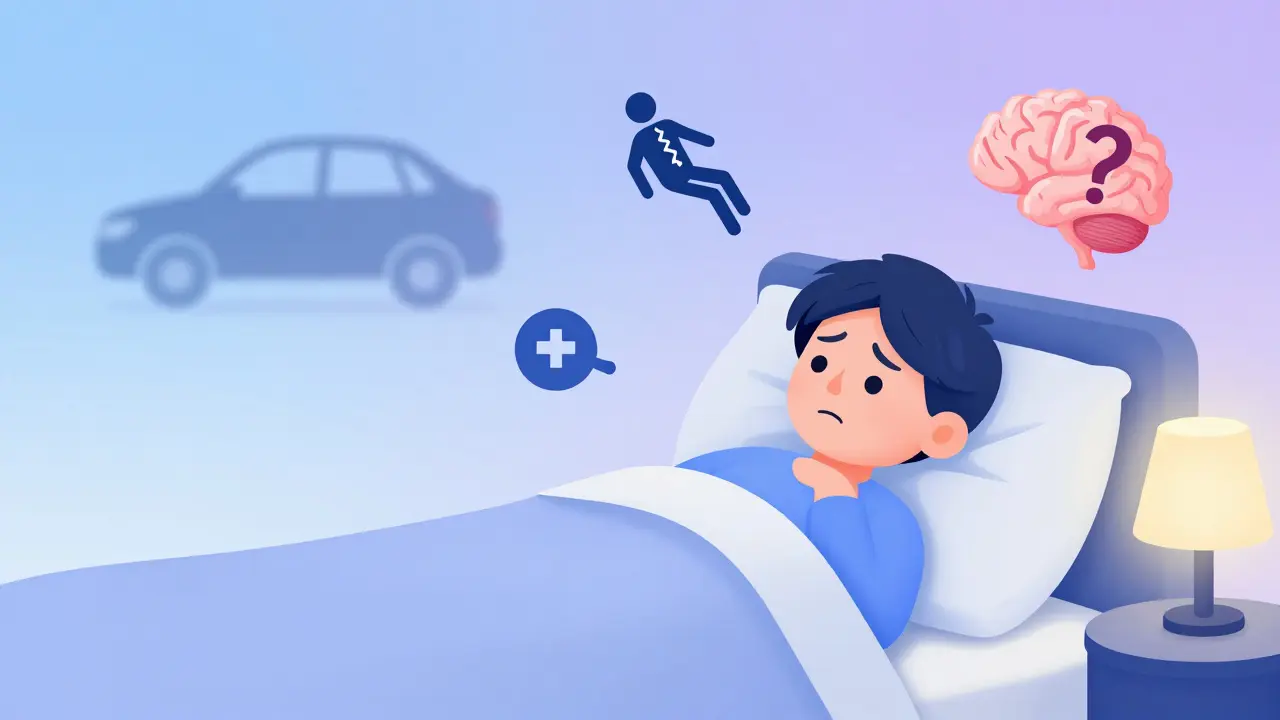
Nearly 4% of U.S. adults use sleep medications monthly, but many don’t realize the hidden dangers. From next-day drowsiness that impairs driving to dependency after just a few weeks, these drugs carry serious risks. This article breaks down the real safety concerns, how dependence develops, and proven alternatives that work better long-term.
Understanding Sleep Medication Classes
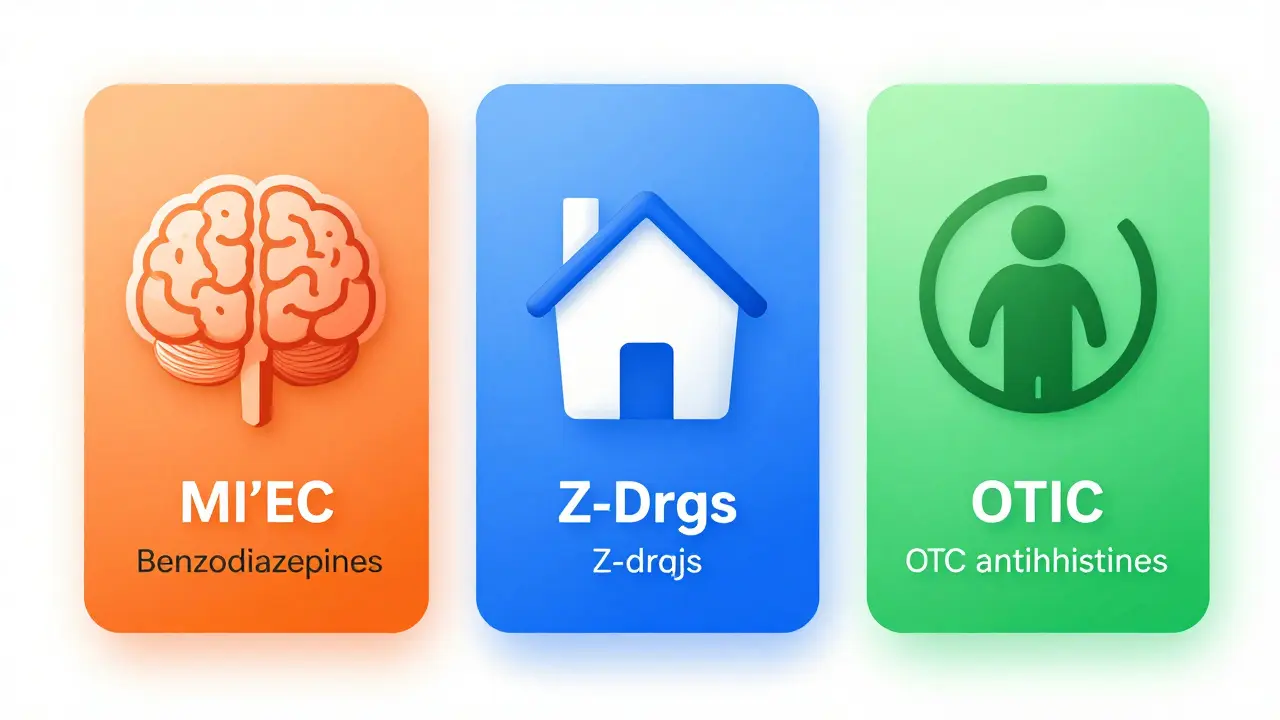
Sleep medications fall into distinct categories, each with unique risks and costs. Benzodiazepines like lorazepam (Ativan) and diazepam (Valium) were first approved in the 1970s. They cost $4-$50 monthly but carry high dependence risks. Non-benzodiazepine "Z-drugs" like zolpidem (Ambien) and eszopiclone (Lunesta) target specific brain receptors. They cost $10-$100 monthly but have FDA warnings for sleepwalking and sleep-driving. Over-the-counter options like diphenhydramine (Benadryl) and doxylamine (Unisom) cost just $4-$15 monthly but increase dementia risk by 54% after long-term use. Sedating antidepressants like trazodone ($4-$10 monthly) and doxepin (Silenor, $300-$400 monthly) are sometimes prescribed off-label but carry cardiac risks. Anticonvulsants like pregabalin ($400-$600 monthly) are rarely used due to severe side effects.
| Medication Class | Examples | Monthly Cost | Key Risks | Dependence Rate |
|---|---|---|---|---|
| Benzodiazepines | Lorazepam (Ativan), Diazepam (Valium) | $4-$50 | Next-day drowsiness, falls in elderly, memory issues | Up to 33% after 4-6 weeks |
| Z-drugs | Zolpidem (Ambien), Eszopiclone (Lunesta) | $10-$100 | Sleepwalking, sleep-driving, next-day impairment | 5-10% |
| OTC Antihistamines | Diphenhydramine (Benadryl), Doxylamine (Unisom) | $4-$15 | Anticholinergic effects, 54% higher dementia risk long-term | Low, but tolerance develops |
| Sedating Antidepressants | Trazodone, Doxepin (Silenor) | $4-$400 | Priapism, cardiac risks | Varies |
Safety Risks You Might Not Know
Next-day drowsiness affects 31% of users, impairing focus and coordination like a blood alcohol level of 0.05-0.08%. The FDA issued a safety announcement in 2019 requiring lower zolpidem doses for women after studies showed this impairment. For older adults, the risks are severe: benzodiazepines and Z-drugs increase fall risk by 50-60% and fracture risk by 20-30%, according to the American Geriatrics Society Beers Criteria (2023). Parasomnias-like sleepwalking or sleep-driving-occur in 0.5% of Z-drug users, documented in FDA reports through 2022. These events often happen when medications are taken with alcohol, which increases overdose risk by 300%.
How Dependence Develops
Dependence can start quickly. Benzodiazepines have a 33% dependence rate after just 4-6 weeks of regular use (Addiction journal, 2016). Z-drugs like Ambien carry a 5-10% dependence risk. When users stop after prolonged use, rebound insomnia often worsens sleep, creating a cycle of continued use. A Reddit user shared: "After 6 months of nightly Ambien, I tried to quit and couldn’t sleep for 3 nights straight-ended up back on it." The FDA requires special warnings for Z-drugs because of this cycle. Withdrawal symptoms include anxiety, tremors, and severe insomnia, making it hard to stop without medical help. Doctors recommend tapering doses by 25% every two weeks, but 40% of patients need extra support to quit (JAMA Internal Medicine, 2021).
Proven Alternatives to Medication
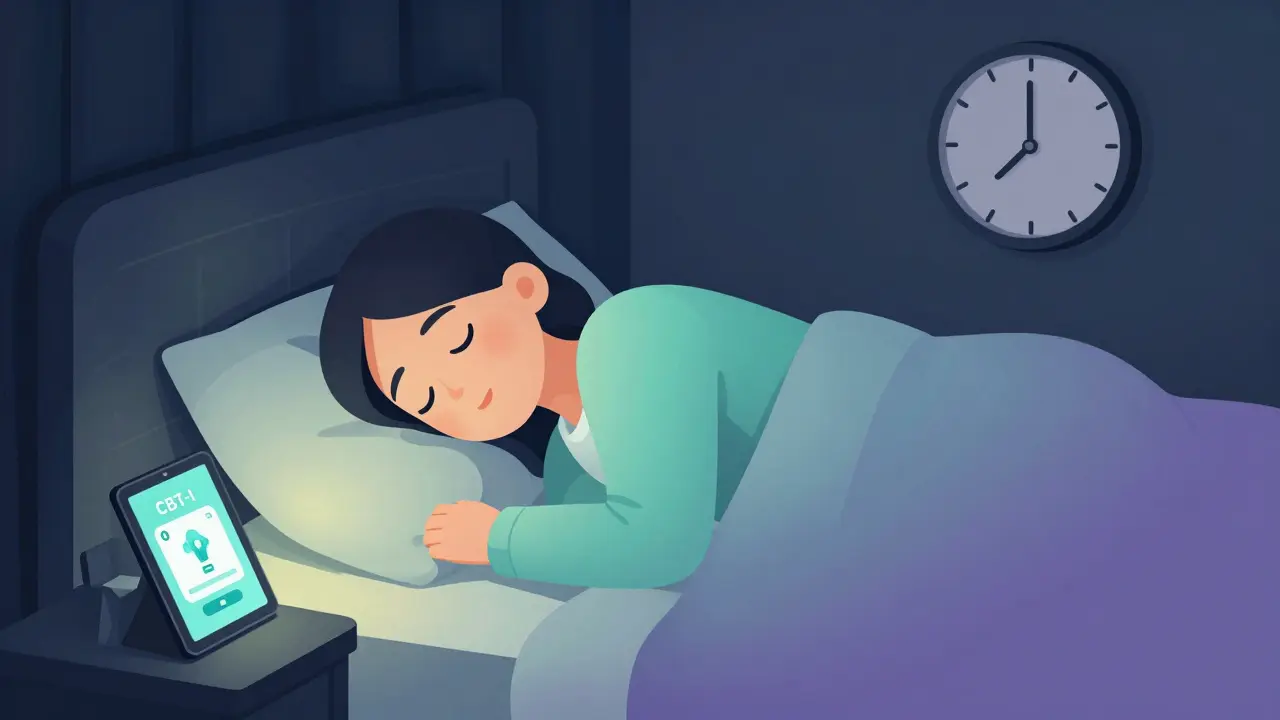
Cognitive Behavioral Therapy for Insomnia (CBT-I) is a structured program that helps individuals change thought patterns and behaviors contributing to insomnia is the first-line treatment recommended by the American Academy of Sleep Medicine. It has 70-80% success rates without drug risks. WebMD reviews show 78% of users who tried CBT-I reported better long-term results than medication alone. Digital tools like Somryst-a prescription-only app approved by the FDA in 2020-deliver CBT-I digitally and achieved 60% remission rates in clinical trials. Newer drugs like daridorexant (Quviviq), approved in January 2022, target orexin receptors with less next-day impairment than traditional sleep aids. Melatonin supplements (4.2/5 rating on Amazon) are popular but lack strong evidence for chronic insomnia; they work best for jet lag or shift work. Lifestyle changes like consistent sleep schedules, reducing caffeine after noon, and darkening bedrooms also improve sleep without drugs.
Using Sleep Medications Safely
If you must use sleep meds, follow these steps: First, get a prescription and avoid OTC options for long-term use. Second, take the lowest dose possible-zolpidem starts at 5mg (2.5mg for older adults). Third, never mix with alcohol or other sedatives. Fourth, use them for only 2-5 weeks, as per FDA guidelines. Fifth, schedule regular check-ins with your doctor to monitor side effects. Many patients don’t realize they need to take the pill immediately before bed with 7-8 hours of sleep available; taking it too early or too late increases next-day impairment. Finally, always discuss alternatives like CBT-I with your doctor before starting medication. Over 73% of major healthcare systems now require prior authorization for sleep meds beyond 30 days and proof of CBT-I referral attempts first (American Hospital Association, 2022).
Why Experts Recommend Non-Drug Approaches First
Dr. Rachel Salas, a Johns Hopkins neurology professor, states: "While sleep medications can help short-term, they should never be first-line treatment-CBT-I has proven efficacy without pharmacological risks." The CDC’s National Health and Nutrition Survey shows usage spikes with age: 1.3% of 20-39 year olds use prescription sleep aids versus 13.2% of those over 80. Yet older adults face the highest danger from falls and cognitive decline. The American Medical Association now encourages medical schools to teach non-drug insomnia treatments. Market data confirms the shift: prescription sleep aid sales grew only 4.1% yearly (2023-2030), while CBT-I digital tools are projected to grow 17.2% yearly. Dr. Michael Grandner, director of the Sleep and Health Research Program, concludes: "The future of insomnia treatment lies in personalized approaches-medications may have a role for acute cases, but behavioral interventions should be the foundation of care."
Can sleep medications be used long-term?
No. Clinical guidelines from the American Academy of Sleep Medicine state sleep medications should only be used for 2-5 weeks. Long-term use increases dependence risk and side effects like memory problems, falls, and cognitive decline. The FDA requires special warnings for extended use, and healthcare systems now mandate CBT-I referrals before prescribing beyond 30 days.
What’s the safest alternative to sleep meds?
Cognitive Behavioral Therapy for Insomnia (CBT-I) is the safest and most effective alternative. It has 70-80% success rates without drug risks. Digital CBT-I apps like Somryst are FDA-approved and accessible. Lifestyle changes-consistent sleep schedules, reducing caffeine after noon, and darkening bedrooms-also work well. Melatonin helps with jet lag but lacks evidence for chronic insomnia.
How quickly does dependence develop?
Dependence can start in as little as 2-4 weeks. Benzodiazepines have a 33% dependence rate after 4-6 weeks of regular use, while Z-drugs like Ambien carry a 5-10% risk. Withdrawal symptoms like anxiety and rebound insomnia often make quitting difficult without medical help. Always use the lowest dose for the shortest time possible.
Why are benzodiazepines risky for older adults?
Benzodiazepines increase fall risk by 50-60% and fracture risk by 20-30% in older adults, according to the American Geriatrics Society Beers Criteria (2023). They also worsen memory problems and confusion. The CDC reports 13.2% of people over 80 use prescription sleep aids, making this group especially vulnerable. Doctors avoid prescribing benzodiazepines to seniors for these reasons.
Is melatonin a safe sleep aid?
Melatonin is generally safe for short-term use (e.g., jet lag) but lacks evidence for chronic insomnia. It doesn’t cause dependence or next-day impairment like prescription drugs. However, OTC melatonin isn’t regulated by the FDA, so quality varies. Some studies show it may help with sleep onset but not sleep maintenance. Always consult a doctor before using melatonin long-term.




Dr. Sara Harowitz
February 6, 2026 AT 01:40Americans need to stop being lazy and take responsibility for their sleep! These medications are a crutch! We need to promote natural sleep hygiene, not rely on drugs! The FDA should ban these dangerous substances immediately!
Lisa Scott
February 6, 2026 AT 22:33Big Pharma is poisoning us these meds are all dangerous they don't tell you the real risks always read the studies
Katharine Meiler
February 7, 2026 AT 18:41CBT-I's efficacy is well-documented in clinical trials with 70-80% success rates. Pharmacological interventions carry significant risks including dependence, cognitive decline, and next-day impairment. Evidence-based practice necessitates prioritizing non-pharmacological approaches. The American Academy of Sleep Medicine recommends CBT-I as first-line treatment. Studies show that long-term use of sleep medications increases dementia risk by 54% for OTC antihistamines. Benzodiazepines have a 33% dependence rate after 4-6 weeks. Z-drugs like Ambien carry 5-10% risk. Withdrawal symptoms can be severe. Doctors recommend tapering doses slowly. CBT-I addresses the root causes of insomnia, not just symptoms. It's a structured program that changes thought patterns. Digital tools like Somryst are FDA-approved. Lifestyle changes like consistent sleep schedules also help. Real-world data from healthcare systems shows that over 73% now require CBT-I referrals before prescribing sleep meds beyond 30 days. Overall, the evidence clearly supports non-drug solutions for chronic insomnia.
Brendan Ferguson
February 9, 2026 AT 10:32I used to take Ambien but switched to CBT-I. It was hard at first but worth it. Doctors should always suggest alternatives before prescribing.
Rene Krikhaar
February 9, 2026 AT 19:27I've been through this and it's tough but CBT-I really helped. Just take it one step at a time. You're not alone
Georgeana Chantie
February 11, 2026 AT 02:07Sleep meds are totally safe! People are overreacting. The FDA says they're fine. 😂 Just take them and sleep well. Don't listen to the haters
Phoebe Norman
February 11, 2026 AT 14:12The neurobiological mechanisms of dependence involve GABA receptor downregulation. CBT-I addresses cognitive distortions and sleep hygiene. Clinical evidence supports its superiority
Pamela Power
February 12, 2026 AT 03:16These medications are for the weak. Real people don't need drugs to sleep. CBT-I is the only legitimate solution. Anyone using these pills is a failure
Elliot Alejo
February 13, 2026 AT 11:30The statistics on dependence rates are alarming. It's crucial to discuss non-drug options with your doctor before starting medication
Johanna Pan
February 14, 2026 AT 11:51I've been using CBT-I for a few months now and its been life changing! Even though I misspelled 'it's'... anyway, the app helped me sleep better without drugs. Highly recommend it
Nancy Maneely
February 15, 2026 AT 11:28I had a total meltdown when I tried to quit Ambien. Couldn't sleep for days. It was hell. Now I do CBT-I and it's awesome. But the drug companies don't want you to know this
Jennifer Aronson
February 17, 2026 AT 04:45The data on sleep medication risks is clear. Long-term use leads to dependence and cognitive issues. CBT-I is the recommended first-line treatment
Kate Gile
February 17, 2026 AT 15:44CBT-I changed my life. It's not easy but the results are worth it. Stay consistent and you'll see improvement. You can do this
Albert Lua
February 19, 2026 AT 10:13Hey everyone! I tried CBT-I and it's amazing! So much better than meds. If you're struggling, check out the app. We all need better sleep solutions