
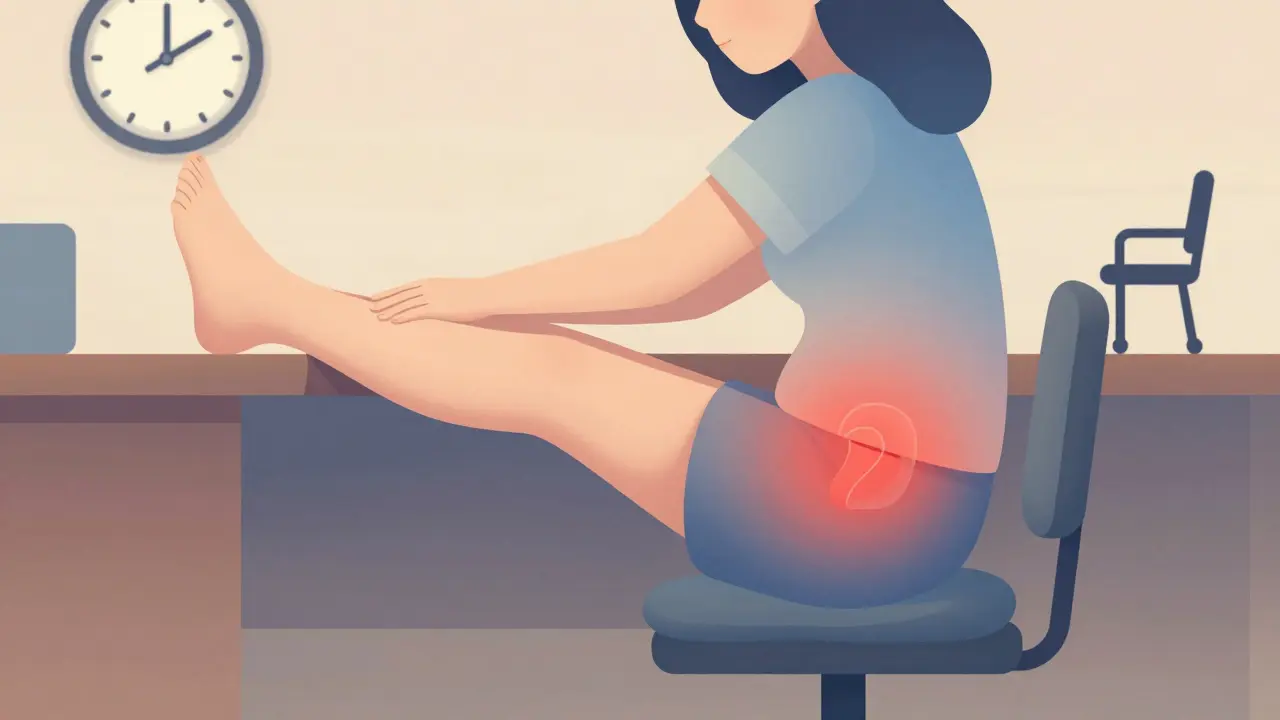
When your hip starts hurting, it’s easy to blame aging, overuse, or a bad workout. But if the pain sticks around, especially when you sit, squat, or twist, it might not be just sore muscles. For many people, especially those between 30 and 50, hip pain comes down to two closely linked problems: a labral tear and early hip arthritis. These aren’t always separate issues - one often feeds the other. And the best way to stop the cycle? Not surgery. Not pills. But smart changes to how you move every day.
What Exactly Is a Hip Labral Tear?
The hip labrum is a ring of tough, rubbery cartilage that hugs the socket of your hip joint. It’s not just padding - it’s a seal. Think of it like a gasket on a coffee maker: it keeps the joint fluid inside so your bones glide smoothly. When it tears - usually from repetitive twisting, deep squatting, or a structural issue like femoroacetabular impingement (FAI) - that seal breaks. Joint fluid leaks out. Bone starts rubbing. And pain follows.
Most labral tears happen in the front of the hip (about 78% of cases). That’s why sitting for long periods, crossing your legs, or doing deep yoga poses like pigeon pose can make it worse. You’re not just bending your hip - you’re pinching the torn tissue against the bone. The tear itself doesn’t always hurt. In fact, studies show that 38% of people over 50 have labral tears on MRI with zero pain. So the key isn’t just what the scan shows - it’s what your body feels.
How Arthritis Sneaks In
Arthritis isn’t just “wear and tear.” It’s a slow breakdown of the smooth cartilage covering the ball and socket of your hip. Once the labrum is damaged, that protective seal is gone. Studies show that when the labrum fails, contact pressure on the articular cartilage jumps by 92%. That’s like removing the cushion from a car tire - the metal rim grinds into the road. Over time, the cartilage thins, bone spurs form, and the joint space narrows. This is what doctors call osteoarthritis (OA), graded from 0 to 4 on X-rays.
Here’s the twist: it works both ways. If you already have early arthritis, the joint is less stable. The labrum gets stretched, frayed, and torn more easily. So it’s not always tear first, then arthritis. Sometimes it’s arthritis first, then tear. That’s why treating just one part often fails.
Activity Modification: The Most Underused Tool
Doctors often jump to surgery or shots. But the most effective, longest-lasting fix for many people is simply changing how you move. Not stopping movement - just changing the way you do it.
Research from the Cleveland Clinic and Yale Medicine shows that when people modify their daily habits, 40-60% of mild cases see real improvement. For some, it’s enough to avoid surgery entirely. Here’s what actually works:
- Don’t flex your hip past 90 degrees. Sitting in low chairs, deep squats, and certain yoga poses all push your hip into this dangerous zone. Use a cushion to raise your seat. Stand up every 30 minutes if you sit at a desk.
- Avoid combining hip flexion with internal rotation. That’s the combo that crushes the labrum. No crossing your legs. No twisting while bent over. No pigeon pose. Even turning your foot inward while standing can trigger pain.
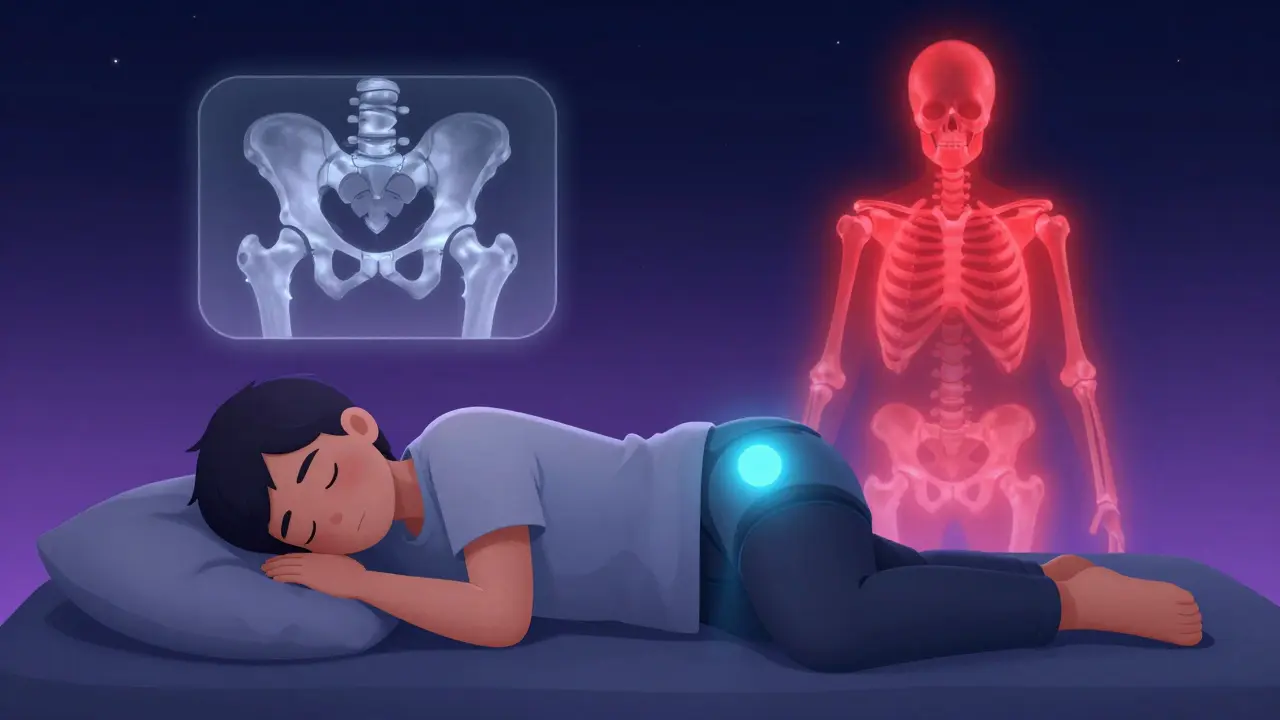
- Change your sleep position. Sleep on your back with a pillow between your knees. If you sleep on your side, put a pillow between your knees to keep your hips aligned. This reduces pressure on the joint by 40%.
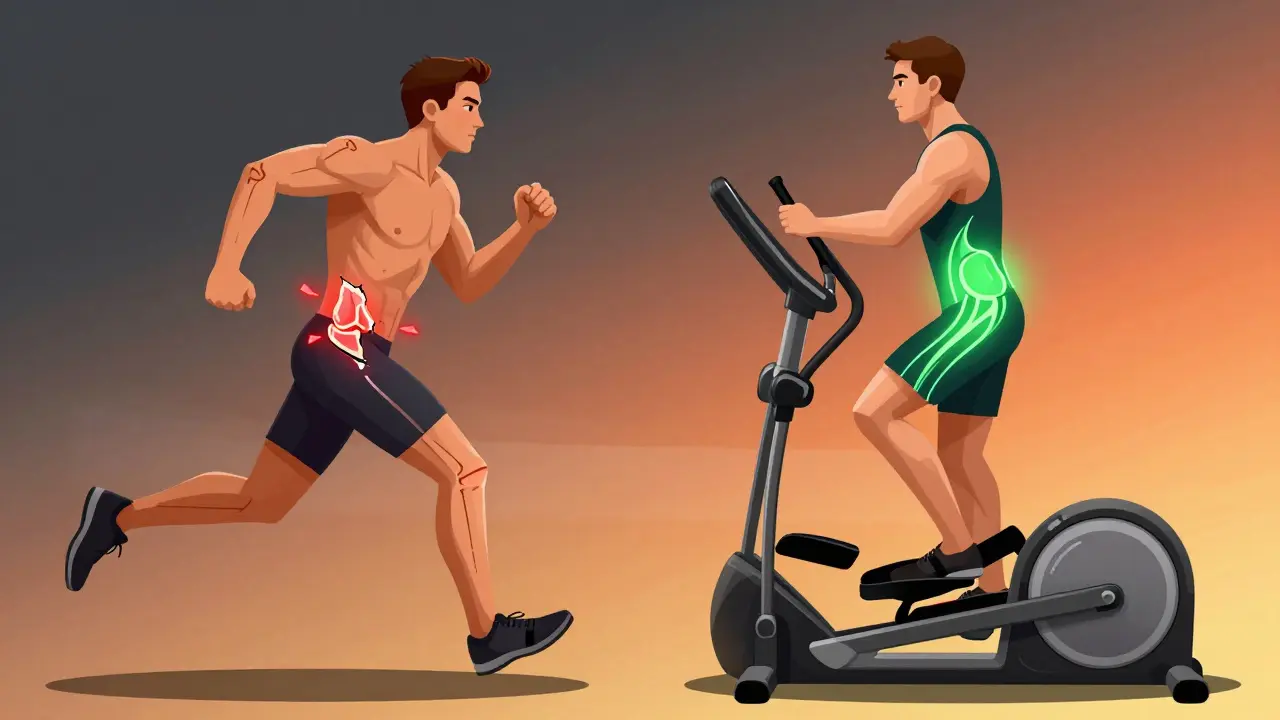
- Modify your exercise. Running? Stop. Deep lunges? Stop. High-impact sports? Pause. Try swimming, cycling, or using an elliptical. These let you stay active without slamming the joint. One study found 71% of people with hip pain could stay fit on the elliptical - only 29% could keep running.
- Adjust your car seat. If you drive, slide your seat forward and tilt the seat back slightly. Add a wedge cushion to reduce hip flexion by 10-15 degrees. That small change can cut pain during long drives.
One yoga instructor in her 40s avoided surgery for a year by eliminating just three poses. She replaced deep hip openers with seated stretches and used a block to limit flexion. Within three months, her pain dropped 70%. No injections. No surgery. Just smarter movement.
What Doesn’t Work (And Why)
Not all treatments are created equal. Some help short-term. Others might make things worse.
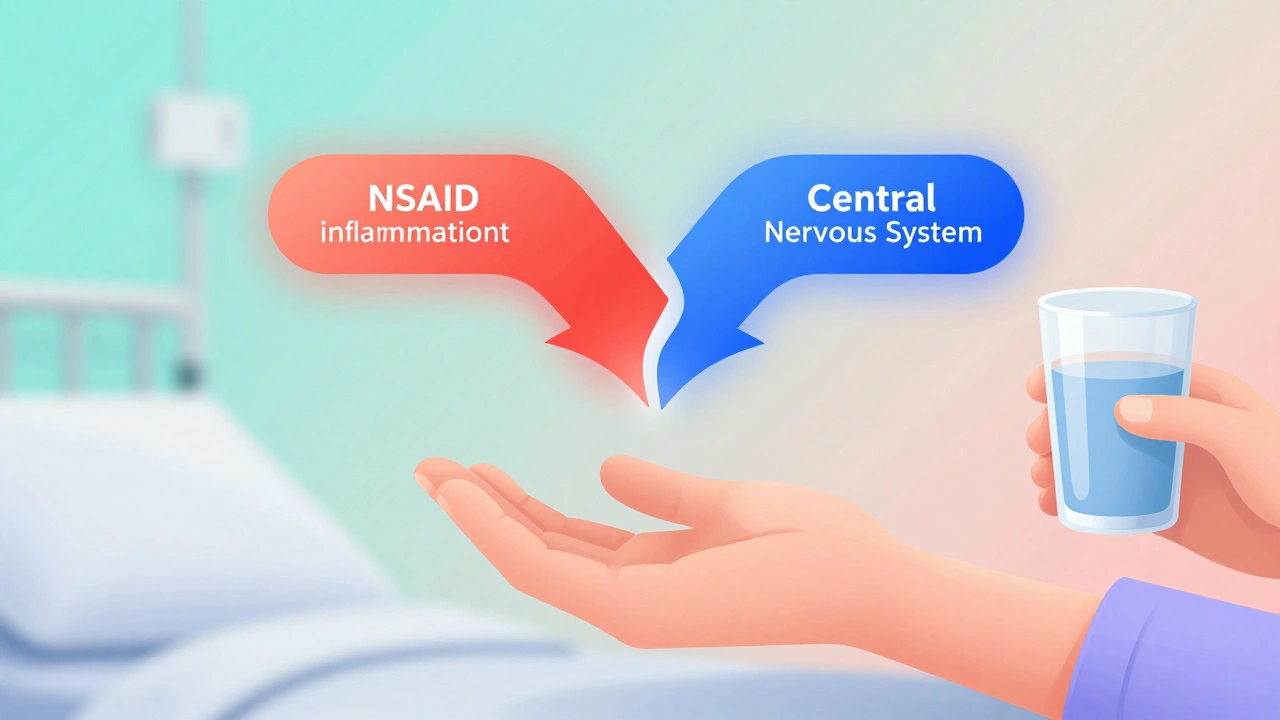
- NSAIDs (like ibuprofen): They reduce pain and swelling, but they don’t fix the cause. Long-term use can harm your stomach and kidneys. Use them only for flare-ups, not daily.
- Cortisone shots: They work for about 3.2 months on average - but repeated shots (more than three a year) can damage cartilage. If you’re already losing cartilage, this is like pouring gasoline on a fire.
- Viscosupplementation (hyaluronic acid injections): These are supposed to “lubricate” the joint. But studies show they only help 55% of people, and the benefit fades after six months. Not worth it unless you’re not a candidate for surgery.
- Labral debridement (trimming the tear): This was once common. Now, surgeons avoid it. Trimming the labrum removes its sealing function. Studies show repair (sewing it back) leads to 85-92% satisfaction at five years - debridement only 65-75%.
When Surgery Might Be Necessary
Surgery isn’t the enemy. But it’s not the first step. It’s for people who’ve tried everything else and still can’t move without pain - especially if imaging shows a clear structural problem.
If you have cam-type FAI (an abnormal bump on the femur head) and an alpha angle over 55 degrees on MRI, surgery to reshape the bone and repair the labrum has a 73% better outcome than just rest and PT. But if you’re over 60 with Kellgren-Lawrence Grade 3 or 4 arthritis - meaning severe joint space loss - surgery won’t stop the decline. In those cases, 45% will need a hip replacement within five years anyway.
The trend is shifting. Ten years ago, hip preservation surgery was done on people around 45. Now, it’s common at 38. Why? Because we know earlier intervention - with activity modification first - gives better long-term results. You don’t need to wait until you’re in agony.
The Invisible Disability
One of the hardest parts of hip pain isn’t the pain itself - it’s the loneliness. People don’t understand. You look fine. You’re not in a wheelchair. But you can’t sit on the floor with your kids, carry groceries, or dance at a wedding. A survey from the Hospital for Special Surgery found 68% of patients felt dismissed because “the pain isn’t visible.”
That’s why education matters. If you’re a teacher, a parent, or a worker who sits all day, you need to explain: “It’s not just arthritis. It’s a mechanical issue. I’m not lazy - I’m protecting my joint.”
Workplaces are starting to catch on. Some companies now offer sit-stand desks, ergonomic assessments, and modified duty options for employees with hip conditions. If you’re struggling at work, ask for a simple accommodation: a higher chair, a footrest, or more frequent breaks.
What’s New in 2026
Technology is helping. Wearable sensors - tiny devices you stick on your hip - now give real-time feedback on your movement. A 2023 Stanford study found that with this tech, people reduced painful episodes by 52% in just 12 weeks. It’s not mainstream yet, but it’s coming.
Also, new MRI techniques can now detect cartilage damage before it shows up on X-rays. That means we can catch problems earlier - before the labrum tears or arthritis sets in.
The big shift in 2024 guidelines? Move better, not just less. It’s not about avoiding all deep squats - it’s about learning how to squat without twisting your hip inward. Quality matters more than quantity.
Bottom Line: You Have More Control Than You Think
Hip pain from labral tears and arthritis doesn’t have to mean surgery, shots, or giving up your life. Most people can manage it well - even thrive - by making small, smart changes to how they move. The goal isn’t to stop moving. It’s to move in a way that protects your joint.
Start with these three steps:
- Stop anything that makes your hip hurt - especially deep flexion and twisting.
- Use pillows, cushions, and raised seats to keep your hip angle under 90 degrees.
- Find low-impact ways to stay active - swimming, cycling, elliptical.
If you do this for six weeks, you’ll likely feel better. If you don’t? Then it’s time to see a specialist. But don’t rush to the operating room. Your hip is still salvageable - if you give it a chance to heal by moving right.
Can a labral tear heal on its own?
No, the labrum doesn’t heal on its own because it has very little blood supply. But that doesn’t mean you need surgery. Many people find relief by changing how they move. The goal isn’t to repair the tear - it’s to stop putting pressure on it. Over time, the surrounding muscles can compensate, and pain can fade.
Is hip arthritis the same as osteoarthritis?
Yes. Hip arthritis is almost always osteoarthritis (OA) - a degenerative condition caused by cartilage breakdown. It’s not caused by inflammation like rheumatoid arthritis. OA in the hip is linked to labral tears, joint misalignment, and repetitive stress. It’s not just aging - it’s how you’ve moved over time.
Should I avoid all exercise if I have hip pain?
No. In fact, staying active is critical. Avoiding movement leads to muscle weakness, which makes your hip less stable and increases pain. The key is to switch from high-impact activities (running, jumping, deep squats) to low-impact ones (swimming, cycling, elliptical). Strengthening your glutes and hip abductors can reduce joint stress by up to 40%.
Why does sitting make my hip hurt more?
Sitting, especially in low chairs or with crossed legs, forces your hip into deep flexion - often past 90 degrees. This pinches the labrum against the front of the hip socket. If you have a tear or FAI, this motion irritates the damaged tissue. Using a cushion to raise your seat or leaning back slightly can reduce this pressure dramatically.
Can I still run with a labral tear?
Most people can’t - at least not long-term. Running puts 3-5 times your body weight through the hip joint with each step. If the labrum is torn or the cartilage is worn, this accelerates damage. A 2022 study found only 29% of people with hip pain could continue running without worsening symptoms. If you want to stay active, switch to cycling or swimming. You’ll protect your joint and still get fit.
How long does it take for activity modification to work?
Most people notice improvement within 4-6 weeks. But full results take 8-12 weeks. The key is consistency. You’re not just resting - you’re retraining your body. Physical therapists often spend 6-8 sessions teaching movement patterns. If you stick with it, 85% of people can identify and avoid their personal pain triggers.
Are hip injections worth it?
Cortisone shots can help for 3-4 months, but they don’t fix the problem. Worse, repeated injections (more than three a year) can damage cartilage. Viscosupplementation (lubricant shots) only helps about half of patients, and the effect fades after six months. They’re useful for short-term relief while you work on movement changes - not as a long-term solution.
What’s the difference between labral repair and debridement?
Repair means sewing the torn labrum back to the bone - preserving its sealing function. Debridement means trimming away the torn part. Repair has a 85-92% satisfaction rate at five years. Debridement only has 65-75%. Why? Because once you remove the labrum’s seal, the joint loses its natural protection. That’s why repair is now the standard - unless the tear is too damaged to fix.




Brett Pouser
February 8, 2026 AT 23:08I used to think hip pain was just part of getting older, until I started sitting on a cushion at my desk. Seriously, it’s crazy how much difference a simple 2-inch foam pad makes. No more sharp pain when I cross my legs. I didn’t even know I was pinching my labrum until I read this. Now I sleep with a pillow between my knees too. Small changes, huge difference.
Andy Cortez
February 9, 2026 AT 00:44lol so now we’re blaming our hip pain on yoga? next thing you know, people will be suing their yoga mats. i’ve been doing pigeon pose for 12 years and my hips are fine. this is just another corporate wellness scam to sell you expensive cushions and ellipticals. also, ‘labral tear’ sounds like a term made up by a surgeon who needs to justify his paycheck.
Joseph Charles Colin
February 9, 2026 AT 11:03From a biomechanics standpoint, the 92% increase in contact pressure post-labral disruption is well-documented in cadaveric studies (Khan et al., 2020). The labrum functions as a suction seal, maintaining intra-articular hydrostatic pressure. Once compromised, the articular cartilage experiences shear stress exceeding 3.5 MPa, accelerating fibrillation. Activity modification isn’t ‘just rest’-it’s neuromuscular re-education to reduce impingement vectors. The 40-60% improvement rates align with EMG-validated gait retraining protocols in outpatient PT clinics.
Elan Ricarte
February 11, 2026 AT 00:27Oh wow, so the real villain isn’t aging, bad genes, or your shitty job-it’s your damn yoga pants and low couches? I’m sorry, but if your hip can’t handle sitting down without screaming, maybe you’re not meant to be a human anymore. Also, ‘elliptical’? That’s just a glorified treadmill for people who hate motion. And don’t get me started on ‘cushions.’ Next you’ll tell me to wear orthopedic socks to fix my back. This isn’t medicine-it’s a lifestyle brand with a PhD.
Scott Conner
February 12, 2026 AT 09:41wait so if 38% of people over 50 have labral tears with no pain… then why are we treating them? is it just because the scan says so? i feel like this whole thing is overdiagnosed. like, if it ain’t broke, why fix it? but then again, if sitting hurts… then maybe it is broke. i’m confused.
Marie Fontaine
February 13, 2026 AT 02:34OMG YES THIS!! I’ve been doing the pillow trick for 3 months and I can finally sit on the floor with my kid again 😭 no more wincing during bedtime stories! also switched to swimming twice a week and my pain dropped like a rock. you’re not broken-you just need to move smarter. you got this!! 💪❤️
Lyle Whyatt
February 14, 2026 AT 10:56I’ve been dealing with this for years, and honestly, the biggest shift for me was realizing that ‘rest’ doesn’t mean stopping movement-it means changing how you move. I used to think cycling was boring, but now I’m doing 40-mile rides on flat terrain, no pain, no problem. I even adjusted my car seat after reading this-slid it forward, added a wedge cushion, and suddenly my 2-hour drives don’t feel like torture. It’s not about being perfect, it’s about being consistent. Small tweaks, massive long-term payoff. Also, sleeping on your back with a pillow between the knees? Game-changer. I didn’t even know I was sleeping with my hips twisted until I started tracking it.
Tatiana Barbosa
February 15, 2026 AT 08:54Labral integrity = joint stability. Once that seal breaks, you’re not just losing cushioning-you’re losing proprioceptive feedback. The hip’s afferent nerve endings are embedded in the labrum. Degradation = altered motor control patterns → compensatory glute med weakness → increased acetabular load. That’s why glute strengthening + hip flexor mobility work is non-negotiable. And yes, the 40% pressure reduction from side-sleeping with a pillow? Validated by pressure-mapping studies. This isn’t anecdotal-it’s biomechanics.
Ken Cooper
February 16, 2026 AT 01:49Hey, I just wanted to say… I’m 42, and I thought I was just ‘getting old’ until I tried the seat cushion. I didn’t even know I was sitting too low. Now I use a footrest too. And I stopped doing deep squats. I mean, I still lift, but now I do box squats with a 2-inch box. It’s not glamorous, but I haven’t had a flare-up in 5 months. Also, I told my boss about the chair thing and now our office is getting ergonomic chairs. So… yeah. You’re not alone. And you’re not lazy. You’re just adapting.
MANI V
February 17, 2026 AT 10:46Of course you're blaming your pain on yoga and sitting. What about the 5G towers? The glyphosate in your food? The fact that your parents didn't breastfeed you long enough? This is all just another way to make you feel guilty so corporations can sell you $200 'hip-friendly' pillows. Wake up. Your pain is caused by systemic inflammation from the government's sugar subsidies. Stop blaming your posture. Blame the system.
Susan Kwan
February 18, 2026 AT 19:26So let me get this straight-your solution to chronic pain is to buy a pillow and stop doing yoga? Meanwhile, people in developing countries squat all day and never complain. Maybe the real issue isn’t your hip-it’s your entitlement to comfort. Also, ‘elliptical’? That’s what you call exercise now? Wow. I’m impressed.
Random Guy
February 19, 2026 AT 18:14Wait… so if I don’t cross my legs and sleep with a pillow between my knees… I won’t need a hip replacement? I’m sorry, but I’m not ready to become a pillow warrior. My cat has more dignity than this. I’d rather just take ibuprofen and call it a day. Also, who decided that sitting at 89 degrees is okay but 91 is the end of the world? This feels like a cult.
Ryan Vargas
February 20, 2026 AT 16:45This entire framework is a product of late-stage medical capitalism. The ‘labral tear’ narrative emerged after pharmaceutical companies lost control over NSAID markets. Now, orthopedic surgeons, ergonomic consultants, and fitness influencers form a triad of profit-driven gatekeepers. The real cause? Sedentary capitalism. The human body was never meant to sit in a chair for 8 hours. But instead of dismantling the system, we’re told to buy a $30 wedge cushion. The solution isn’t posture-it’s revolution. Or at least, a universal basic income so we can all stand while we work.
Tasha Lake
February 22, 2026 AT 14:02Just wanted to add-when I started doing clamshells and banded walks daily, my hip pain dropped within weeks. The glute med is the unsung hero here. And yes, I still do yoga-but now I use a block under my hand in pigeon pose. Keeps my hip at 85 degrees. No pain. Also, the MRI tech said my cartilage looked ‘surprisingly intact’ for my age. So… maybe this works? Just saying.