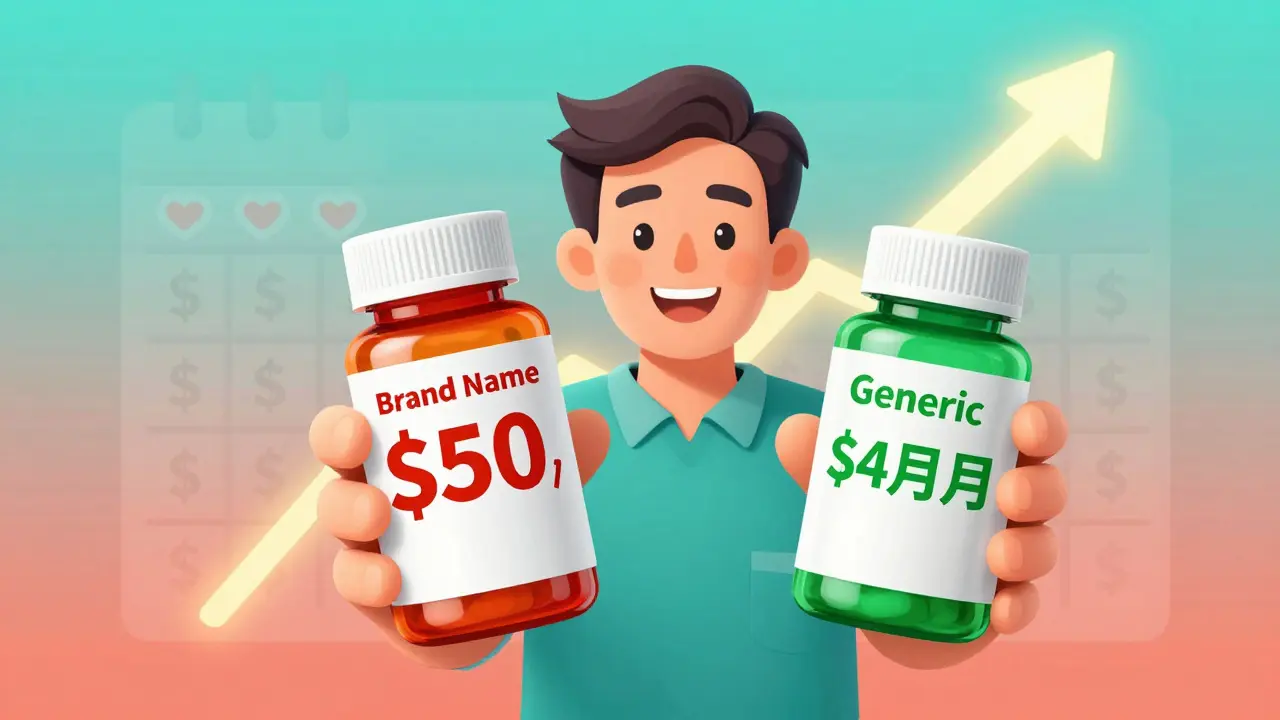
Imagine paying $4 a month for your blood pressure medicine instead of $50. That’s not a fantasy-it’s what happens when you switch from brand-name drugs to generic medications. For people managing chronic conditions like diabetes, high blood pressure, or asthma, this switch isn’t just a small win-it’s a life-changing financial reset that adds up to tens of thousands in savings over a lifetime.
Why Generics Are Just as Good as Brand Names
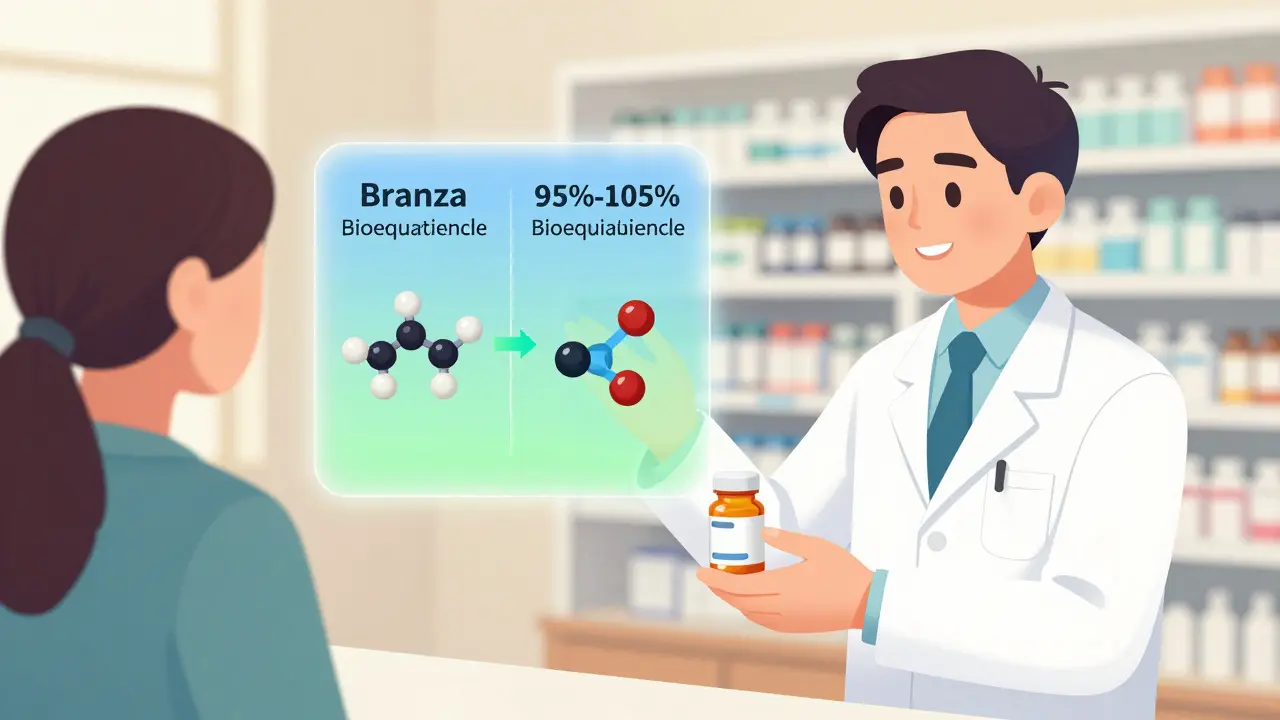
A lot of people think generic drugs are cheaper because they’re weaker or made with lower-quality ingredients. That’s not true. The U.S. Food and Drug Administration (FDA) requires every generic drug to have the same active ingredient, strength, dosage form, and route of administration as the brand-name version. They must also prove they work the same way in the body-bioequivalence is non-negotiable. That means the amount of drug absorbed into your bloodstream must fall within 80% to 125% of the brand-name drug’s levels. In real terms? Your body can’t tell the difference. For example, generic lisinopril works exactly like Prinivil. Generic metformin does the same job as Glucophage. Generic albuterol inhalers relieve asthma just like Ventolin. The only differences? The shape, color, or filler ingredients-none of which affect how the medicine treats your condition. These inactive ingredients might cause rare allergic reactions in sensitive individuals, but they don’t reduce effectiveness. And if you ever notice a change after switching, talk to your pharmacist. Often, it’s just your brain adjusting, not the drug failing.The Real Cost Difference: Numbers That Add Up
Here’s where it gets serious. A patient on brand-name lisinopril might pay $40 to $50 a month. The generic? Around $4. That’s $480 saved every year. Do that for 20 years? That’s nearly $10,000. Now add in a diabetes medication like metformin-brand name costs $150/month, generic is $10. That’s $1,680 saved annually. For someone managing three chronic conditions, switching all prescriptions to generics can cut annual drug costs by 80% or more. According to the USC Schaeffer Center, in 2020, generics made up 90% of all prescriptions filled in the U.S., but only 18% of total drug spending. That means 9 out of 10 pills you take are generic-and they’re saving the system billions. For you personally? It’s not just about saving money now. It’s about avoiding the bigger costs later.How Savings Lead to Better Health
Money isn’t the only thing you save when you switch to generics-it’s your health too. When medications are affordable, people actually take them. That’s not a guess. Studies show patients on generic drugs are 18% to 22% more likely to stick with their treatment plan than those on brand-name versions. For chronic conditions, consistency is everything. Missing a dose of blood pressure medicine increases your risk of stroke. Skipping insulin raises your chance of kidney failure or nerve damage. Medication Therapy Management (MTM) programs-often offered through pharmacies or Medicare Part D-help patients switch to generics and stay on track. Pharmacists review your entire list of medications, spot duplicates, find cheaper alternatives, and even help you apply for patient assistance programs. One study found MTM programs improved adherence by 15% to 25% and cut medication-related hospital visits by 30% to 40%. That’s not just saving money-it’s saving lives.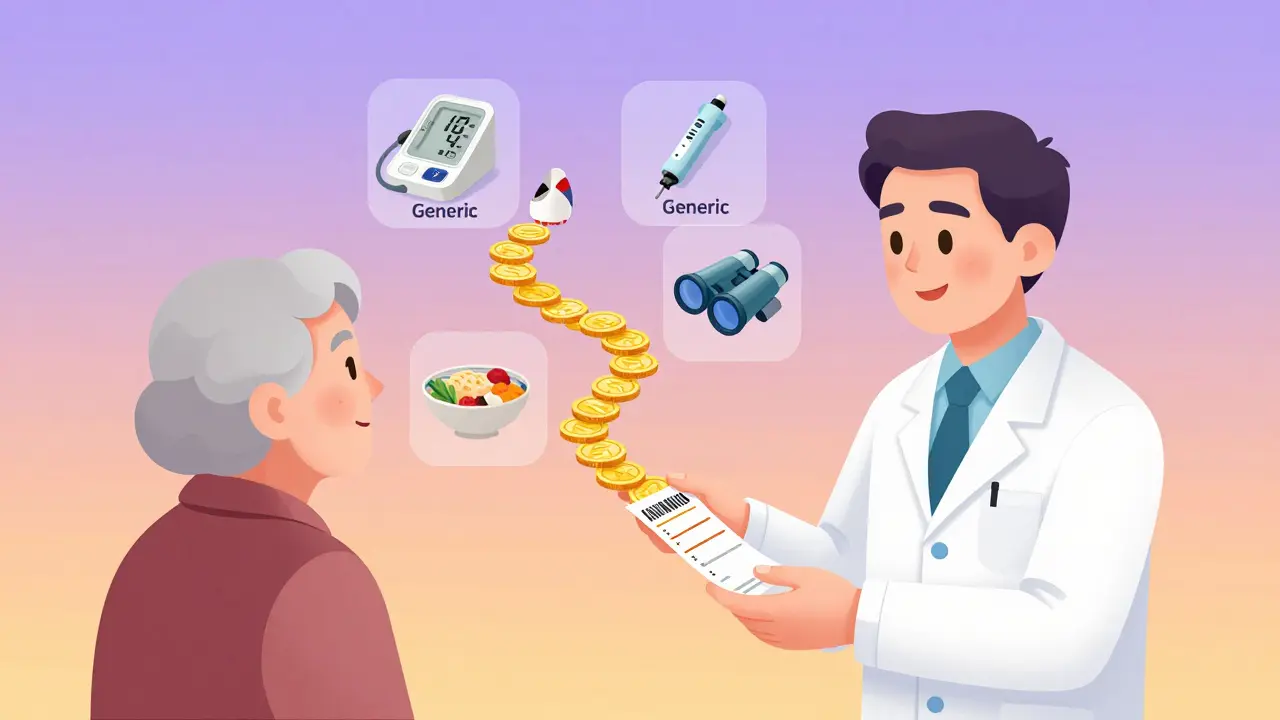
Real Stories, Real Savings
In India, when generic HIV drugs became widely available, treatment adherence jumped 40% and death rates dropped by 25% between 2005 and 2015. Brazil cut its annual healthcare spending on hypertension and diabetes by $1.2 billion after pushing generic use. Closer to home, a 68-year-old woman in New Zealand switched from brand-name glimepiride to generic-her monthly cost dropped from $120 to $15. She used the savings to buy a new pair of walking shoes. She walks every day now. Her A1C dropped from 8.1 to 6.7. These aren’t outliers. They’re the norm for people who understand how generics work. A Care Harmony report found patients using generics in chronic care programs reported 30% lower out-of-pocket costs and 25% higher satisfaction with their treatment. When you’re not choosing between medicine and groceries, you’re more likely to stay healthy.Why Aren’t More People Using Generics?
If generics are this good and this cheap, why do some still pay full price? Three reasons: misinformation, inertia, and insurance quirks. Many believe generics are “second-rate.” That myth persists because brand-name companies spent decades marketing their products as premium. Pharmacies sometimes don’t automatically substitute unless asked. And some insurance plans still make you pay more for generics if they’re not on their preferred list-or if your doctor didn’t write “dispense as written.” The fix? Ask. Always ask your pharmacist: “Is there a generic version of this?” If they say no, ask why. Sometimes it’s because the patent hasn’t expired yet. Other times, it’s just a default setting. Pharmacists are trained to find alternatives. Use them.What’s Changing Right Now?
The landscape is shifting fast. The FDA’s Generic Drug User Fee Amendments (GDUFA) III, running through 2027, is speeding up approvals for complex generics-like inhalers, injectables, and long-acting formulations used for chronic diseases. That means more affordable options will hit the market sooner. The 2022 Inflation Reduction Act caps insulin costs at $35 a month for Medicare users-and that includes generics. It also limits out-of-pocket drug spending for seniors. In 2026, these rules will expand to more people. Meanwhile, biosimilars-generic versions of biologic drugs used for arthritis, cancer, and autoimmune diseases-are gaining traction. They’re not yet as cheap as traditional generics, but they’re already saving patients thousands a year.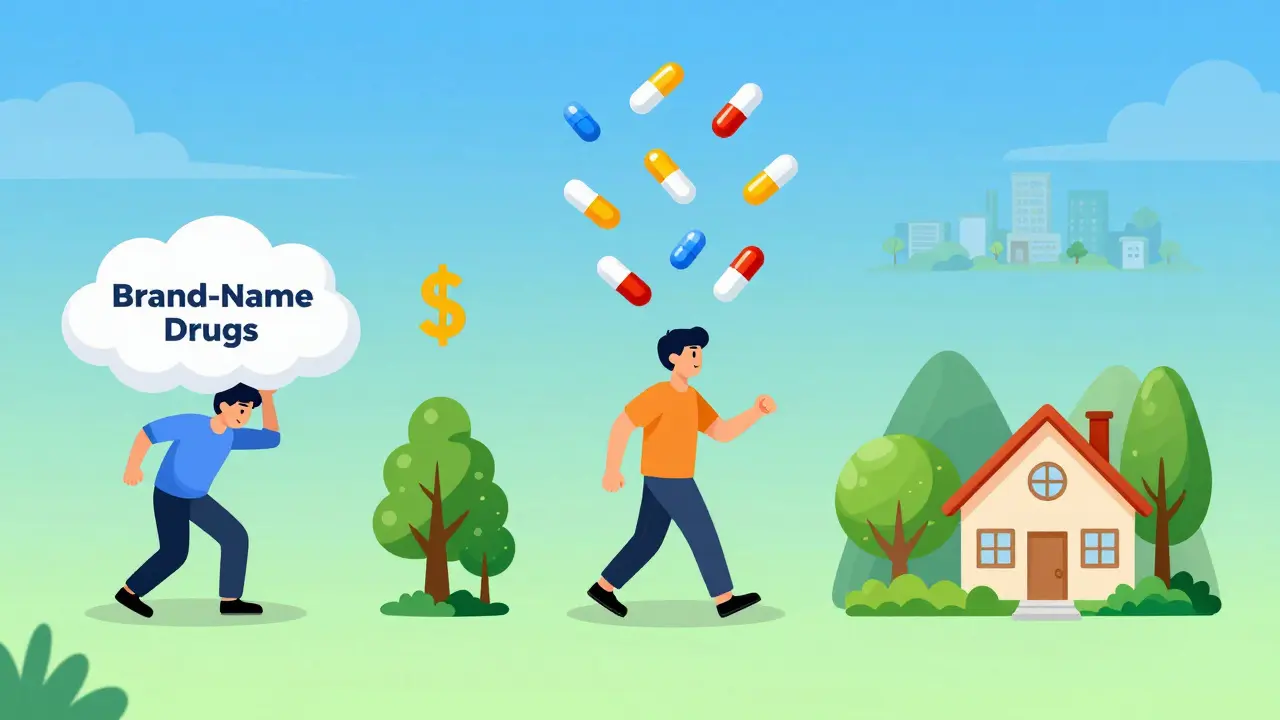
How to Maximize Your Lifetime Savings
You don’t need to be a pharmacist to save big. Here’s how to start:- Make a list of every medication you take for a chronic condition.
- Ask your pharmacist: “Which of these have generics?”
- Check your insurance formulary-some plans have tiered pricing, and generics are often Tier 1 (cheapest).
- If a generic isn’t available yet, ask your doctor to note “dispense as written” on the prescription to avoid brand-name defaults.
- Sign up for Medication Therapy Management if you’re on Medicare Part D-it’s free and includes personalized savings plans.
- Use the FDA’s Orange Book online to check patent expiration dates and when generics will become available.
What About the Future?
Between 2023 and 2027, around $150 billion in brand-name drug sales will lose patent protection. That means more generics will enter the market-especially for heart disease, depression, and COPD. Experts predict the global generic drug market will hit $357 billion by 2028. The trend isn’t slowing. It’s accelerating. The bottom line? Generics aren’t a compromise. They’re the smartest, most proven way to manage chronic illness without going broke. For someone on lifelong medication, switching to generics isn’t a minor cost-cutting trick-it’s the single biggest financial health move they’ll ever make. And it’s available right now, no waiting.Are generic medications really as effective as brand-name drugs?
Yes. The FDA requires generic drugs to have the exact same active ingredient, strength, dosage form, and route of administration as the brand-name version. They must also prove bioequivalence-meaning they deliver the same amount of medicine into your bloodstream at the same rate. Thousands of studies confirm they work the same way. Differences in color, shape, or inactive ingredients don’t affect how well they treat your condition.
Why do some people say generics don’t work for them?
Sometimes it’s a placebo effect-people expect a cheaper drug to be less effective. Other times, switching between different generic brands (which can vary slightly in inactive ingredients) causes minor side effects like stomach upset. This doesn’t mean the drug isn’t working; it just means your body might react differently to the filler. Talk to your pharmacist. They can help you stick with the same generic manufacturer if needed. Rarely, an allergy to an inactive ingredient could be the cause-but that’s not about effectiveness.
Can I switch to generics without asking my doctor?
In most cases, yes. Pharmacists are legally allowed to substitute generics unless your doctor writes “dispense as written” or “no substitution.” Even then, your pharmacist can call your doctor to suggest a switch if it’s safe and cost-effective. Always check with your pharmacist first-they’re trained to spot these opportunities. You don’t need a new prescription to save money.
Are there any chronic conditions where generics aren’t available?
Yes, but not many. Generics become available after the brand-name drug’s patent expires, which is typically 20 years from filing. Some newer drugs, especially complex biologics for conditions like rheumatoid arthritis or multiple sclerosis, still don’t have generics-though biosimilars (similar, but not identical) are now entering the market. For most common chronic conditions-high blood pressure, diabetes, cholesterol, asthma, depression-generics have been available for years.
How much can I realistically save over my lifetime using generics?
It depends on your conditions and how long you need treatment. For someone taking three generic medications for chronic illness-like blood pressure, cholesterol, and diabetes-the average annual savings is $1,500 to $3,000. Over 30 years, that’s $45,000 to $90,000. That’s not just money saved-it’s money you can use for better food, travel, or emergency funds. For many, it’s the difference between managing their health and falling behind.
Do insurance plans always cover generics?
Most do-and they usually cost less than brand-name drugs. Many insurance plans require you to try generics first before covering the brand. Some even have zero copays for generics under Medicare Part D. But not all generics are treated equally. Check your plan’s formulary. If a generic isn’t covered, ask your pharmacist if there’s another generic version that is. Sometimes, switching manufacturers makes all the difference.
Is there a downside to using generics?
The main downside is availability. Generics can’t be made until the brand-name patent expires. For some complex drugs, like inhalers or injectables, developing generics takes longer. Also, rare allergic reactions to inactive ingredients can occur-but these are uncommon and not related to the drug’s effectiveness. Overall, the benefits far outweigh the risks. For most people, the only real downside is not switching sooner.