When you take a statin, a class of drugs used to lower cholesterol by blocking liver enzymes that produce it. Also known as HMG-CoA reductase inhibitors, statins like simvastatin, atorvastatin, and lovastatin help reduce heart attack risk—but they can become dangerous if mixed with grapefruit, a fruit that blocks an enzyme in your gut called CYP3A4, which normally breaks down many medications. This isn’t just a myth. One small glass of grapefruit juice can mess with how your body handles a statin for up to 72 hours. That means even if you take your pill in the morning and drink juice at night, you’re still at risk.
The problem isn’t grapefruit itself—it’s what it does to your body’s ability to process drugs. CYP3A4, a liver and gut enzyme responsible for metabolizing over half of all prescription drugs gets blocked by compounds in grapefruit called furanocoumarins. When that happens, your statin doesn’t get broken down the way it should. Instead, it builds up in your bloodstream. Higher levels mean stronger effects—and stronger side effects. Muscle pain, weakness, and a rare but life-threatening condition called rhabdomyolysis can happen when statin levels get too high. Your kidneys can’t handle the muscle breakdown products, and that can lead to kidney failure. Not all statins are equally risky. Simvastatin and lovastatin are the worst offenders. Atorvastatin is risky too, but less so. Rosuvastatin, pravastatin, and fluvastatin are safer choices if you like grapefruit. But even then, your doctor should know what you’re eating.
This isn’t just about juice. Whole grapefruit, grapefruit zest, and even some orange varieties like Seville oranges and tangelos can cause the same reaction. Energy drinks with grapefruit extract? Same risk. Medications aren’t the only thing affected—this interaction also happens with some blood pressure drugs, anti-anxiety meds, and even certain cancer treatments. But with statins, the stakes are high because people take them for years, often without realizing the danger. If you’ve been told to avoid grapefruit with your cholesterol pill, don’t just skip the juice. Read labels. Ask your pharmacist. Check if your statin is one of the high-risk ones. And if you’re unsure, switch to orange juice or water. Your muscles—and your kidneys—will thank you.
Below, you’ll find real-world advice and research-backed posts that dig into statin safety, how drug interactions work, and what other foods or meds might be quietly affecting your treatment. Whether you’re managing cholesterol, worried about side effects, or just trying to understand why your doctor warned you about fruit, these guides give you the facts without the fluff.
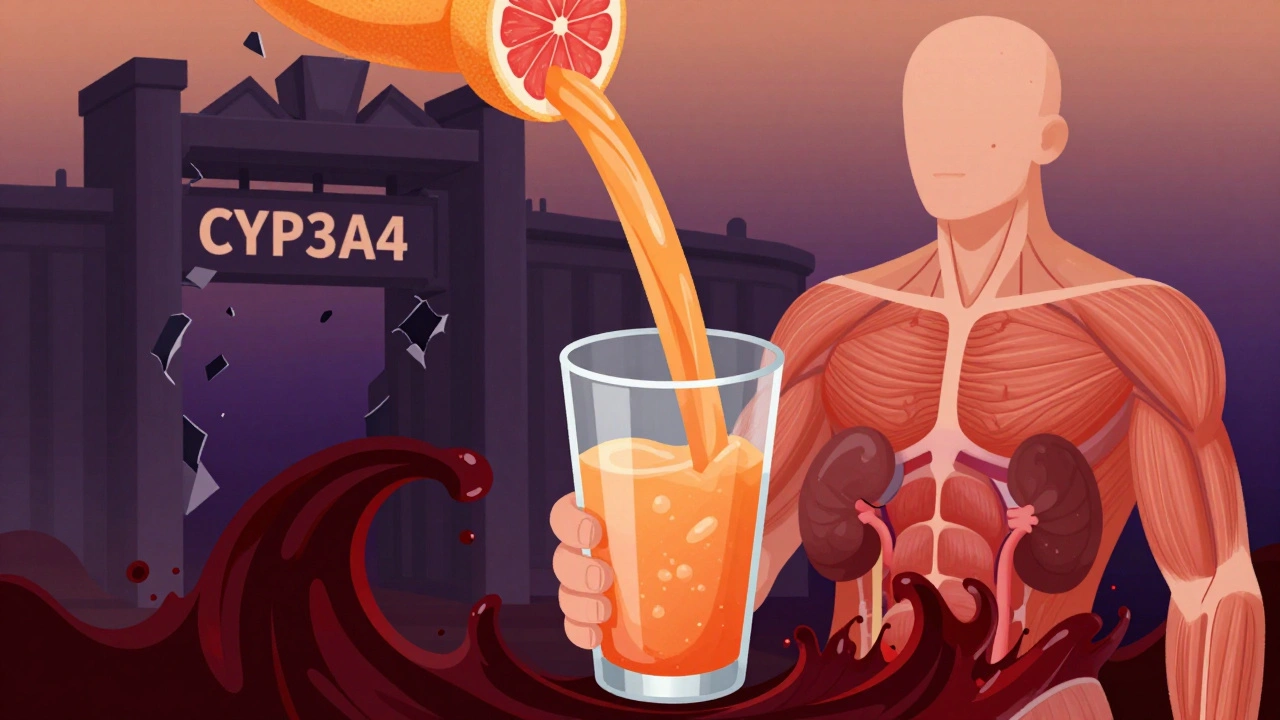
Grapefruit juice can dangerously increase simvastatin levels in your blood, raising the risk of muscle damage and kidney failure. Learn how much is unsafe, which statins are safer, and what to do if you're currently taking this combination.
View More