
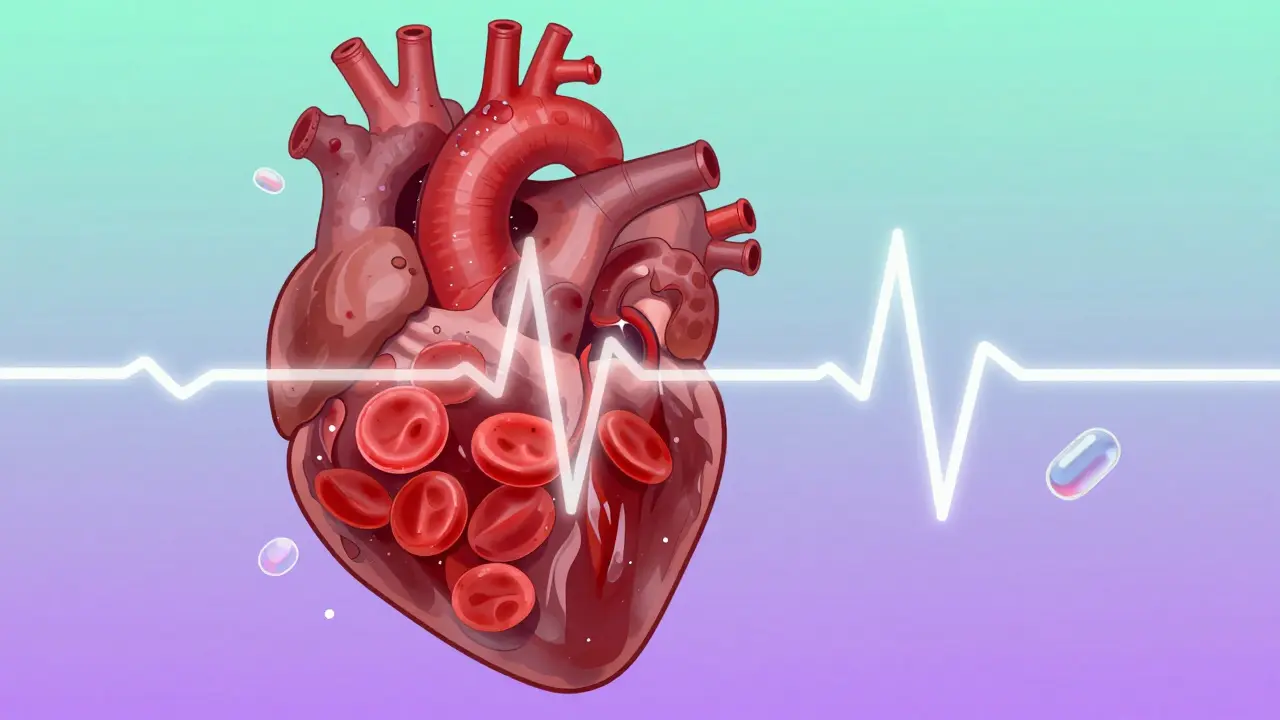
When you have atrial fibrillation, your heart doesn’t beat regularly. That irregular rhythm can let blood pool in the chambers, forming clots. If one of those clots breaks loose and travels to your brain, it can cause a stroke. That’s why anticoagulants - often called blood thinners - are one of the most important tools doctors use to prevent strokes in people with this condition.
It’s not just about taking a pill. It’s about choosing the right one, understanding how it works, and knowing what to watch for. For decades, warfarin was the only option. Today, there are better, safer, and easier choices. But not all are right for everyone.
How Blood Thinners Prevent Stroke
Anticoagulants don’t actually thin your blood. They slow down the clotting process by targeting specific proteins in your blood. In atrial fibrillation, the risk of stroke isn’t random - it’s calculated. Doctors use a scoring system called CHA₂DS₂-VASc to figure out your risk. If your score is 2 or higher, guidelines say you should be on an anticoagulant.
Without any treatment, about 5% of people with atrial fibrillation have a stroke each year. With warfarin, that drops to around 1.8%. With newer drugs called DOACs, it drops even further - to about 1.3%. That’s a two-thirds reduction in stroke risk compared to no treatment at all. The biggest win? DOACs cut the chance of deadly brain bleeds by more than half.
Warfarin: The Old Standard
Warfarin has been around since the 1950s. It works by blocking vitamin K, which your body needs to make clotting factors. It’s cheap - generic versions cost less than $20 a month. But here’s the catch: it’s finicky.
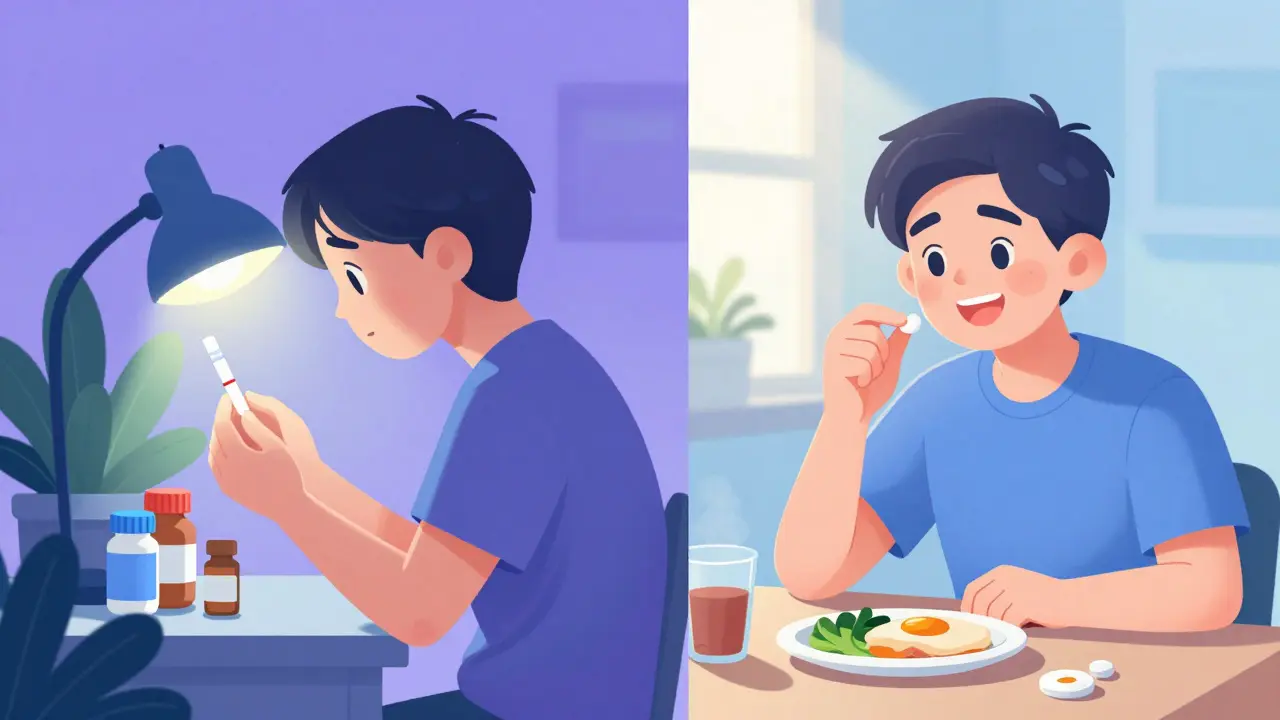
You need regular blood tests (INR checks) to make sure your dose is right. Too little, and you’re still at risk for stroke. Too much, and you could bleed internally. Studies show that in real life, nearly half of patients don’t stay in the safe range more than 65% of the time. That’s because what you eat matters. Leafy greens, broccoli, kale - they’re full of vitamin K and can undo the drug’s effect. Even a single big salad can throw off your levels.
Also, warfarin interacts with dozens of other medications - antibiotics, painkillers, even some herbal supplements. That’s why many patients end up going to a clinic every few weeks just to get their blood drawn. It’s a hassle. And it’s stressful.
The New Generation: DOACs
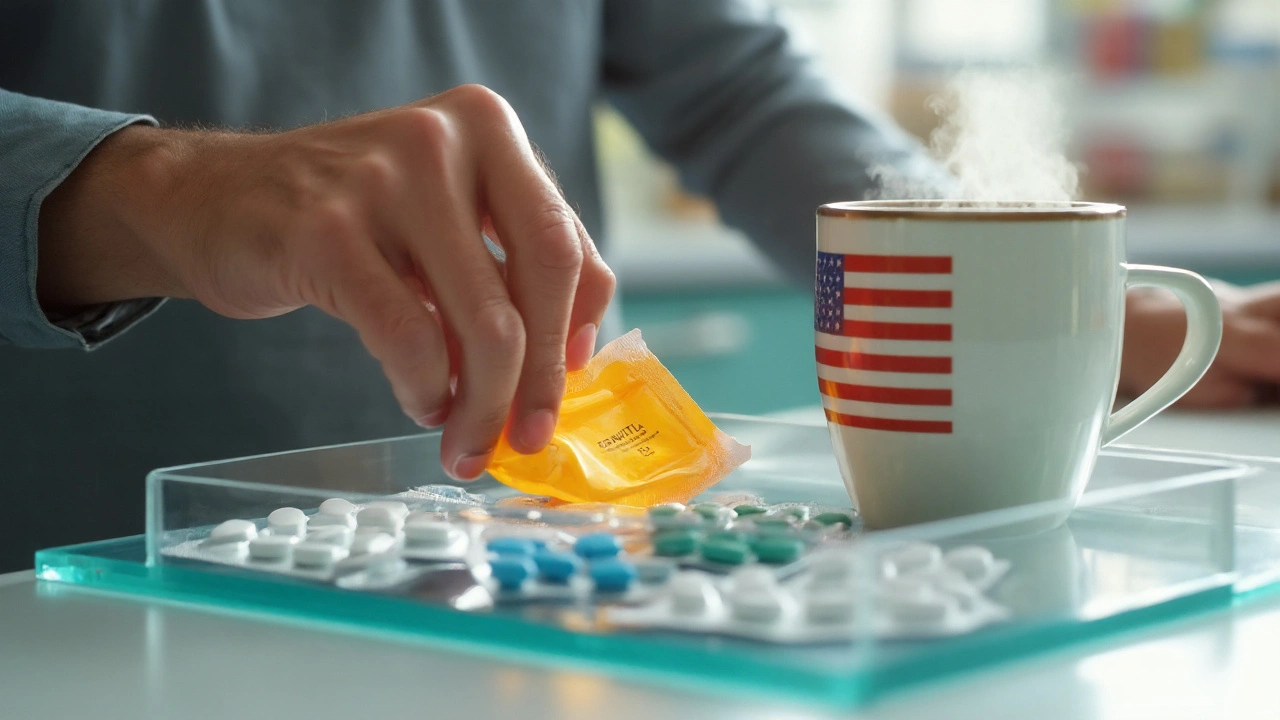
Since 2010, four new drugs have changed the game: apixaban (Eliquis), rivaroxaban (Xarelto), dabigatran (Pradaxa), and edoxaban (Savaysa). These are called DOACs - direct oral anticoagulants. They don’t need constant blood tests. You take the same dose every day, no matter what you eat.
They work differently. Apixaban and rivaroxaban block factor Xa. Dabigatran blocks thrombin. Both paths stop clots from forming, but without the vitamin K interference. That’s why patients report feeling more in control. A 2023 review of over 2 million patients found DOACs reduced stroke risk by 23% and major bleeding by 32% compared to warfarin.
And the safety edge is biggest when it comes to brain bleeds. DOACs cut the risk of intracranial hemorrhage by 54%. That’s huge. A brain bleed is often fatal or leaves permanent damage. Avoiding that is a major win.
Which DOAC Is Best?
Not all DOACs are the same. Apixaban stands out in real-world data. In a 2022 study of nearly 268,000 patients, apixaban reduced major bleeding by 31% compared to warfarin. It also had the lowest rate of gastrointestinal bleeding among the DOACs.
Dabigatran is effective but has the highest rate of stomach upset - about 32% of users report nausea or abdominal pain. Rivaroxaban is taken once daily, which is convenient, but it needs to be taken with food to be absorbed properly. Edoxaban is the least prescribed - partly because it’s still mostly brand-name, and partly because it’s not as widely studied in older or sicker patients.
Here’s the kicker: apixaban is now available as a generic. Since January 2024, generic apixaban costs about $450-$500 a month - similar to the price of warfarin when you add in all the blood tests. Rivaroxaban and dabigatran generics followed soon after. The cost gap has closed.
Who Should Still Take Warfarin?
For most people, DOACs are the clear first choice. But there are exceptions.
- If you have a mechanical heart valve - like a metal one - warfarin is still the only approved option. DOACs can cause dangerous clots on these valves.
- If you have severe kidney disease (creatinine clearance below 15), DOACs aren’t recommended. Warfarin might be safer, though it’s not ideal.
- If you’re under 60 kg or over 120 kg, or over 80 years old, your doctor might still lean toward warfarin. Dosing DOACs in extreme weights isn’t well studied.
- If you’ve had a major GI bleed before, dabigatran might not be the best pick.
And if you’re someone who can’t afford even generic DOACs? Warfarin is still a valid, life-saving option - if you can manage the monitoring.
Bleeding Risks and What to Watch For
All anticoagulants increase bleeding risk. But the good news? Most bleeds aren’t catastrophic. You’re more likely to get a nosebleed, bruise easily, or have heavier periods than to have a life-threatening bleed.
Know the red flags:
- Bleeding that won’t stop after 10 minutes of pressure
- Red or black, tarry stools
- Vomiting blood or material that looks like coffee grounds
- Sudden severe headache, dizziness, confusion, or weakness on one side of the body
- Unexplained swelling or pain in joints or muscles
If any of these happen, go to the ER immediately. There are reversal agents for both warfarin (vitamin K and fresh plasma) and DOACs (idarucizumab for dabigatran, andexanet alfa for apixaban and rivaroxaban). But time matters.
What Patients Are Saying
On patient forums, the shift from warfarin to DOACs is one of the most common success stories. One Reddit user wrote: “Switched from warfarin to apixaban after 10 years. No more broccoli anxiety. No more monthly blood draws. My neurologist says my bleeding risk is 50% lower.”
On PatientsLikeMe, 78% of DOAC users said they preferred their drug over warfarin. The top reasons? No dietary restrictions (65%) and no blood tests (58%).
But it’s not perfect. Some DOAC users still report stomach issues. Others worry about the cost - even with generics, $500 a month is a lot if you’re on a fixed income. That’s why some still choose warfarin, even with the hassle.
What Comes Next?
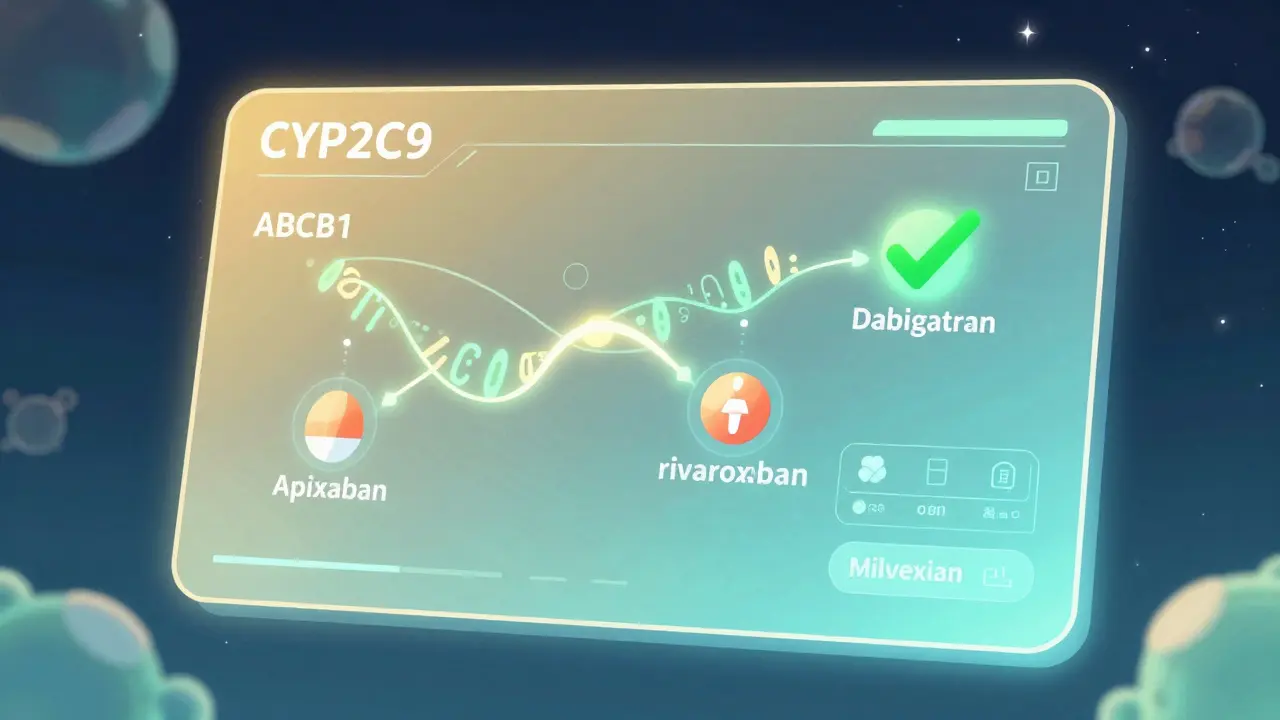
The future of anticoagulants is exciting. New drugs like milvexian and abelacimab are in late-stage trials. They target different parts of the clotting system and may reduce bleeding risk even more - without losing stroke protection.
Soon, genetic testing might guide your choice. Some people metabolize warfarin slowly because of their CYP2C9 gene. Others absorb DOACs poorly because of ABCB1 variants. In five years, your doctor might run a quick DNA test before prescribing.
For now, the message is clear: if you have atrial fibrillation and are at risk for stroke, don’t ignore anticoagulation. The options are better than ever. Talk to your doctor about DOACs. Ask about generics. Ask about your bleeding risk with the HAS-BLED score. And if you’re on warfarin and tired of the blood tests - there’s a better way.


Anthony Massirman
February 2, 2026 AT 15:52DOACs are a game changer. No more broccoli anxiety. No more monthly blood draws. I switched to apixaban last year and finally feel like I’m living instead of just surviving.
Brett MacDonald
February 3, 2026 AT 02:40warfarin still works if you dont be lazy and check your inr. people these days want everything handed to em on a silver platter. also why is everyone so scared of a little bleeding? we all bleed eventually lol
Sandeep Kumar
February 4, 2026 AT 01:33DOACs are just fancy western pharma marketing. In India we use warfarin and live longer. Your body adapts. You dont need expensive pills to stay alive. This is why your healthcare costs are insane
Gary Mitts
February 5, 2026 AT 02:49So what you're saying is… I can finally eat a salad without feeling like I’m committing treason? Sweet.
clarissa sulio
February 6, 2026 AT 06:59My dad was on warfarin for 12 years. He had a stroke last year. We switched my mom to apixaban after that. She’s 78. No more blood tests. No more panic over kale. It’s been 18 months and she’s never felt better.
Bridget Molokomme
February 8, 2026 AT 05:15Apixaban is great but did you know rivaroxaban has a 20% higher GI bleed risk than apixaban? Also dabigatran makes you feel like you swallowed a cactus. I’m not even mad. Just… informed.
Vatsal Srivastava
February 9, 2026 AT 09:11Everyone loves DOACs because they’re convenient. But warfarin is proven over 70 years. DOACs have only been around 14. You think you’re smart but you’re just trusting a corporate brochure
Brittany Marioni
February 10, 2026 AT 10:20Important reminder: If you’re over 80, or under 60kg, or have kidney issues, please talk to your doctor before switching. DOACs aren’t one-size-fits-all. And if you’re worried about cost-ask about patient assistance programs. You’re not alone.
Monica Slypig
February 11, 2026 AT 12:58Apixaban is just another pill made by Big Pharma to steal your money. I read a study that said warfarin is just as good if you dont eat spinach. And why do they even call them blood thinners? They dont thin blood. Its just marketing. I hate this crap
Becky M.
February 12, 2026 AT 01:41I’m a nurse in rural Kansas. We have patients on warfarin who drive 90 miles for INR checks. Some skip them because of cost or transportation. DOACs? They can’t afford them. So we help them with coupons. Please don’t judge. This isn’t a luxury. It’s survival.
Dan Pearson
February 12, 2026 AT 15:56Apixaban is the best? Oh really? Let me tell you about my cousin’s uncle who had a GI bleed on apixaban and ended up in ICU for 3 weeks. And you think that’s better than warfarin? Wake up. The FDA is asleep at the wheel. This is why Americans die early.
Eli Kiseop
February 13, 2026 AT 08:31Wait so dabigatran causes nausea but apixaban doesn’t? And edoxaban is barely used? Why is that not on the label? I feel like I’m being lied to
Ellie Norris
February 13, 2026 AT 14:56Just had a patient switch from warfarin to apixaban last month. She cried because she hadn’t slept through the night in 8 years from worrying about her INR. Now she’s gardening again. This isn’t just medicine. It’s freedom.
Marc Durocher
February 15, 2026 AT 10:19Someone above said warfarin is proven over 70 years. Cool. But DOACs are proven over 14 years in over 2 million patients. And they’re better. The data doesn’t lie. If you’re still on warfarin because you ‘trust tradition’… you’re not brave. You’re just scared of change.