When you hear international reference pricing, a system where governments use drug prices from other countries to set their own fair rates. It's not about guessing—it's about comparing what Canada, Germany, or Australia pay for the same pill you're being charged for in the U.S. This isn't theoretical. It's how most high-income countries keep prescription costs under control while the U.S. pays up to four times more for the same medicine.
Why does this matter to you? Because when a country uses international reference pricing, it forces drugmakers to justify their prices. If a cancer drug costs $10,000 in the U.S. but only $2,500 in the U.K., that gap doesn’t disappear—it gets questioned. pharmaceutical costs aren’t set by science—they’re set by negotiation, politics, and market power. Countries that use price comparison as a tool don’t just guess what’s fair—they look at real-world data from their peers.
This system doesn’t mean drugs are cheaper everywhere. It means they’re more predictable. In places like France or Japan, the government doesn’t let companies charge whatever they want. They say: "Here’s what similar drugs cost in other nations. Match it, or we won’t cover it." That’s why you see generic versions of the same drug priced differently across borders. And yes, it’s one reason why some people travel abroad to fill prescriptions legally.
But here’s the catch: if the U.S. ever adopted this approach, drugmakers would likely raise prices elsewhere to make up for lost profits. That’s why you see so much resistance from pharmaceutical companies in Washington. They don’t want you knowing that your $500 insulin could cost $30 in Germany. They want you to believe the price is based on research and development—not profit margins.
What you’ll find in the posts below isn’t just theory. It’s real-world evidence. You’ll read about how drug pricing changes year after year, why generics spike in cost unexpectedly, and how border rules for medication reflect these global disparities. You’ll see how doctors are being held liable for prescribing cheaper generics, how travelers get caught with prescriptions that are legal at home but banned abroad, and how regulatory agencies are influenced by the very companies they’re supposed to oversee. This isn’t about politics. It’s about what’s in your pill bottle—and why you’re paying what you are.
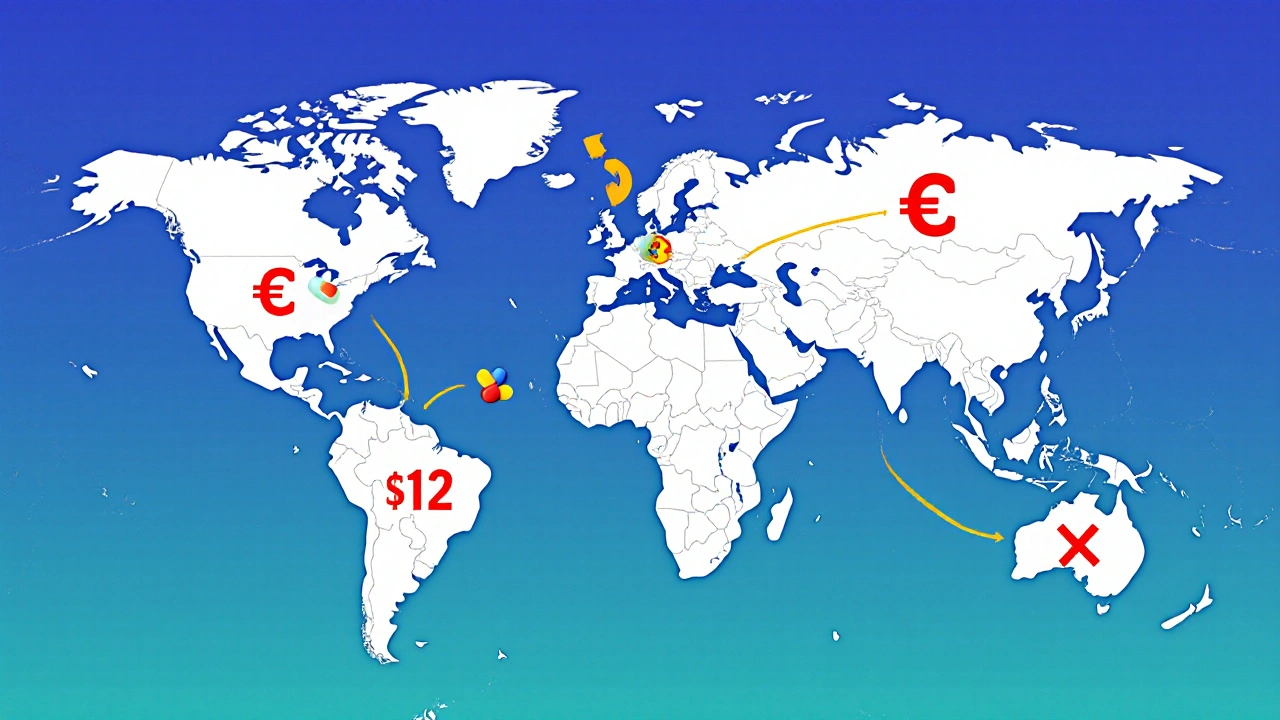
International reference pricing helps countries set lower prices for generic drugs by comparing costs across nations. Learn how it works, which countries use it, and the real impact on patients and manufacturers.
View More