When your blood sugar drops too low, your body doesn’t have enough fuel to function — that’s hypoglycemia, a condition where blood glucose falls below 70 mg/dL, often causing confusion, sweating, or even loss of consciousness. Also known as low blood sugar, it’s not just a diabetic issue — it can hit anyone, especially those taking insulin or certain pills to manage blood sugar. Think of your blood sugar like a car’s gas tank. If you take too much insulin or skip a meal, the tank runs empty fast — and your brain, which depends entirely on glucose, starts to panic.
Medications are the most common cause. insulin, a hormone injected or pumped to lower blood sugar in people with diabetes is the biggest culprit. Too much, or not enough food after a dose, and you’re in danger. Same goes for sulfonylureas, a class of oral diabetes drugs that force the pancreas to release more insulin. Even some antibiotics, heart meds, or alcohol can push blood sugar down when mixed with these drugs. It’s not always about overdoing it — sometimes it’s about timing. A missed meal, extra exercise, or drinking without eating can turn a normal dose into a crisis.
What does it feel like? Early signs are easy to miss: shaky hands, sudden hunger, sweating, or a racing heart. But if you ignore it, you can get confused, slurred speech, seizures, or pass out. That’s when it becomes an emergency. People with diabetes often carry glucose tablets or gel — fast-acting sugar that can pull them back from the edge. But if you’re not diabetic and you’re having frequent low blood sugar episodes, something else might be going on — maybe a tumor, hormone problem, or reaction to a new medication.
The posts below cover real-world scenarios where hypoglycemia shows up unexpectedly. You’ll find how alcohol messes with blood sugar control, why some drug combinations can drop your glucose without warning, and how to track symptoms so you don’t get caught off guard. Some stories are about people who didn’t know they were at risk — until they passed out at work or had to be rushed to the ER. Others show how doctors miss the link between meds and low sugar because they focus only on high numbers. You’ll learn what to ask your doctor, how to spot hidden triggers, and how to protect yourself — whether you’re on insulin, taking pills, or just curious why you feel shaky after lunch.
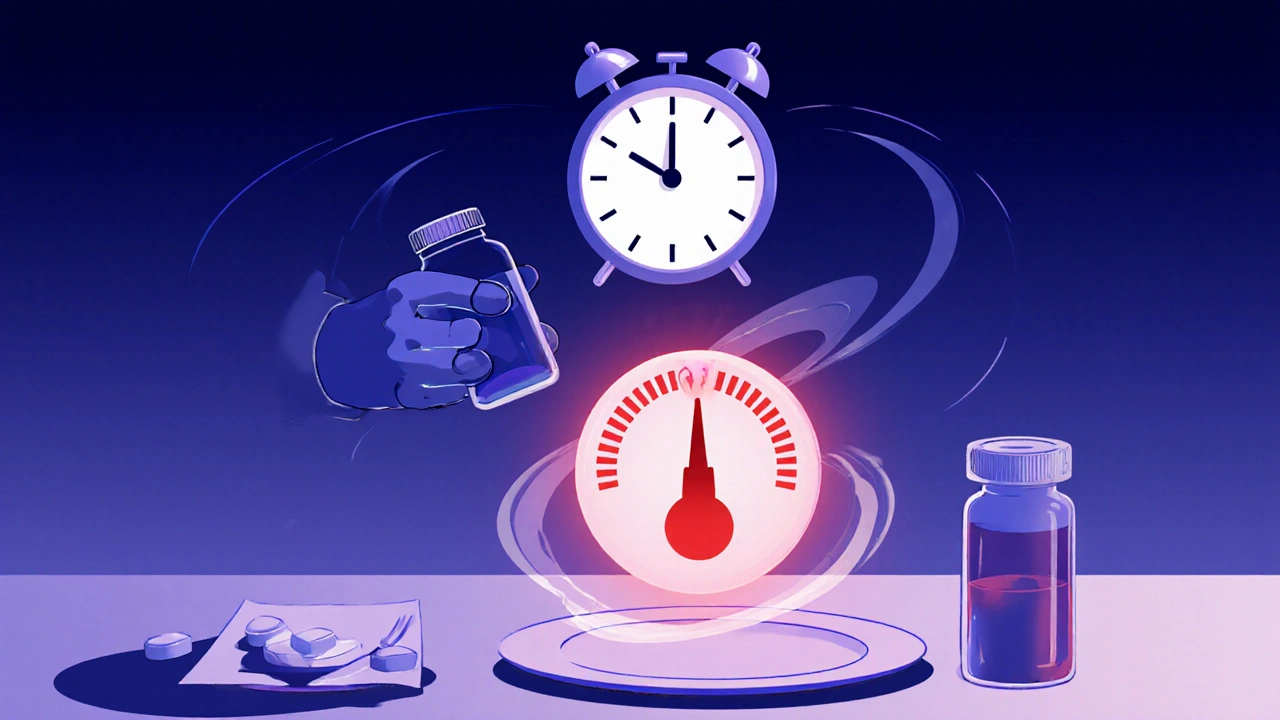
Meglitinides help control blood sugar after meals but can cause dangerous hypoglycemia if meals are skipped. Learn how repaglinide and nateglinide work, why timing matters, and how to stay safe.
View More