
Meglitinides Meal Timing Calculator
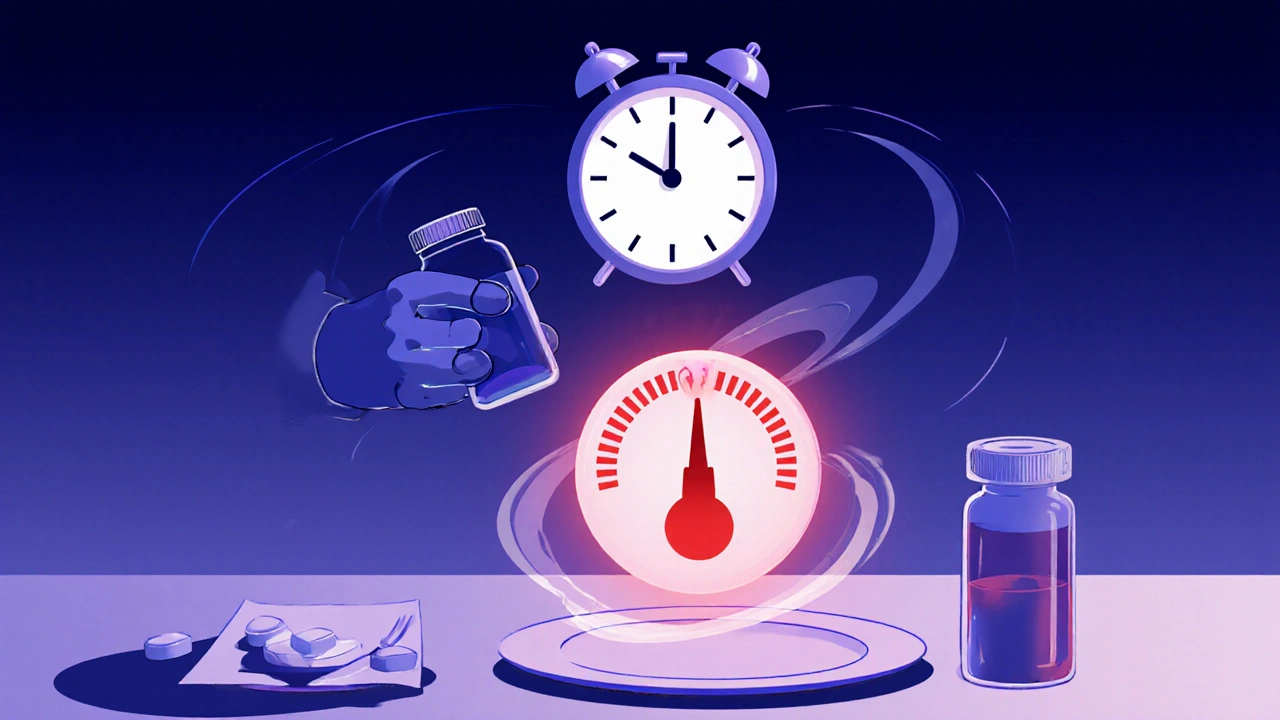
This calculator helps you determine the safe timing between taking meglitinide diabetes medications and eating. The risk of hypoglycemia increases significantly if you delay eating after taking meglitinides.
When you take a diabetes pill and skip your meal, it’s not just a missed snack-it could send your blood sugar crashing. This is the real risk with meglitinides, a class of diabetes drugs designed for people who don’t eat on a clock. But here’s the catch: they only work safely if you eat when you’re supposed to. Skip a meal, delay lunch, or grab coffee instead of breakfast, and your body ends up with too much insulin and not enough glucose. The result? Dangerous hypoglycemia.
What Are Meglitinides, Really?
Meglitinides are fast-acting insulin secretagogues. That’s a fancy way of saying they tell your pancreas to release insulin quickly-right when you eat. The two main drugs in this group are repaglinide and nateglinide. Unlike older diabetes pills like sulfonylureas that stay active for hours or even a full day, meglitinides work fast and fade fast. Repaglinide hits peak levels in about 30 to 60 minutes. Nateglinide kicks in even faster-within 15 minutes. Both are gone from your system in about 2 to 4 hours.This speed is why doctors prescribe them. They’re ideal for people who eat at odd hours-shift workers, busy parents, older adults with changing routines, or anyone who can’t stick to three meals a day. But that same speed is also their biggest danger. If you take the pill and then don’t eat, insulin floods your bloodstream with nothing to act on. Blood sugar drops fast-sometimes below 70 mg/dL in under 90 minutes.
The Meal Timing Trap
The biggest mistake patients make? Taking meglitinides on a "just in case" basis. "I’ll take it now, and eat when I’m hungry." That’s not how these drugs work. Clinical guidelines are crystal clear: take meglitinides 15 minutes before a meal. If you don’t know when you’ll eat, don’t take the pill. Memorial Sloan Kettering’s patient materials say it plainly: "Waiting too long to eat after you take the medicine raises the risk of hypoglycemia."Studies show skipping just one meal after taking a meglitinide increases hypoglycemia risk by 3.7 times. In real-world settings, 41% of low-blood-sugar events happen 2 to 4 hours after dosing-the exact window when the drug is strongest but meals are delayed. This isn’t rare. A 2022 national survey found that over 4% of U.S. adults with type 2 diabetes are on meglitinides. That’s hundreds of thousands of people walking around with a ticking time bomb in their system if they miss a meal.
It gets worse for older adults and those with kidney problems. The American Diabetes Association’s 2025 guidelines warn that older patients are at higher risk because of "irregular meal intake," often due to memory issues, reduced appetite, or changes in daily routines. People with advanced chronic kidney disease (CKD) face a 2.4-fold higher risk of hypoglycemia on meglitinides than those with healthy kidneys. That’s why repaglinide is often preferred over sulfonylureas in kidney patients-it’s mostly cleared by the liver, not the kidneys. But even then, dosing must be lowered to 60 mg per meal if your kidney function is severely reduced.
How Meglitinides Compare to Other Diabetes Drugs
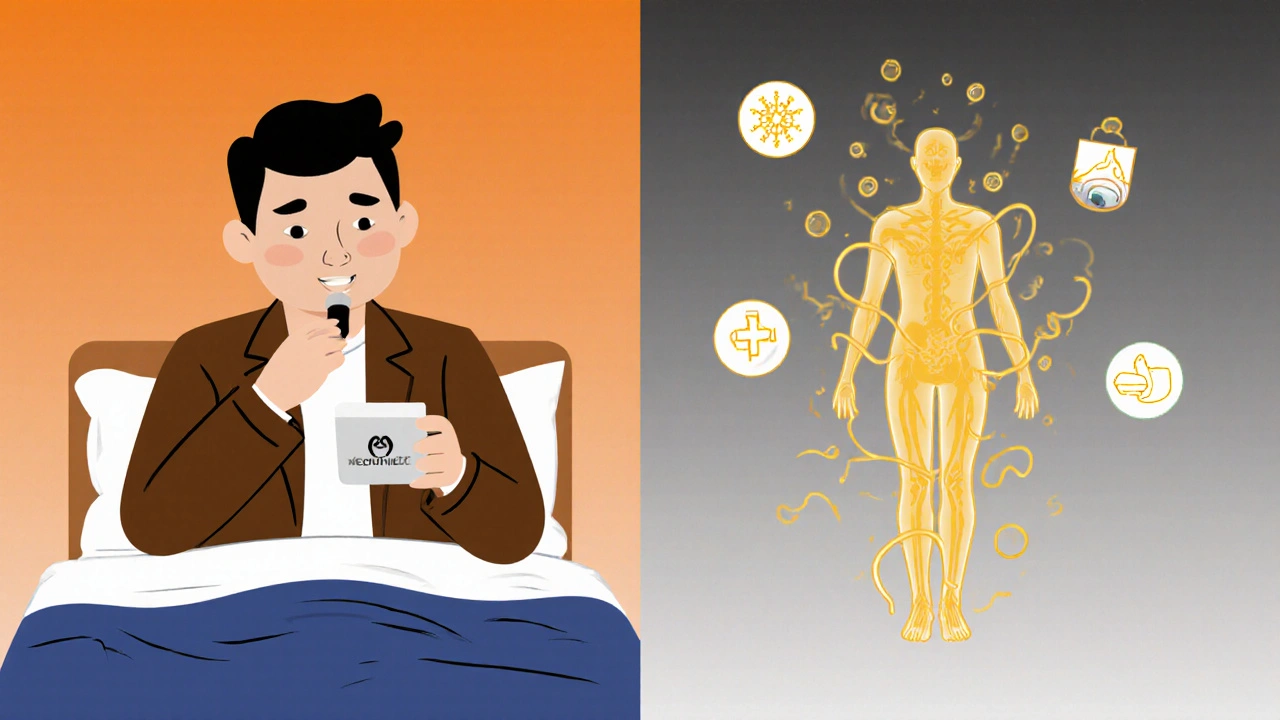
It helps to know how meglitinides stack up against other options.- Sulfonylureas (like glipizide or glyburide): These work all day long. You can skip a meal and still crash. Their hypoglycemia risk is steady, not tied to timing.
- Metformin: Doesn’t cause hypoglycemia on its own. Often the first choice for type 2 diabetes.
- GLP-1 agonists (like semaglutide): These slow digestion and only trigger insulin when blood sugar is high. Much lower hypoglycemia risk-unless combined with insulin or meglitinides.
- Insulin: Always carries hypoglycemia risk. Combining insulin with meglitinides? That doubles the danger. One study found this combo raised hypoglycemia risk significantly (p=0.018).
Repaglinide is slightly more effective than nateglinide at lowering HbA1c (average blood sugar over time), but it also causes 28% more low-blood-sugar episodes. That’s why doctors often pick nateglinide for patients who are more prone to hypoglycemia-like the elderly or those with unpredictable eating habits.
What to Do If You Can’t Eat on Schedule
If your life doesn’t fit into a 9-to-5 meal schedule, here’s how to stay safe:- Only take the pill when you’re about to eat. No meal? No pill. This is called the "dose-to-eat" method. It’s not just recommended-it’s life-saving.
- Keep fast-acting carbs handy. Always have glucose tablets, juice, or candy with you. If you feel shaky, sweaty, or dizzy, act fast. Don’t wait.
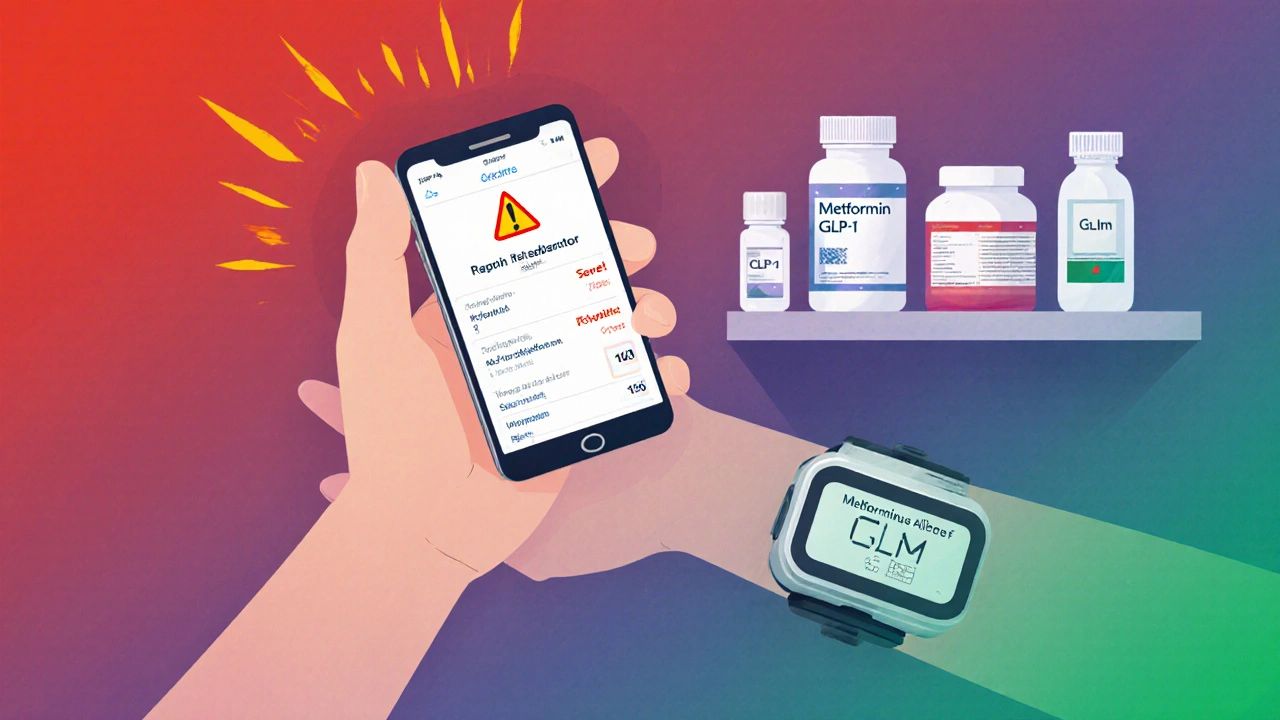
- Use a phone reminder app. A 2023 study showed that patients who got text or app reminders before meals reduced hypoglycemia by 39%. Simple tools make a big difference.
- Consider continuous glucose monitoring (CGM). If you’ve had a low blood sugar episode before, CGM can alert you before you feel symptoms. Studies show it cuts hypoglycemia events by 57% in meglitinide users with irregular meals.
- Talk to your doctor about alternatives. If you’re constantly skipping meals, maybe meglitinides aren’t the best fit. Metformin, SGLT2 inhibitors, or GLP-1 agonists might be safer for your lifestyle.
What’s New and What’s Coming
The FDA now requires all meglitinide labels to include clear warnings about hypoglycemia risk with skipped meals-a change made in 2021. That’s a sign the medical community finally understands how serious this is.Researchers are working on solutions. One promising development is an extended-release version of repaglinide (repaglinide XR). Early trials show it reduces hypoglycemia by 28% compared to the standard version, while still allowing flexible dosing. It’s not on the market yet, but Phase II results are strong.
Meanwhile, newer drugs like GLP-1 agonists are taking over as first-line treatments. They help with weight loss, protect the heart, and rarely cause low blood sugar. But they’re expensive. For many, meglitinides remain the only affordable, flexible option.
Bottom Line: Flexibility Has a Price
Meglitinides are a smart tool for people with unpredictable eating habits. But they’re not a set-it-and-forget-it solution. They demand attention. You can’t outsmart their mechanism. If insulin is released and food doesn’t follow, your body pays the price.If you’re on repaglinide or nateglinide, treat them like insulin injections-strict timing matters. Talk to your doctor if meals are becoming inconsistent. Don’t just lower the dose or stop taking them on your own. There are safer alternatives. But if you stick with meglitinides, make meal planning part of your daily routine. Because in this case, your schedule isn’t just inconvenient-it’s a matter of life or blood sugar.


Elizabeth Choi
November 27, 2025 AT 15:31So let me get this straight-you take a pill that forces your pancreas to dump insulin, and if you don’t eat right then, you’re basically poisoning yourself? That’s not a treatment, that’s a trap. Why is this even still on the market? Someone’s making bank off people’s poor meal planning.
And don’t get me started on the ‘just take it when you eat’ advice. If I’m a shift worker, I don’t eat when I’m ‘supposed to.’ I eat when I’m not on the clock. This drug assumes everyone lives in a 9-to-5 bubble.
Also, why isn’t there a version that only activates when glucose is high? That’s not rocket science. This feels like 1990s pharma thinking.
My aunt took this and passed out at the grocery store. She was fine, but she didn’t need to be a walking lab rat.
Allison Turner
November 28, 2025 AT 19:44People are so dumb. You take a pill, you eat. That’s it. If you can’t do that, don’t take the pill. Stop acting like your chaotic life is the drug’s fault.
Also, CGM? Really? You want a fancy watch to tell you you’re about to pass out? Just eat a damn snack.
Darrel Smith
November 29, 2025 AT 19:06Let me tell you something, folks-this isn’t just about diabetes, this is about the collapse of American discipline. We used to eat at set times. We used to respect our bodies. Now? We snack on protein bars at 3 a.m. because we’re ‘too busy.’
And now we want a magic pill that lets us eat when we feel like it? No. No, no, no. This isn’t medicine-it’s enabling. The FDA should ban these drugs outright. They’re a symptom of a culture that thinks it can outsmart biology.
My grandfather took insulin. He ate at 7 a.m., 1 p.m., and 7 p.m. Every. Single. Day. He didn’t need apps or glucose monitors. He had discipline. We lost that. And now we’re paying for it with hypoglycemic episodes.
Stop blaming the drug. Blame yourself. Blame the culture that tells you it’s okay to be lazy with your health.
This isn’t a medical issue. It’s a moral failure.
Aishwarya Sivaraj
December 1, 2025 AT 17:47My uncle in Delhi takes repaglinide and skips meals all the time because he forgets or feels full after tea
he keeps juice in his pocket now and checks his sugar with a cheap meter
doctors here dont talk much about timing but its life saving
also nateglinide is cheaper here so many use it
we dont have CGM but we use phone alarms
its not perfect but its working
its not about being perfect its about being aware
and maybe doctors should ask more about daily life not just labs
also why do we always think new drugs are better when simple habits save lives
love this post btw thanks for writing it
its the truth we need to hear
not the marketing hype
Iives Perl
December 1, 2025 AT 23:50They’re watching you.
CGM, apps, reminders-this isn’t healthcare, it’s surveillance.
They want you addicted to tech because then they can sell you more.
And the ‘extended-release’ version? That’s just the next step-control you 24/7.
Trust no one.
They’re coming for your insulin.
:)
Jebari Lewis
December 3, 2025 AT 23:04As a clinical researcher with over 12 years in endocrinology, I must emphasize the profound clinical implications of this pharmacokinetic profile. The temporal mismatch between insulin secretion and nutrient availability is not merely a risk factor-it is a mechanistic vulnerability that underpins a significant proportion of iatrogenic hypoglycemia in outpatient populations.
Furthermore, the data from the 2022 national survey referenced is corroborated by CDC NHANES sub-analyses, which demonstrate a 3.8-fold increase in emergency department visits for hypoglycemia among meglitinide users with irregular meal patterns compared to metformin monotherapy users.
Importantly, the preference for nateglinide in elderly populations is supported by its shorter half-life and reduced hepatic metabolism burden, though the 28% higher hypoglycemia incidence with repaglinide remains a clinically significant trade-off for HbA1c reduction.
My recommendation: If meal timing cannot be standardized, transition to SGLT2 inhibitors or GLP-1 agonists. The cardiovascular and renal benefits are not ancillary-they are primary. Cost should not be a barrier when the alternative is preventable neuroglycopenic events.
Do not self-adjust. Consult your provider. This is not optional. This is physiology.
Emma louise
December 5, 2025 AT 10:54Oh wow, a whole article about how lazy Americans can’t eat on time? Shocking.
Next you’ll tell us that people who skip workouts shouldn’t take weight loss pills.
Maybe the real problem is that we’ve turned medicine into a babysitter for people who refuse to grow up.
Also, why are we still using American-made drugs when India makes cheaper, equally effective generics?
Also also, who approved this article? It reads like a pharma ad with a thesaurus.
Mira Adam
December 5, 2025 AT 23:37What if the problem isn’t the drug… but the idea that we should be controlling our biology at all?
What if insulin isn’t a tool to fix our chaos, but a signal that our lives are out of sync with our bodies?
Maybe we don’t need a better pill.
Maybe we need to stop pretending we can out-engineer hunger.
Maybe the real hypoglycemia is spiritual.
…I’ll be in the forest.
Peace.
Miriam Lohrum
December 6, 2025 AT 04:33I’ve been on repaglinide for 5 years. I used to skip meals because I thought it was ‘intermittent fasting.’ I didn’t realize I was risking brain fog, tremors, and passing out in the shower.
After my third episode, I started using a simple phone alarm labeled ‘EAT OR DON’T TAKE.’
It’s not glamorous. It’s not high-tech. But it saved me.
Also, I switched to nateglinide. Fewer lows.
Doctors don’t always explain the ‘when’-they explain the ‘what.’
Thank you for writing this. It’s the kind of thing I needed to read when I was still in denial.