
When a pharmacist reaches for a generic version of a prescription, they’re not just saving money-they’re trying to make sure the patient gets the right medicine at the right price. But getting that generic filled isn’t always as simple as swapping a brand name for a cheaper version. Behind every substitution is a conversation-with the prescriber, with the patient, and sometimes with the system itself.
Why Generics Work-And When They Don’t
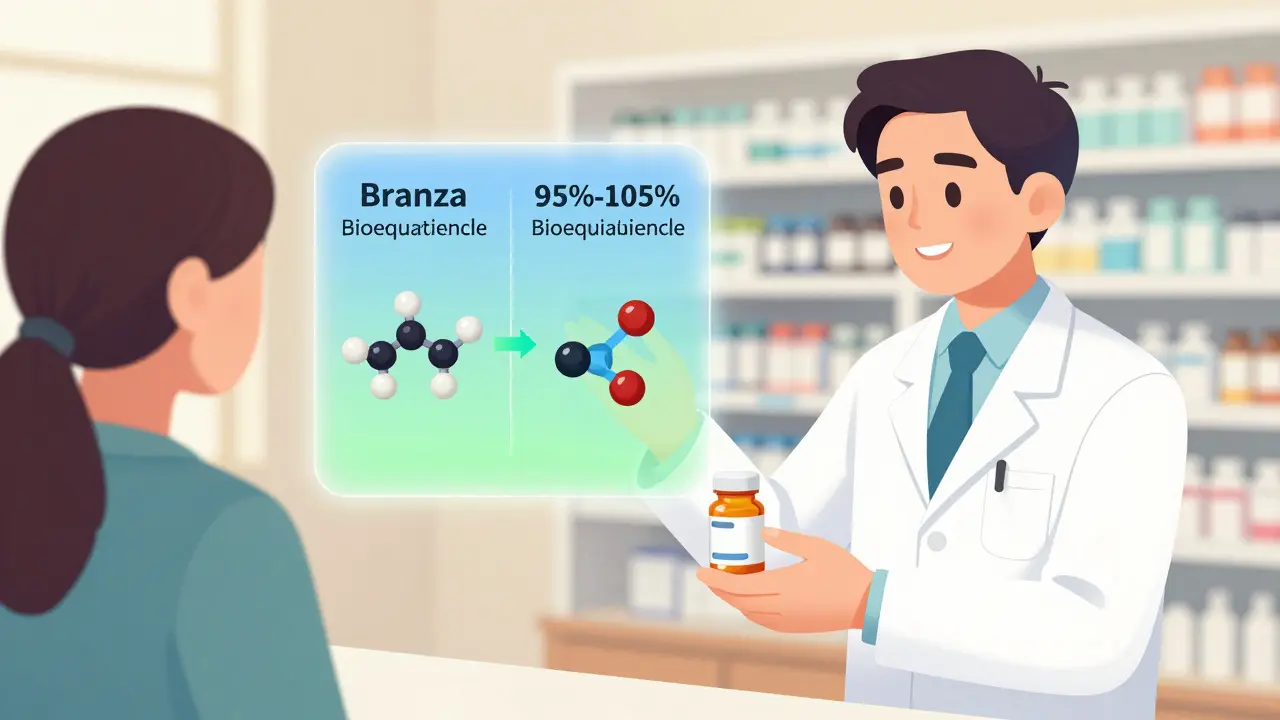
Generic drugs aren’t knockoffs. They’re FDA-approved copies of brand-name drugs that contain the same active ingredients, in the same strength and dosage form. The FDA requires generics to meet strict bioequivalence standards: the amount of drug absorbed into the bloodstream must fall within 80% to 125% of the brand-name version. In reality, most generics land between 95% and 105%, meaning they perform almost identically in the body. But here’s the catch: not all drugs are created equal. For medications with a narrow therapeutic index-like warfarin, levothyroxine, or phenytoin-tiny differences in absorption can lead to serious side effects or loss of effectiveness. These are the drugs where pharmacists pause. They don’t automatically substitute. Instead, they check the FDA’s Orange Book, which rates drug products for therapeutic equivalence. If a generic has an ‘A’ rating, it’s considered interchangeable. If it’s a ‘B,’ it’s not. And for NTI drugs, even an ‘A’ rating might trigger a call to the prescriber.When the Prescriber Says ‘Do Not Substitute’
About 15% of prescriptions come with a ‘dispense as written’ (DAW) note. That means the prescriber doesn’t want the pharmacist to switch to a generic, even if one exists. Sometimes, it’s because the patient had a bad reaction to a previous generic. Other times, it’s a precaution based on outdated beliefs. A 2023 survey found that 37.6% of prescribers still worry about generic effectiveness, especially for complex drugs like inhalers and topical creams. But here’s what they might not know: a 2018 study of over 12 million patients showed that switching to generics improved medication adherence by 12.4%. That’s not a small number. It means more people took their meds consistently, and hospital admissions for chronic conditions dropped by 15.2%. That’s the data pharmacists bring to the table. When a prescriber writes DAW, a good pharmacist doesn’t just accept it. They ask: Why? If it’s because the patient had an allergic reaction to an inactive ingredient-like lactose or a dye-that’s valid. But if it’s because the prescriber thinks generics are ‘inferior,’ that’s where the conversation starts.How Pharmacists Talk to Prescribers
It’s not enough to say, “I substituted this generic.” You need to explain why it’s safe, how it’s equivalent, and what the patient stands to gain. The American Society of Health-System Pharmacists recommends a clear four-step approach:- Contact the prescriber within 24 hours of receiving the prescription.
- Cite the Orange Book’s therapeutic equivalence rating for the specific drug.
- Share the cost difference-often hundreds of dollars per year per patient.
- Document the outcome in the patient’s record.
What Gets in the Way
Even with all the evidence, barriers remain. Pharmacists report having just 2.3 minutes per prescription to verify everything-dosage, interactions, allergies, substitutions. That’s not enough time to research every drug or call every prescriber. And not all pharmacists feel confident discussing complex generics. Modified-release tablets, transdermal patches, and inhalers have delivery systems that can affect how the drug works. A 2022 study found that 41.7% of pharmacists felt unsure about how to explain these to prescribers. Prescribers, too, are stretched thin. In the same 2023 Medscape report, 62.1% of primary care doctors said they didn’t have time to review substitution requests. That’s why concise, data-driven communication matters. A single email with the bioequivalence range, cost savings, and a link to the FDA’s Product-Specific Guidance can do more than a 20-minute phone call.State Laws and Patient Consent
The rules aren’t the same everywhere. In 49 states, pharmacists can substitute generics unless the prescriber says “do not substitute.” But 17 states require patient consent before switching. Five states-Connecticut, Massachusetts, New York, Texas, and Virginia-go further. They only allow substitution from a state-approved list of generics, which limits options and adds complexity. If a patient has an excipient allergy-say, to a dye or filler in the generic-the pharmacist must check the inactive ingredients. About 8.7% of substitution issues stem from this. The FDA allows different inactive ingredients in generics, and that’s legal. But it’s not always safe for every patient. That’s why pharmacists need to cross-check the product’s labeling before dispensing.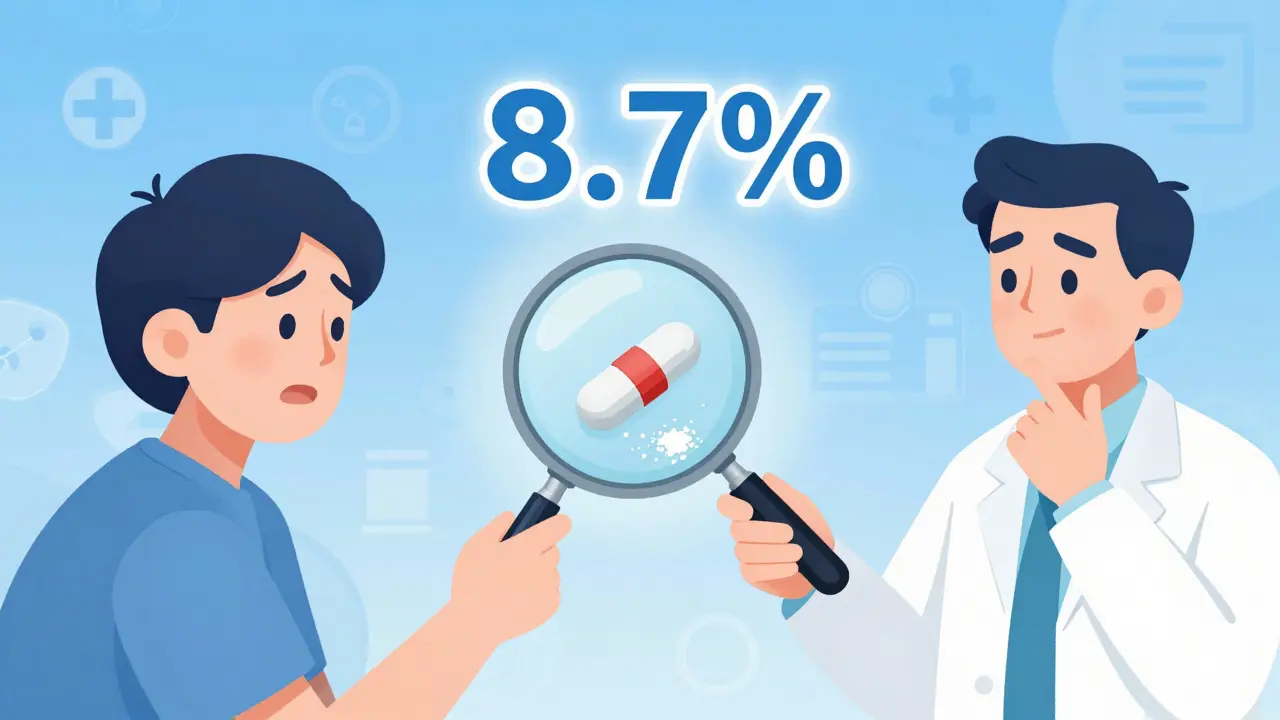
Documentation: Not Just Paperwork
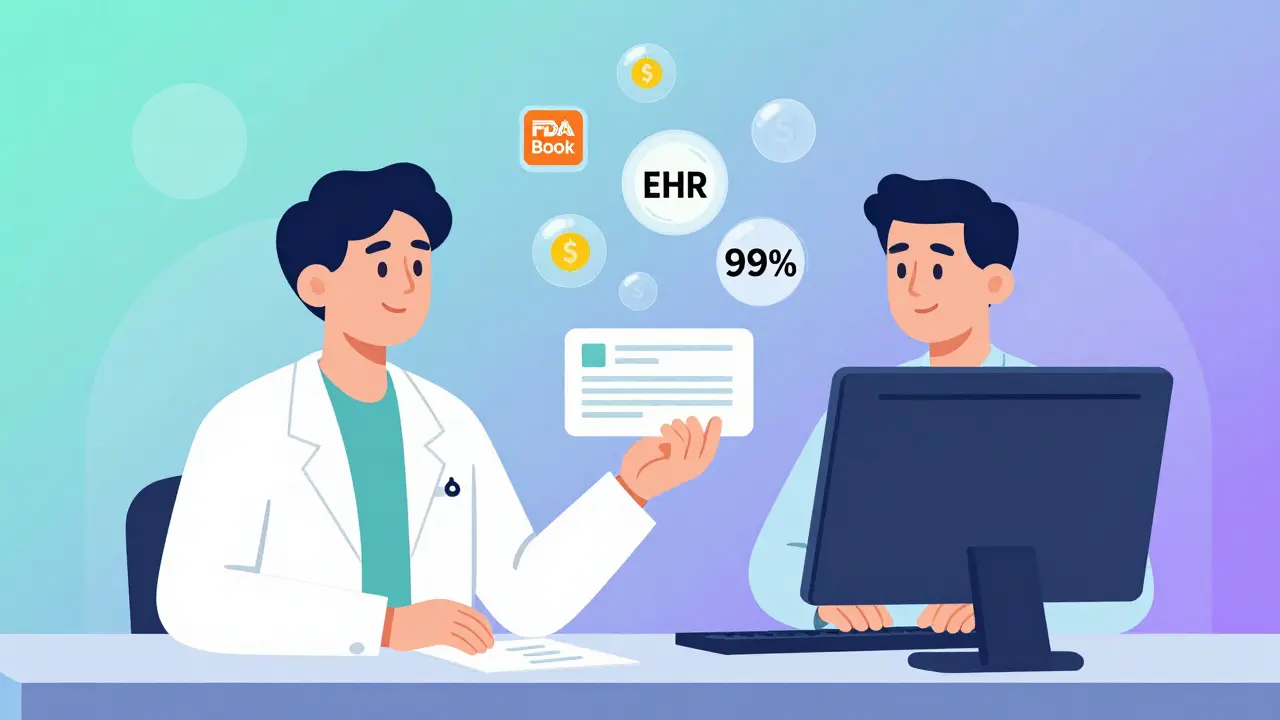
Every substitution must be documented. Not because the government wants a record-but because it protects the patient and the pharmacist. The Centers for Medicare & Medicaid Services (CMS) requires pharmacies to record the generic product dispensed, its NDC code, the manufacturer, and any communication with the prescriber. A 2023 study of over 4,500 pharmacies found that those using EHR-integrated documentation had 27.5% fewer medication errors and 18.3% higher patient satisfaction. Why? Because when the next pharmacist or prescriber looks at the chart, they see the full story: Why the switch was made, who approved it, and what the patient’s response was. The American Medical Association and the American Pharmacists Association jointly published best practices in 2022. They recommend including: date and time of communication, method used (phone, secure message), prescriber name, the recommendation, and the outcome. That’s not bureaucracy-it’s continuity of care.The Future Is Integrated
The Inflation Reduction Act of 2022, which took effect in January 2025, expands pharmacists’ role in Medicare Part D. Now, pharmacists can provide formal medication therapy management services focused on generic optimization. That means more time, more authority, and more accountability. AI tools are helping too. Platforms like PharmAI’s Generic Substitution Assistant analyze prescriptions, pull equivalence data from the Orange Book, and draft communication templates in seconds. Pharmacies using these tools saw recommendation accuracy jump from 76.4% to 94.2% in 2023. The FDA is also updating the Orange Book to include real-world evidence-data from actual patients using generics over time. And the CDC is launching a Generic Medication Safety Network in late 2024, which will alert pharmacists and prescribers to any safety signals tied to specific generic products. This isn’t about replacing brand-name drugs. It’s about using the best tool for the job-safely, wisely, and with clear communication.Can pharmacists substitute generics without the prescriber’s permission?
In 49 states, yes-unless the prescriber has marked ‘dispense as written’ or ‘do not substitute.’ In 17 states, patient consent is also required. Five states limit substitution to specific generics listed in their formularies. Always check your state’s pharmacy board rules.
Are generics really as effective as brand-name drugs?
Yes. The FDA requires generics to meet the same strict standards for strength, purity, and bioequivalence as brand-name drugs. Studies show 98.7% of approved generics fall within 95%-105% of the brand’s absorption rate. A 2018 study of 12.7 million patients found generics improved adherence by 12.4% and reduced hospital admissions by 15.2%.
What should a pharmacist do if a patient has an allergy to an inactive ingredient?
Check the inactive ingredients listed on the generic’s label. If the patient is allergic to an excipient like lactose, dyes, or preservatives, do not substitute. Contact the prescriber to confirm whether a different generic or brand-name version is needed. About 8.7% of substitution issues stem from inactive ingredient reactions.
Why do some prescribers resist generic substitution?
Common reasons include outdated beliefs about efficacy, concerns about complex formulations (like inhalers or extended-release tablets), or fear of patient complaints. A 2023 survey found 37.6% of prescribers expressed concerns, especially for topical and inhaled drugs. Pharmacists can overcome this by providing specific bioequivalence data, cost savings, and references to FDA guidelines.
How can pharmacists improve communication with prescribers?
Use structured communication: contact within 24 hours, cite the Orange Book’s equivalence rating, share cost data, and document the exchange. Use EHR-integrated tools like Surescripts to reduce time and improve accuracy. A 2021 study showed this method increased prescriber acceptance from 57.3% to 82.4%.

Lelia Battle
January 13, 2026 AT 02:11It’s fascinating how much trust we place in systems we don’t understand. The FDA’s bioequivalence standards are rigorously enforced, yet so many still treat generics like second-class medicine. It’s less about science and more about perception-how we assign value to branding, even when the chemical reality is identical.
Pharmacists are the quiet guardians of this balance. They don’t shout. They don’t demand. They cite data, document choices, and quietly correct misinformation. That’s not just professional duty-it’s ethical stewardship.
I’ve seen patients cry because they couldn’t afford their brand-name insulin. Then they got the generic, and two months later, they showed up at the pharmacy smiling, saying they hadn’t missed a dose in years. That’s the real metric-not market share, not profit margins, but human stability.
There’s dignity in cost-effective care. We shouldn’t confuse familiarity with efficacy. The body doesn’t care what’s on the label. It only cares whether the molecule works.
Maybe the real problem isn’t the generics. It’s our collective refusal to let go of the illusion that more expensive equals better.
And yet, we still pay premiums for name-brand painkillers while ignoring that the active ingredient is the same. We’re not just overpaying-we’re reinforcing a broken system.
Pharmacists are trying to fix that, one quiet conversation at a time. We should be thanking them, not doubting them.
Alex Fortwengler
January 14, 2026 AT 04:06LMAO so now pharmacists are doctors? Next they’ll be writing prescriptions and doing surgeries. This whole generic thing is a corporate scam to make big pharma richer by selling you watered-down junk. You think the FDA actually tests these? Nah, they just rubber stamp whatever the big guys send them. I’ve seen people get sick switching to generics-no one talks about that because the media’s bought out.
My cousin took a generic for his seizure med and ended up in the ER. You think that’s a coincidence? Think again. They’re all just trying to cut corners and save a buck while we pay with our health.
jordan shiyangeni
January 15, 2026 AT 20:30It is, without a doubt, one of the most egregious failures of modern healthcare discourse that pharmacists-trained professionals with doctoral degrees and clinical expertise-are routinely dismissed as mere dispensers of pills, when in fact they are the most consistently reliable gatekeepers of therapeutic integrity in the entire system.
The notion that a patient’s adherence improves by 12.4% with generics is not merely statistically significant-it is morally imperative. Yet, we live in a culture where prescribers, often undertrained in pharmacokinetics and swamped by administrative bloat, cling to outdated dogmas as if they were sacred texts.
The Orange Book is not a suggestion. It is a codified, evidence-based, federally mandated taxonomy of therapeutic equivalence. To ignore it is not caution-it is negligence. To dismiss bioequivalence data as ‘just numbers’ is to reject the very foundation of evidence-based medicine.
And let us not forget: the inactive ingredients in generics are not arbitrary. They are carefully selected, FDA-regulated, and tested for stability and compatibility. The 8.7% of substitution issues stemming from excipient allergies? That is not a failure of generics-it is a failure of communication, documentation, and pharmacist vigilance.
The real tragedy is not that generics are underutilized. It is that the medical establishment continues to perpetuate fear, misinformation, and professional arrogance under the guise of ‘patient safety.’
And yet, the data is clear. The science is unambiguous. The only thing standing between patients and optimal care is the stubbornness of those who refuse to update their knowledge.
It is not the pharmacist who is out of touch. It is the prescriber.
And if you still think generics are ‘inferior,’ you owe it to your patients to read the FDA’s Product-Specific Guidance documents before prescribing another brand-name drug.
Abner San Diego
January 16, 2026 AT 02:38Y’all act like this is some revolutionary idea. We’ve been doing this for decades. The only reason it’s getting attention now is because the government’s forcing pharmacies to cut costs. Meanwhile, the real issue is that American doctors are too lazy to learn what’s actually in their own prescriptions.
And don’t get me started on the ‘EHR-integrated tools.’ That’s just another way for tech companies to make money off healthcare. You think some software in Texas knows more about your meds than your own doctor? Please.
Also, why are we letting pharmacists make clinical decisions? That’s not their job. Their job is to fill the script. If the doc says no substitute, then no substitute. End of story. This ‘structured communication’ nonsense is just bureaucracy with a fancy name.
And don’t even get me started on the Inflation Reduction Act. Now we’re gonna let pharmacists ‘manage’ Medicare patients? Next thing you know, they’ll be giving flu shots and writing diabetes plans. This country’s gone off the rails.
Eileen Reilly
January 16, 2026 AT 12:55ok so i just had to switch my anxiety med to generic bc my insurance refused to cover the brand and honestly i was terrified but it worked FINE. like i didn’t even notice a difference. the pharmacist even called my dr and they were like ‘oh yeah i didn’t even know that generic had an A rating’ lol.
also i got a bill for $3 instead of $200 and i cried a little. not because i’m sad, because i’m happy. why is this even a debate? people are choosing between food and meds every day. if the science says it’s the same, just let us take it.
also the ‘inactive ingredient’ thing is real tho. i’m lactose intolerant and i once got a generic that had lactose in it and i was SO sick for 2 days. so yeah, check the label. but also, stop being scared of generics. they’re not magic potions, they’re just cheaper versions of the same thing.
steve ker
January 18, 2026 AT 06:20Pharmacists should not be calling doctors. That is not their role. Doctors know best. This is why America is collapsing. Everyone thinks they are qualified to override expertise. The system is broken because people forget hierarchy. The doctor prescribes. The pharmacist dispenses. That is how it has always been. No need for data. No need for communication. Just follow the order.
Also generics are for poor people. Rich people get the real medicine. That is how it should be.
Audu ikhlas
January 18, 2026 AT 19:47Generics? They use cheap chemicals from China. That’s why people get sick. FDA? They take bribes from big pharma. You think they really test every pill? No. They just look at the paperwork. I know someone who took a generic and his liver failed. No one talks about that because the government is hiding it. You think your life is worth a few dollars? Think again. The system is rigged. We need to go back to American-made drugs only. No more imports. No more generics. Only the best for real Americans.
gary ysturiz
January 20, 2026 AT 05:23This is one of those moments where healthcare actually works the way it should. Pharmacists are stepping up, using science, saving money, and keeping people healthy. That’s not just good practice-it’s heroic.
People think healthcare is about big hospitals and fancy machines. But the real magic? It’s the pharmacist on the other end of the phone, checking the Orange Book, explaining the data, and making sure someone can afford their medicine.
It’s quiet. It’s routine. But it changes lives.
Let’s celebrate that. Let’s train more pharmacists. Let’s give them time. Let’s stop treating them like order-takers. They’re the unsung heroes of everyday medicine.
And if you’re still worried about generics? Talk to your pharmacist. Ask them to show you the data. You’ll be surprised.
Good work, everyone doing this right.
Jessica Bnouzalim
January 20, 2026 AT 09:59YES YES YES!! I’ve been saying this for YEARS!! My grandma switched to generic levothyroxine and her TSH levels stayed PERFECT for 3 years straight-same as the brand!!
And the cost difference? $180/month vs $12/month. That’s not ‘saving money’-that’s keeping people alive.
Also, the part about inactive ingredients? SO IMPORTANT. My aunt had a reaction to a dye in a generic and no one told her to check the label. That’s on us. We need better labeling, clearer warnings, and pharmacists who actually have time to talk.
And the AI tools? YES PLEASE. I wish every pharmacy had them. Why are we still faxing things in 2025??
Pharmacists are the real MVPs. They’re the ones catching errors, explaining things, and fighting for patients when no one else has time.
Let’s give them the respect-and the time-they deserve.
Also, if your doctor says ‘no substitute’ without knowing why… ask them why. Maybe they just haven’t looked at the data yet. 😊