When your body processes medications, one of the most important systems at work is the CYP3A4, a liver enzyme responsible for breaking down more than half of all prescription drugs. Also known as cytochrome P450 3A4, it’s the main gatekeeper that decides how much of a drug enters your bloodstream and how fast it leaves. If CYP3A4 is slowed down or boosted by another drug, food, or supplement, your medication can either build up to toxic levels or get cleared too quickly—making it useless.
This isn’t theoretical. CYP3A4 inhibitors, like grapefruit juice, clarithromycin, or certain antivirals can turn a safe dose of a blood pressure pill into a life-threatening drop in pressure. On the flip side, CYP3A4 inducers, such as rifampin or St. John’s wort can make your birth control, cholesterol drug, or painkiller stop working altogether. These aren’t rare edge cases—they happen every day, often without patients or even doctors realizing why symptoms suddenly changed.
The real danger? Many of these interactions involve common drugs. A simple antibiotic like clarithromycin can spike levels of amlodipine or simvastatin to dangerous highs. Antivirals for HIV or hepatitis C are packed with CYP3A4 interactions, which is why their labels are so dense. Even over-the-counter supplements like goldenseal or pomegranate juice can interfere. You don’t need to memorize every drug on the planet—just know that if you’re taking more than one medication, especially for chronic conditions like high blood pressure, diabetes, or depression, CYP3A4 is likely playing a role.
What you’ll find below are real-world examples of how this enzyme affects everything from pain meds to cholesterol drugs to antivirals. Some posts show you exactly which combinations to avoid. Others explain why a generic version might suddenly stop working—or why your doctor switched you from one antibiotic to another. You’ll see how grapefruit juice isn’t just a warning on a label, but a real metabolic bomb. And you’ll learn how to spot the signs when your meds aren’t behaving as they should—before something goes wrong.
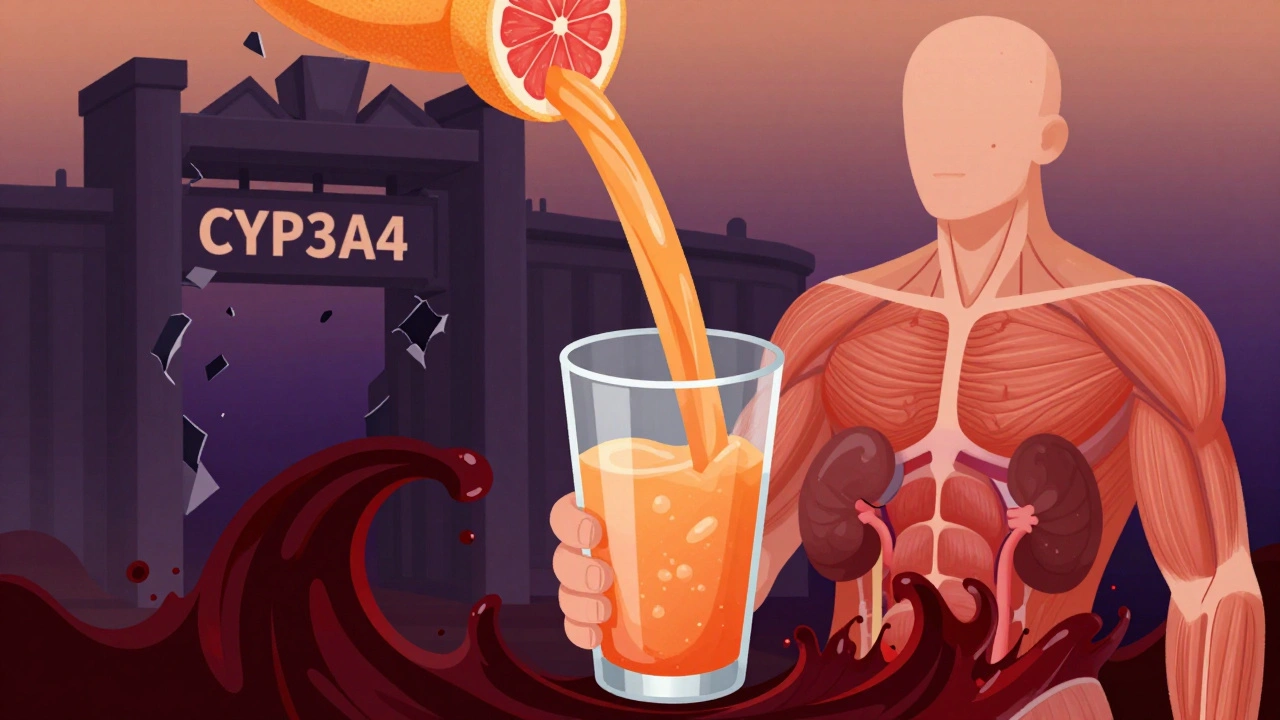
Grapefruit juice can dangerously increase simvastatin levels in your blood, raising the risk of muscle damage and kidney failure. Learn how much is unsafe, which statins are safer, and what to do if you're currently taking this combination.
View More