
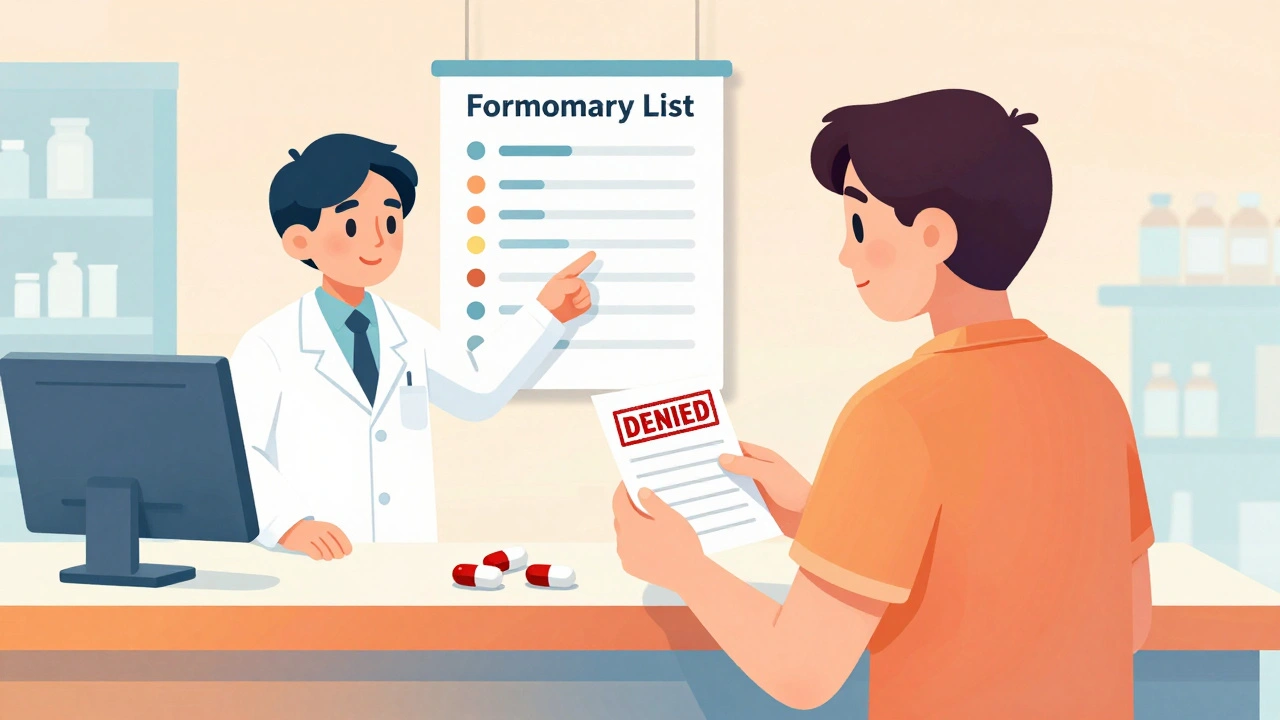
When your doctor prescribes a generic medication and the pharmacy says it’s not covered, it’s not a mistake - it’s a non-formulary generic. This means your insurance plan doesn’t list that specific drug on its approved list, even though it’s the same active ingredient as a covered version. You’re not alone. In 2022, over 12.7% of all generic prescriptions were denied because they weren’t on the formulary. That’s more than one in eight. And for people managing chronic conditions like diabetes, Crohn’s disease, or epilepsy, this isn’t just an inconvenience - it’s a health risk.
Why does this happen?
Insurance plans create formularies to control costs. They pick a few generic versions of each drug - usually the cheapest ones - and cover those. But there are dozens of generic manufacturers for most medications. Just because one generic is covered doesn’t mean all are. For example, your plan might cover metformin made by Teva but not the one made by Mylan, even though they’re chemically identical. The difference? Price negotiations. Your insurer struck a deal with Teva. Mylan didn’t. This isn’t about safety or effectiveness. It’s about contracts. And when your doctor prescribes the non-covered version - maybe because you’ve had side effects with the covered one, or your body just responds better to this brand - you hit a wall.What you can do: the exceptions process
Federal law requires every insurance plan - including Medicare Part D and most commercial plans - to have a formal way to appeal these denials. It’s called the coverage exception request. This isn’t a loophole. It’s your right. Here’s how it works in practice:- Get the denial in writing. The pharmacy should give you a notice explaining why the drug isn’t covered. Don’t accept a verbal no.
- Call your doctor. Your prescriber must complete a formal request form. This isn’t just a signature - they need to explain why the non-formulary drug is medically necessary.
- Document the clinical reason. Don’t say “I don’t feel well on the other one.” Say: “Patient experienced severe diarrhea and cramping with Formulary Generic A. Switched to Non-Formulary Generic B in January 2023. Fecal calprotectin dropped from 420 to 85 over 8 weeks. No other generic in class has produced this response.” Specifics matter.
- Submit the request. Most plans allow online submission, fax, or mail. Keep a copy and a tracking number.
Timeframes and urgency
You don’t have to wait weeks. If your condition is stable, the plan has 72 business hours to respond. But if you’re at risk - say, you’re running out of medication and your condition could flare - you can ask for an expedited review. For urgent cases, they must respond within 24 hours. And here’s something most people don’t know: if your request is for an urgent situation, the plan is legally required to give you a 72-hour emergency supply while they review your case. But 37% of plans skip this step. If they refuse, file a complaint with your state insurance department.Approval rates - and why they vary
The good news? Most properly documented requests get approved. In 2022, 68.4% of non-formulary exception requests were approved on the first try. For protected drug classes like anticonvulsants or insulin, approval rates hit 95% or higher. But not all drugs are treated equally. Gastrointestinal meds like mesalamine? Only 52% approval rate. Why? Insurers think there are “enough” alternatives - even when patients report clear differences in side effects or effectiveness. That’s where detailed clinical data makes the difference. A patient with ulcerative colitis on Reddit shared her story: she submitted four times before approval. Each time, she added more lab results - A1c levels, inflammatory markers, symptom logs. The fifth request included her doctor’s note: “Patient has failed three formulary alternatives. Only this formulation maintains mucosal healing.” Approved.
What happens if you’re denied?
If your first request is turned down, you can appeal internally. You have 60 days from the denial date to file. The plan must respond within 30 days. If they say no again, you can request an external review by an independent third party. This step is free, and the decision is binding. Don’t give up. The Crohn’s & Colitis Foundation found that 58% of initial denials were overturned on appeal. That’s more than half. You’re not fighting the system - you’re using the system as it’s meant to be used.Costs - and how to reduce them
Even if your exception is approved, you might still pay more. Here’s the catch: if your drug is approved as an exception, you can’t ask to move it to a lower cost tier. You’re stuck with the non-formulary price. SmithRx found patients pay 3.7 times more for non-formulary generics - sometimes $400 a month instead of $15. So what can you do?- Ask your doctor if a different generic from the same manufacturer is covered. Sometimes, switching the brand (not the drug) works.
- Use GoodRx or SingleCare to compare cash prices. Sometimes, paying out of pocket is cheaper than your copay.
- Ask about patient assistance programs. Many generic manufacturers offer free or low-cost programs for people who can’t afford their meds.
Who’s most affected?
Endocrinologists and gastroenterologists report the highest denial rates. That’s because their patients often need specific formulations - not just any generic. A diabetic might respond better to one brand of metformin ER. Someone with IBD might need a specific mesalamine coating to avoid flare-ups. And it’s not just seniors. Commercial plans are getting stricter. In 2023, 17 states passed laws to tighten exceptions rules - but most only added minor improvements. California requires 48-hour reviews for urgent cases. Federal law only requires 24. New York is pushing for 24-hour reviews even for non-urgent cases.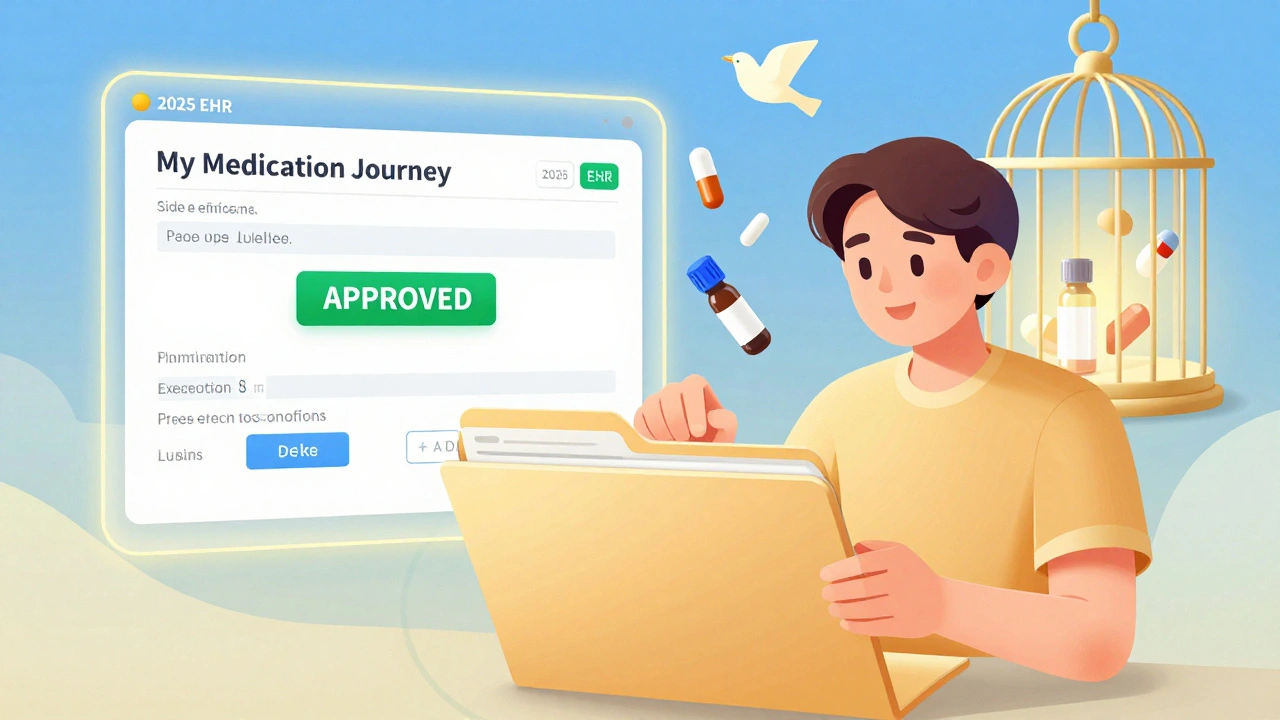
What’s changing in 2025?
Good news: CMS is making the process smarter. Starting in 2023, they rolled out standardized clinical criteria for common conditions. Now, doctors get clear guidance on what data to include - like A1c levels for diabetes or fecal calprotectin for IBD. Since then, approval rates have jumped 22%. By 2025, CMS plans to integrate exception requests directly into electronic health records. That means less paperwork, faster decisions, and fewer errors. Also, the Inflation Reduction Act now requires automatic approval for certain generics - insulin, naloxone, and some seizure meds. No paperwork needed.What to avoid
Don’t skip doses. 38% of patients reduce or stop their meds when they can’t afford them. That leads to ER visits, hospitalizations, and higher long-term costs. Don’t assume your doctor will handle it. Most physicians spend over 13 hours a week on prior authorizations and exceptions. They’re overwhelmed. You need to be the advocate. Don’t wait until your prescription runs out. Start the process as soon as you’re denied. The clock starts ticking on day one.Final tip: Keep a file
Save every denial letter, every doctor’s note, every lab result. Create a folder - digital or physical - with your medication history. Include:- Names of all generics you’ve tried
- Side effects you experienced
- Dates of flare-ups or relapses
- Lab values that improved on your preferred drug
What is a non-formulary generic?
A non-formulary generic is a generic version of a medication that your insurance plan does not list on its approved drug list. Even though it contains the same active ingredient as a covered generic, it’s not included in the plan’s contract with manufacturers. This means you’ll be denied coverage unless you successfully appeal through the plan’s exceptions process.
Can I just pay out of pocket instead of appealing?
You can, but it’s often not the best choice. Non-formulary generics can cost 3 to 4 times more than formulary ones - sometimes hundreds of dollars a month. For example, a generic metformin ER that normally costs $15 might be priced at $417 without coverage. Use tools like GoodRx to compare cash prices. Sometimes paying cash is cheaper than your copay. But if you’re on a fixed income or need the drug long-term, the exceptions process can save you thousands.
How long does the appeals process take?
For standard requests, plans have 72 business hours to respond. For urgent cases - like if you’re running out of medication or your condition is worsening - they must respond within 24 hours. If your request is denied, you can file an internal appeal within 60 days, which takes up to 30 days to resolve. If that fails, an external review can take another 10-14 days. Plan ahead. Don’t wait until your pills run out.
Do I need a lawyer to appeal?
No. You don’t need a lawyer. The process is designed for patients to handle themselves. What you need is a supportive doctor and clear documentation. Many patient advocacy groups - like the Crohn’s & Colitis Foundation or Patients Rising - offer free templates and step-by-step guides. Focus on clinical evidence: lab results, symptom logs, past treatment failures. That’s what gets approvals.
Why do some drugs get approved more easily than others?
Insurers prioritize drugs with fewer alternatives or those tied to serious health risks. Anticonvulsants, insulin, and naloxone have high approval rates because there’s little room for error. Gastrointestinal drugs like mesalamine have lower approval rates because insurers believe “any” version will work - even when patients report clear differences. Your doctor’s detailed explanation of why alternatives failed is what turns the tide.
Can I switch to a different insurance plan to avoid this?
You can only switch during open enrollment (November-December) or if you qualify for a special enrollment period - like losing other coverage or moving. Don’t wait for a denial to change plans. Before you enroll, check the formulary. Search for your exact generic drug by name and manufacturer. If it’s not listed, assume it won’t be covered. Some plans have better formularies than others - especially Medicare Advantage plans with pharmacy networks.





Katie Harrison
December 9, 2025 AT 14:11Wow. This is the most comprehensive, practical guide I’ve seen on non-formulary generics. I’ve been through this with my son’s epilepsy meds-four denials, three appeals, and finally approval after submitting his EEG results and seizure logs. The 24-hour emergency supply rule? Life-saving. Thank you for spelling this out so clearly.
William Umstattd
December 10, 2025 AT 04:34So insurance companies are just playing word games with life-saving drugs? Shocking. But not surprising. They’d rather you die slowly than lose a few cents per pill.
Evelyn Pastrana
December 10, 2025 AT 07:39Let me get this straight-you’re telling me I can’t get my $15 metformin because the manufacturer didn’t pay off the insurer? 😂
Chris Marel
December 10, 2025 AT 13:39This hits hard. I’m from Nigeria, and here, even branded meds are out of reach. But the idea that even generics-cheaper versions of already cheap drugs-are being denied… it’s a global crisis disguised as a bureaucratic hiccup. Thank you for writing this.
Steve Sullivan
December 11, 2025 AT 23:04Okay but… why do doctors even prescribe the non-formulary ones if they know it’s gonna be a nightmare? I get it if you’ve got side effects, but like… why not just start with the covered one? Save everyone the headache. Also, GoodRx saved my life last year. $17 for 90 pills vs $380 copay. I’m not even mad anymore.
ian septian
December 13, 2025 AT 06:28Start the process the day you’re denied. Keep records. Use GoodRx. Don’t skip doses. You got this.
Asset Finance Komrade
December 15, 2025 AT 05:15While I appreciate the earnestness of this piece, one must consider the broader economic architecture of pharmaceutical monopolies. The formulary system, however imperfect, is a necessary friction in a market where price signals are distorted by third-party payers. To advocate for unfettered access to every generic variant is to ignore the fundamental inefficiencies created by fragmented demand. The real solution lies in centralized formulary standardization-perhaps under a public option. Until then, we are merely rearranging deck chairs on the Titanic.
Arun Kumar Raut
December 15, 2025 AT 16:28As someone who’s helped 3 families in India navigate this exact issue, I can say: the key is persistence + documentation. Even if your doctor is busy, just ask them to write one line: 'Patient failed all formulary alternatives.' That’s often enough. And yes, patient programs exist-many are hidden but real. I made a simple Google Sheet template for this. DM me if you want it.
precious amzy
December 16, 2025 AT 22:01How quaint. A patient advocacy manual written in the vernacular of the uninitiated. One must ask: does the market not reflect the true value of pharmaceutical innovation? And if a drug is deemed non-formulary, is it not because the insurer, in its infinite wisdom, has discerned a clinical inferiority? The notion that all generics are functionally identical is a myth propagated by those who misunderstand pharmacokinetics. One does not equate chemical identity with therapeutic equivalence.
Carina M
December 18, 2025 AT 15:57It is profoundly irresponsible to suggest that patients should appeal every denial. The healthcare system is not designed to be gamed. If a drug is non-formulary, it is because it is not clinically superior. To encourage patients to waste the time of physicians and insurers with subjective symptom logs is not advocacy-it is entitlement. Those who cannot afford their medication should seek charitable aid-not litigate their prescriptions.
Elliot Barrett
December 18, 2025 AT 19:32This whole post is just a long ad for patient advocates and GoodRx. Nobody cares. Just pay cash or shut up. Also, your doctor should’ve prescribed the covered one in the first place. This is why healthcare is broken.