
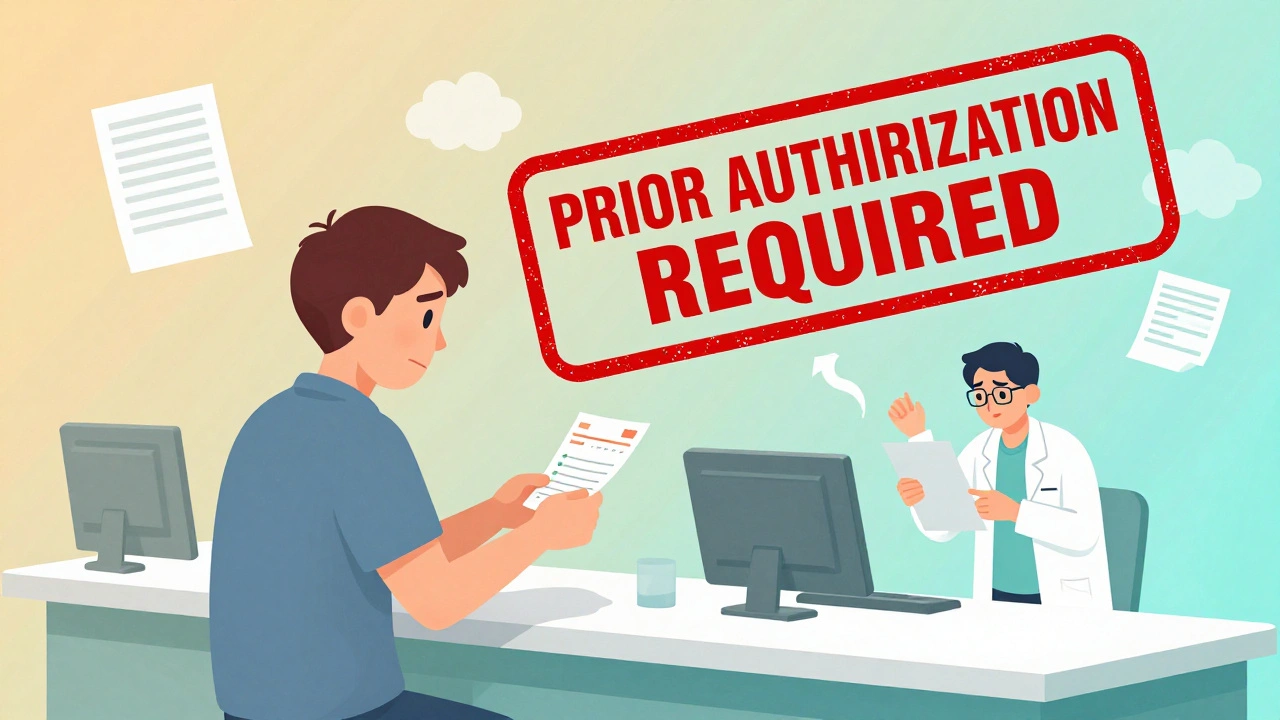
Imagine you’ve been taking generic metformin for years to manage your type 2 diabetes. Your doctor writes the prescription, you walk to the pharmacy, and then-boom-you’re told the pharmacy can’t fill it. Not because it’s out of stock. Not because it’s too expensive. But because your insurance company needs approval before they’ll pay for it. Even though it’s a generic drug that costs pennies compared to brand-name alternatives.
This isn’t a glitch. It’s becoming routine.
Generics make up about 90% of all prescriptions filled in the U.S., yet nearly 1 in 5 now require prior authorization before insurance will cover them. That’s up from just 5% in 2018. And it’s happening for drugs like lisinopril, levothyroxine, and atorvastatin-medications doctors have been prescribing for decades as first-line treatments. Why? Because insurance companies and pharmacy benefit managers (PBMs) are applying the same bureaucratic rules meant for expensive specialty drugs to the cheapest, most common pills on the shelf.
How Prior Authorization Works (Even for Cheap Drugs)
Prior authorization is supposed to be a safety net. Originally, it was designed to stop overprescribing of high-cost or risky medications. But now, it’s being used as a cost-control tool-even for generics that save patients and insurers money.
Here’s how it plays out: Your doctor prescribes a generic medication. The pharmacy’s system checks your insurance plan’s formulary and sees a red flag: “Prior Authorization Required.” The pharmacy notifies your doctor. Now, your doctor-or their staff-has to fill out paperwork. This could mean submitting lab results, diagnostic codes, proof that other generics didn’t work, or even a letter explaining why this specific generic is necessary.
Some insurers accept electronic submissions through platforms like CoverMyMeds. Others still require faxes or phone calls. The average physician spends 43 hours a week just handling prior authorizations. About 38% of those are for generic drugs. That’s nearly half a workweek spent on paperwork instead of seeing patients.
Approval times vary wildly. Cigna says 5-10 business days. Mayo Clinic says “a few days to a few weeks.” If it’s urgent, you can request an expedited review-but even then, it can take 72 hours. And if your request gets denied? You start the whole process again, often with more documentation.
Why Are Generics Being Targeted?
It seems backwards, right? Generics are cheaper. They’re safe. They’re proven. So why put them through the same hoops as a $10,000 cancer drug?
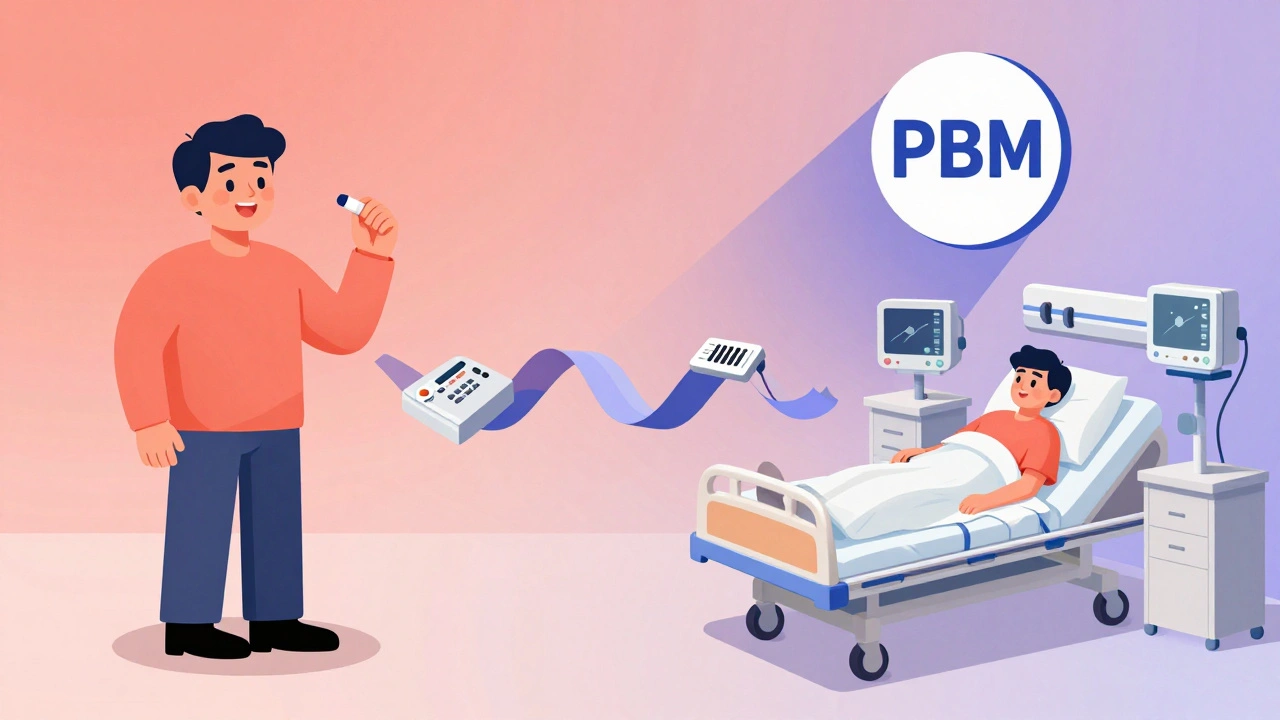
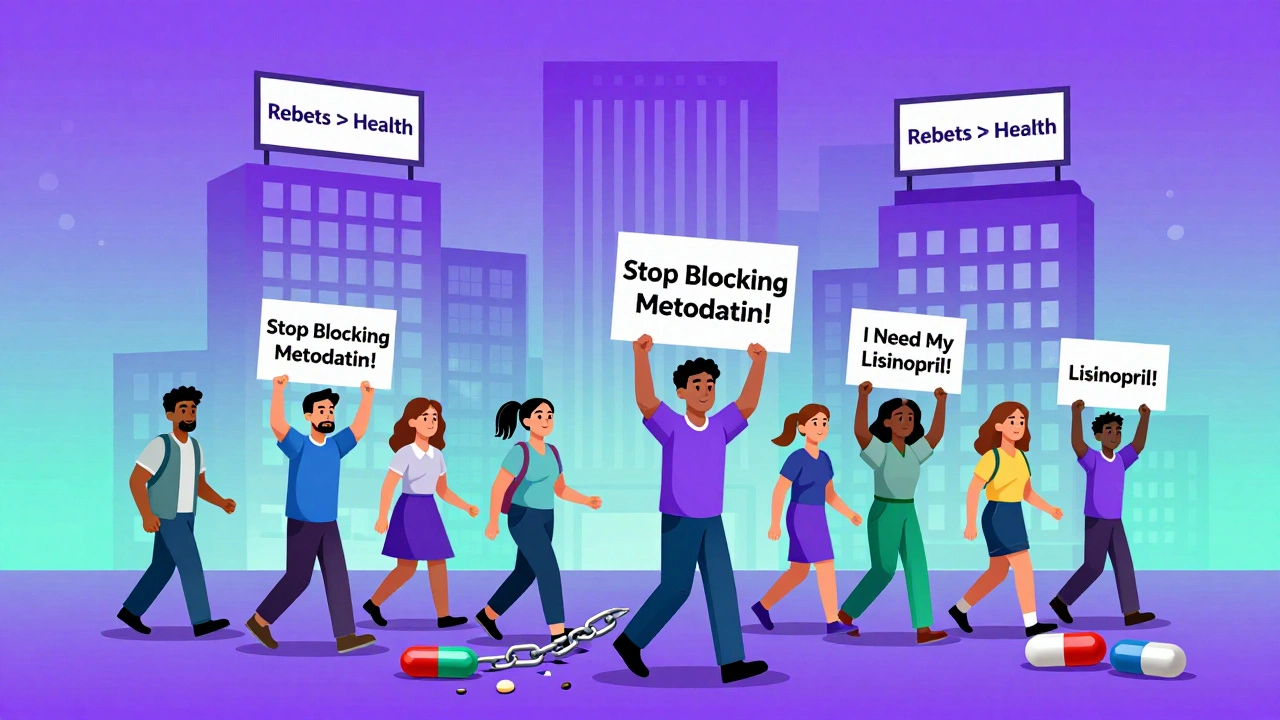
The answer lies in how PBMs make money. PBMs negotiate rebates with drug manufacturers. Some brand-name companies pay huge rebates to stay on the formulary. To make those rebates work, PBMs need to limit how often generics are used-even when they’re the best choice. For example, if your plan has a deal with a brand-name statin manufacturer, they might require you to try a different generic first, even if your doctor says it won’t work for you.
Some insurers also use prior authorization to enforce “step therapy.” That means you have to try one drug before moving to another-even if the first one is known to be ineffective for your condition. A patient with high blood pressure might be forced to try a generic beta-blocker before getting the ACE inhibitor their doctor prescribed, even though the beta-blocker has a higher risk of side effects for their age or medical history.
Specialty generics face the highest barriers. In oncology, 35% of generic chemotherapy drugs require prior authorization. In heart disease, it’s 12%. For common conditions like thyroid issues or depression, it’s still rising.
Real People, Real Delays
It’s not just about inconvenience. Delays in filling prescriptions can hurt your health.
A 2024 Kaiser Family Foundation case study followed a patient with type 2 diabetes who was denied generic metformin for 14 days due to prior authorization. During that time, their blood sugar rose from 6.8% to 8.2%. That’s not just a number-it’s increased risk of nerve damage, kidney problems, and vision loss.
On Reddit’s r/healthinsurance, hundreds of people share stories: “My thyroid med was denied for two weeks-I felt like I was dying.” “I had to pay $120 out of pocket for lisinopril because my insurance wouldn’t approve it.” “My kid’s ADHD medication is a generic. They made us wait 10 days. He couldn’t focus in school. We missed work.”
Doctors are seeing it too. One provider on Reddit wrote: “My clinic spends 17.3 hours a week on prior auths for generics. That’s a full-time employee’s salary wasted on paperwork.”
The American Medical Association found that 24% of physicians have seen patients hospitalized because of delays caused by prior authorization. That’s not hypothetical. That’s real people in real ERs because their insurance blocked a $5 pill.
Who’s Doing This-and Why?
Not all insurers treat generics the same way.
According to 2024 data from the Formulary Review Institute:
- Aetna requires prior authorization for 25% of generic medications
- UnitedHealthcare: 22%
- Cigna: 20%
- Humana: 18%
Some states are pushing back. California’s SB 1024, effective January 2025, bans prior authorization for 47 essential generic drugs-including those for diabetes, high blood pressure, asthma, and depression. Medicaid programs in 34 states now have similar restrictions.
At the federal level, the 2024 Improving Seniors’ Timely Access to Care Act requires Medicare Advantage plans to use electronic prior authorization by 2026 and respond to urgent requests within 72 hours.
In June 2025, six major insurers-including Aetna, UnitedHealthcare, Cigna, and Humana-announced a joint effort to eliminate prior authorization for 12 common generic drug classes by January 2026. These include statins, ACE inhibitors, metformin, and levothyroxine. It’s a start. But it’s still just a drop in the bucket.
What You Can Do
If your generic medication is being held up:
- Ask your doctor if they’ve submitted the prior authorization. Many offices don’t notify patients until it’s denied.
- Request an expedited review if your condition is unstable. You have the right to ask for this.
- Get documentation-lab results, past prescriptions, doctor’s notes. If it’s denied, appeal with this evidence. The Crohn’s & Colitis Foundation says 67% of denials are overturned with better paperwork.
- Check your formulary online. Your insurer’s website should list which generics require prior authorization. If yours isn’t listed but you’re still being blocked, ask for a written explanation.
- Ask about alternatives. Sometimes switching to another generic in the same class avoids the hurdle. Not always, but sometimes.
- Call your insurer. Ask for the specific reason for the denial. Often, it’s a coding error or outdated policy.
And if you’re on Medicare or Medicaid, know your rights. These programs are slowly tightening rules on prior authorization. You’re not powerless.
The Bigger Picture
Generic drugs save the U.S. healthcare system an estimated $370 billion a year. They’re the backbone of affordable care. Yet, we’re treating them like dangerous, high-risk drugs.
The system is broken. Prior authorization for generics doesn’t control costs-it increases them. Delays lead to complications. Complications lead to hospital visits. Hospital visits cost far more than the $5 pill you were denied.
Experts agree: this isn’t healthcare. It’s administrative waste. The American College of Physicians says prior authorization for generics should only be used in “narrowly defined clinical scenarios.” That means: rarely.
And the tide is turning. More states are banning it. More insurers are backing down. More patients are speaking up. The question isn’t whether this practice will end-it’s how long it will take before your next prescription isn’t held hostage by a system that’s supposed to help you get better.
Why does my insurance require prior authorization for a generic drug?
Even though generics are cheaper, some insurance companies and pharmacy benefit managers (PBMs) use prior authorization to control which drugs are prescribed. This often happens because brand-name drug manufacturers pay rebates to stay on the formulary, and PBMs limit generic use to protect those deals. Some insurers also use it to enforce step therapy, forcing patients to try one drug before another-even when the first isn’t ideal.
What should I do if my generic medication is denied?
First, ask your doctor to submit an appeal with clinical documentation-like lab results, past prescriptions, or notes explaining why the generic is necessary. Many denials are overturned with better paperwork. You can also request an expedited review if your condition is unstable. If all else fails, contact your insurer directly and ask for a written explanation of the denial.
How long does prior authorization for generics usually take?
Approval times vary. Most insurers say 5-10 business days for standard requests. For urgent cases, you can request expedited review, which should be processed within 72 hours. But in practice, delays can stretch to weeks depending on your insurer’s responsiveness and how complete your paperwork is. Electronic submissions through platforms like CoverMyMeds are faster than fax or phone.
Are there any generic drugs that never need prior authorization?
Yes. In some states like California, prior authorization is banned for 47 essential generic drugs-including metformin, levothyroxine, lisinopril, and atorvastatin. Medicare Advantage plans are also required to eliminate prior authorization for many generics by 2026. Additionally, Medicaid programs in 34 states restrict prior authorization for common generic medications. Check your state’s laws and your plan’s formulary for details.
Can I pay out of pocket if prior authorization is denied?
Yes. You can always pay for your medication yourself, even if insurance denies coverage. Many generics cost under $10 for a 30-day supply at pharmacies like Walmart or Costco. If you’re paying out of pocket, ask the pharmacy if they offer discount programs or coupons. Some manufacturers also have patient assistance programs for low-income individuals.
If you’re on a chronic medication and keep hitting roadblocks, keep track of every denial, every delay, and every conversation with your insurer. Your experience matters-and the more people speak up, the faster the system changes.

Ashley Elliott
December 5, 2025 AT 05:41My mom had to wait three weeks for her levothyroxine last year-she was exhausted, depressed, and her TSH went through the roof. She’s 72. This isn’t about cost control. It’s about bureaucracy winning.
Chad Handy
December 6, 2025 AT 07:54Look, I get it-insurance companies are profit-driven entities that operate on a model where the more friction you introduce between a patient and a low-cost medication, the more leverage they have to push higher-margin alternatives, often through rebate structures that incentivize formulary placement over clinical appropriateness, and when you combine that with pharmacy benefit managers who are essentially middlemen with zero accountability and whose compensation is tied to the volume of brand-name drugs dispensed, you end up with a system that actively punishes patients for using the cheapest, safest, most evidence-based options available, which is not just absurd, it’s morally indefensible, and yet we keep pretending this is healthcare instead of corporate logistics dressed in white coats.
Ollie Newland
December 7, 2025 AT 16:20It’s the PBMs, no question. They’re the hidden architects of this mess. Rebate arbitrage is the engine-brand manufacturers pay them to suppress generics so they can maintain market share. It’s not the insurers’ fault per se, it’s the middlemen gaming the system. And doctors? They’re drowning in paperwork while the system calls it ‘utilization management.’
zac grant
December 8, 2025 AT 08:22Big picture: Prior auth for generics is like putting a lock on the water faucet because someone once drank too much. It’s not just inefficient-it’s dangerous. We’ve got data showing hospitalizations spike after delays. The AMA says it’s a public health crisis. If your insurer blocks metformin for 10 days, you’re not saving $5-you’re risking kidney damage, neuropathy, amputations. That’s not cost control. That’s negligence dressed as policy.
michael booth
December 9, 2025 AT 02:32Thank you for this comprehensive breakdown. The systemic inefficiencies outlined here are not merely administrative-they represent a fundamental misalignment between financial incentives and patient outcomes. I urge all readers to document every delay and formally report incidents to their state insurance commissioner. Legislative change is possible when voices are consistent and data-driven.
Jordan Wall
December 9, 2025 AT 09:14OMG this is so 2020. PBMs are literally the reason why healthcare feels like a Kafka novel. Like, I get it, they’re ‘negotiating rebates’ but bro, it’s a $3 pill for hypertension. Why am I submitting a 12-page form to prove I’m not a robot? Also, why does CoverMyMeds still use fax? Are we in 1998? 🤦♂️
Shofner Lehto
December 11, 2025 AT 00:54I’ve been a pharmacist for 18 years. I’ve seen this get worse every year. The worst part? Patients blame us. We’re just the messengers. We don’t make the rules. We just have to tell you your $4 med is on hold because someone in a call center in Ohio didn’t get the right code entered. It breaks my heart.
Jake Deeds
December 11, 2025 AT 15:09Let’s be real: this is the result of corporate greed disguised as ‘risk management.’ They’re not protecting patients-they’re protecting profits. And the fact that they think we’re too stupid to notice? That’s the real insult. If you’re still using insurance that does this, switch. There are options. You’re not powerless. Stop being nice. Start demanding better.
George Graham
December 12, 2025 AT 16:30I work with a lot of elderly patients. One of them missed her atorvastatin for 17 days because of prior auth. Her cholesterol spiked. She had a mild stroke. She didn’t die-but she lost the ability to drive. This isn’t about money. It’s about dignity. We treat a $5 pill like it’s a controlled substance because someone’s bonus depends on it. That’s not healthcare. That’s cruelty with a spreadsheet.
John Filby
December 14, 2025 AT 14:59My dad’s on lisinopril. Got denied. We called the insurer. They said ‘formulary change.’ We checked the website-still listed as covered. They had a typo in their system. Took 3 weeks to fix. We paid $110 out of pocket. Now I have screenshots of every email. If you’re getting denied, document everything. They hate paper trails.