
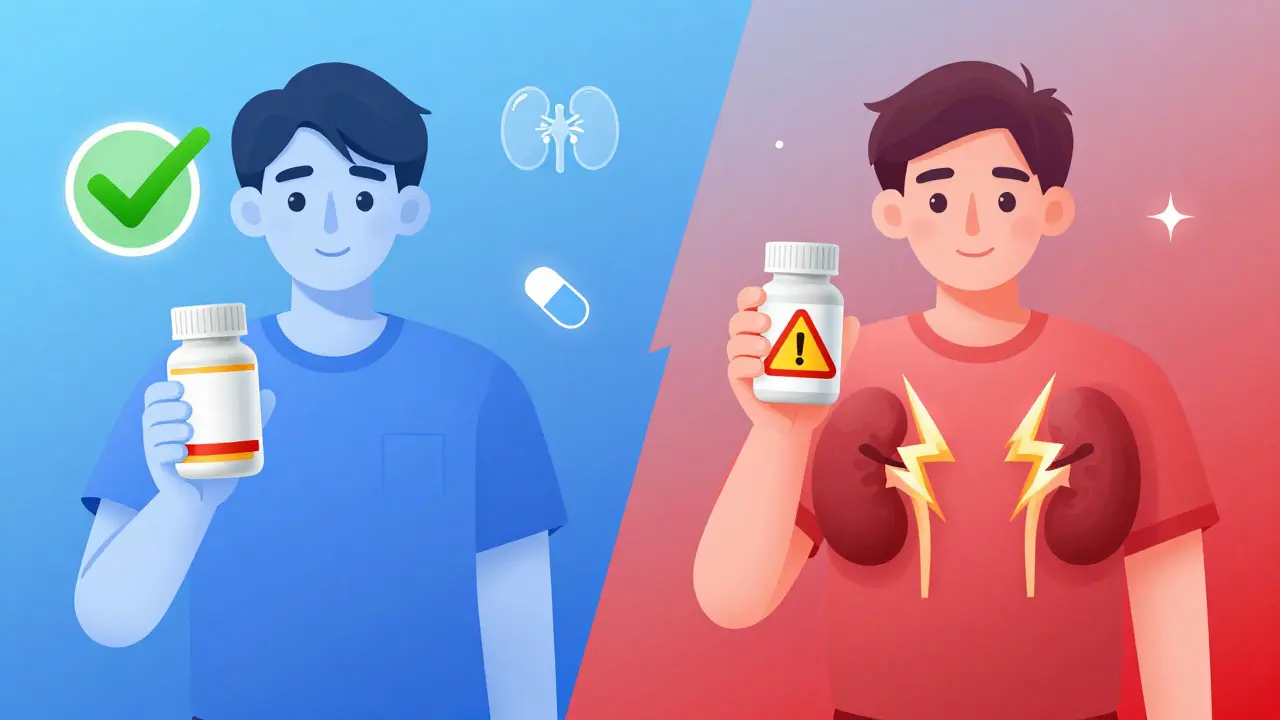
Lithium-NSAID Toxicity Risk Calculator
This tool helps you understand your risk of lithium toxicity when taking NSAIDs. Lithium toxicity can be life-threatening and lead to permanent kidney damage. Use this calculator to assess your risk and make informed decisions about pain management.
Risk Factors
Your Risk Assessment
Recommended Actions:
- Do not take NSAIDs while on lithium
- Use acetaminophen (Tylenol) for pain or fever
- Always consult your doctor before taking any new medication
- Regular kidney function monitoring is essential
When you're managing bipolar disorder with lithium, even a simple over-the-counter pain reliever can turn dangerous. Many patients don’t realize that taking ibuprofen, naproxen, or other common NSAIDs while on lithium can trigger life-threatening toxicity - not because of an allergic reaction or overdose, but because of a quiet, predictable drug interaction that silently builds up in the kidneys. This isn’t a rare edge case. It’s one of the most dangerous and frequently overlooked drug interactions in modern medicine.
How Lithium and NSAIDs Work Together to Harm the Kidneys
Lithium has been used for over 50 years to stabilize mood in bipolar disorder. It’s effective, but it’s also narrow in its safety window. Your body needs to keep lithium levels tightly controlled - too little and your mood crashes; too much and you risk seizures, confusion, tremors, or even coma.
NSAIDs like ibuprofen and naproxen work by blocking enzymes called COX-1 and COX-2. These enzymes help produce prostaglandins, which keep blood flowing to your kidneys. When NSAIDs block them, your kidneys get less blood. That sounds minor - until you learn that lithium is cleared almost entirely by your kidneys. Less blood flow means less lithium gets flushed out. Studies show that NSAIDs can reduce lithium clearance by 25% to 60%. In just 48 hours, your lithium levels can spike into toxic range.
But it’s worse than that. Lithium itself damages kidney cells over time. It interferes with a protein called GSK-3β, leading to cell stress and scarring. NSAIDs add another layer: they starve the kidneys of oxygen by reducing blood pressure in the filtering units. Together, they’re a one-two punch that accelerates kidney damage. A 2023 JAMA Network Open study found that people taking both drugs had a 3.2 times higher risk of acute kidney injury than those on lithium alone - and the highest danger was in the first 30 days after starting the NSAID.
Not All NSAIDs Are Created Equal
Some NSAIDs are far more dangerous than others when mixed with lithium. Indomethacin, often used for gout or arthritis, can boost lithium levels by 40% to 60%. Piroxicam and naproxen are next in line, increasing levels by 25% to 35%. Even ibuprofen - the most commonly used NSAID - can raise lithium levels by 20% to 30%.
Aspirin and celecoxib are the exceptions. Aspirin barely affects lithium levels, and celecoxib, marketed as a “kidney-friendly” NSAID, still increases lithium by 10% to 15% in people with existing kidney issues. That’s not safe - it’s just less dangerous. The myth that celecoxib is safe for lithium users is widespread and deadly.
Acetaminophen (Tylenol) is the only over-the-counter painkiller that doesn’t interfere with lithium. It doesn’t affect kidney blood flow or lithium clearance. For patients on lithium, acetaminophen is the only recommended first-line option for pain or fever - up to 3,000 mg per day to avoid liver damage.
Who’s at the Highest Risk?
Age matters. People over 65 are at the greatest risk. Kidney function naturally declines with age. A 70-year-old with an eGFR of 55 mL/min/1.73 m² - already in the “mildly impaired” range - can go from stable to toxic lithium levels within days of taking an NSAID.
So are people with diabetes, high blood pressure, or heart failure. These conditions already strain the kidneys. Adding lithium and NSAIDs is like overloading a circuit. A 2021 study found that patients with preexisting kidney disease had a 5-fold higher risk of severe toxicity compared to those with normal kidney function.
And then there’s the prescribing gap. A 2023 Health Affairs study found that only 58% of primary care doctors knew NSAIDs were high-risk for lithium users. Many patients get an NSAID prescription from a dentist, orthopedist, or urgent care provider who has no idea they’re on lithium. In one case series, 82% of lithium toxicity hospitalizations were linked to NSAIDs prescribed by non-psychiatrists.
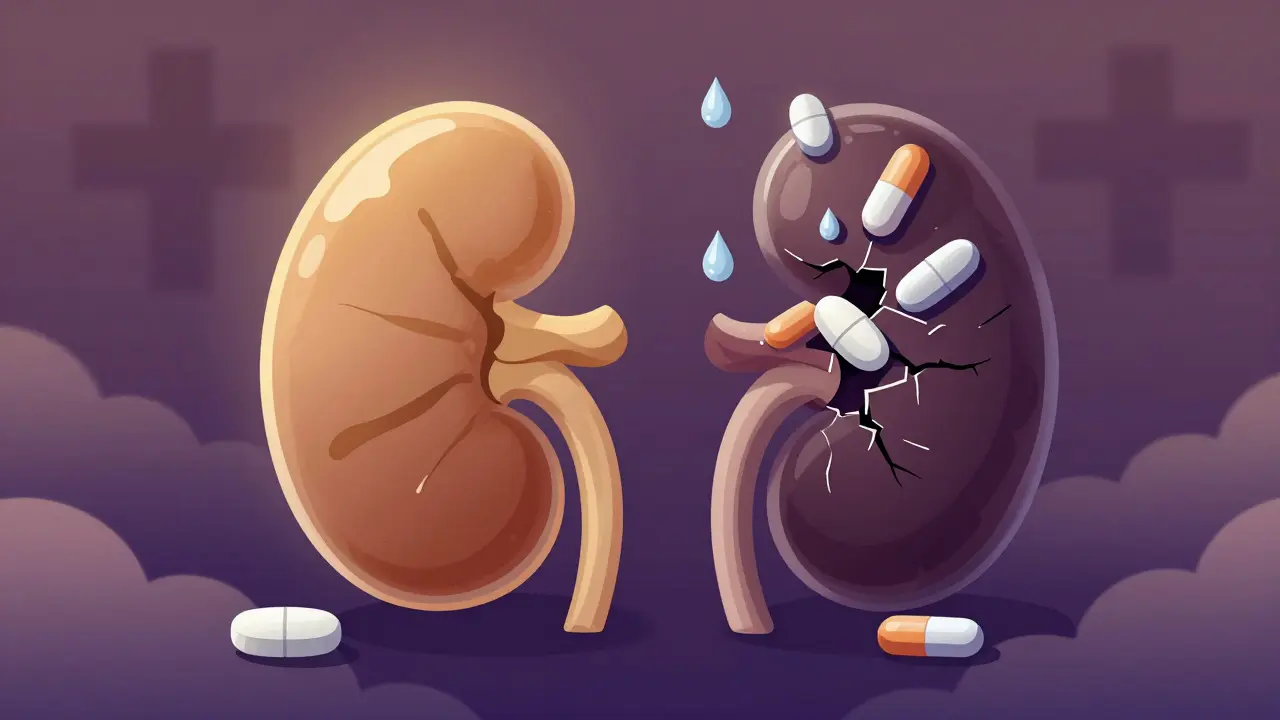
What Happens When Toxicity Strikes
Lithium toxicity doesn’t always come with warning signs. It can start with mild tremors, nausea, or increased thirst - symptoms easily mistaken for the flu or stress. But within hours, it can progress to confusion, slurred speech, muscle weakness, or seizures.
Emergency room data shows that 35% of patients hospitalized for lithium toxicity end up with permanent kidney damage - meaning their eGFR drops by more than 40% and never recovers. That’s not a temporary setback. It’s lifelong chronic kidney disease. Some patients end up on dialysis.
Reddit communities and patient forums are full of stories. One user wrote: “I took Advil for a headache. Two days later, I couldn’t stand up. My hands shook so bad I couldn’t hold a cup. They said my lithium level was 2.8 - that’s triple the safe limit.” Another said: “My doctor didn’t warn me. I lost 30% of my kidney function. Now I’m on a transplant list.”
What Doctors Should Do - and Often Don’t
The American Society of Nephrology and the American Psychiatric Association both say the same thing: avoid combining lithium and NSAIDs. If there’s no alternative, monitor lithium levels twice a week for the first month and check kidney function weekly.
But in practice? Only 62% of psychiatrists include NSAID warnings in patient education materials. Compare that to 99% who warn about diuretics - another known lithium interaction. Why the gap? Because NSAIDs are seen as harmless. They’re sold on drugstore shelves. Patients assume they’re safe.
Guidelines also say: if you must use an NSAID, keep it under 7 days. Use the lowest dose possible. Drink at least 3 liters of water daily. And never restart an NSAID after stopping - the effect lingers for 7 to 10 days. Your kidneys don’t bounce back immediately.
Some health systems are trying to fix this. Kaiser Permanente cut lithium-NSAID co-prescribing from 32% to 12% by adding hard alerts in their electronic system. The Veterans Health Administration, however, saw only a 15% drop - because the alerts were easy to bypass.
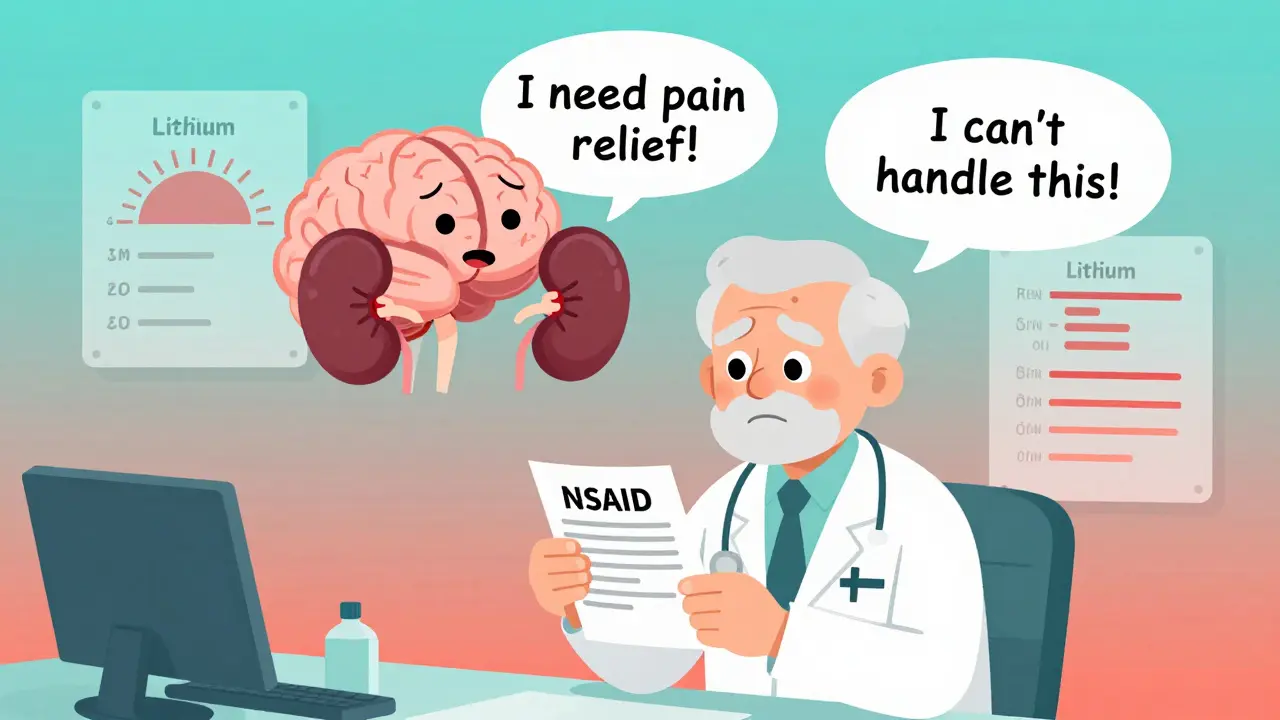
What Patients Can Do Right Now
If you’re on lithium:
- Never take NSAIDs without talking to your psychiatrist or pharmacist. That includes ibuprofen, naproxen, meloxicam, diclofenac, and even topical gels that contain NSAIDs.
- Use acetaminophen (Tylenol) for pain or fever. Stick to 3,000 mg per day max.
- Ask about tramadol if acetaminophen isn’t enough. It’s not perfect - it can cause dizziness and has addiction risks - but it doesn’t affect lithium levels.
- Carry a medical alert card or app listing all your medications. Many ERs don’t know your full history.
- Check your kidney function regularly. Even if you feel fine, get an eGFR test every 3 to 6 months.
- Don’t assume “natural” pain relievers are safe. Some herbal supplements like willow bark act like aspirin and can still interfere.
The Bigger Picture: Why This Keeps Happening
This isn’t just about bad prescribing. It’s about how medicine treats pain versus mental health. Pain is urgent. Mood disorders are invisible. So when a patient with bipolar disorder goes to the ER with a bad back, the doctor treats the back - not the lithium.
Pharmaceutical companies don’t warn enough. Electronic health records don’t always flag the interaction. Patients aren’t educated. And when toxicity happens, it’s often blamed on “patient noncompliance” instead of system failure.
The FDA added a boxed warning to lithium labels in 2021. The European Medicines Agency now recommends blocking NSAID prescriptions for lithium users unless a nephrologist signs off. But these rules aren’t enforced. In 2023, nearly 29% of lithium users in the U.S. still got at least one NSAID prescription that year.
What’s Next?
Researchers are testing a new drug - a prostaglandin E1 analog - that could protect the kidneys during NSAID use without interfering with lithium clearance. Early results show it cuts lithium level spikes by 87%. But it’s still in trials.
In the meantime, lithium remains the most effective drug for preventing suicide in bipolar disorder. Studies show it reduces suicide risk by 44%. That’s more than any other mood stabilizer. So we can’t just stop using it.
We have to fix how we manage pain in people who take it. That means better education. Better alerts. Better communication between doctors. And most of all - it means patients knowing that the little blue pill in their medicine cabinet isn’t harmless. It could be deadly.
Can I take ibuprofen while on lithium?
No, you should avoid ibuprofen while on lithium. It can increase lithium levels by 20% to 30%, raising your risk of toxicity. Even short-term use - like taking it for a headache or menstrual cramps - can be dangerous. Use acetaminophen (Tylenol) instead. If you absolutely must take ibuprofen, your doctor needs to check your lithium levels within 48 hours and may need to lower your lithium dose.
What are the first signs of lithium toxicity?
Early signs include hand tremors, increased thirst, frequent urination, nausea, diarrhea, and mild confusion. These can be mistaken for a virus or stress. As toxicity worsens, you may develop muscle weakness, slurred speech, dizziness, seizures, or loss of coordination. If you experience any of these while taking NSAIDs, stop the NSAID immediately and get medical help. Lithium toxicity can progress rapidly.
Is Tylenol (acetaminophen) safe with lithium?
Yes, acetaminophen is the safest over-the-counter pain reliever for people on lithium. It does not affect kidney function or lithium clearance. You can take up to 3,000 mg per day, but don’t exceed that to avoid liver damage. Always check with your doctor if you have liver disease or drink alcohol regularly.
How long does the lithium-NSAID interaction last?
The interaction doesn’t end when you stop the NSAID. It can take 7 to 10 days for your kidneys to fully recover and resume normal lithium clearance. That means even if you took an NSAID a week ago, your lithium levels could still be dangerously high. Never restart an NSAID without checking your lithium level first.
Can I take celecoxib (Celebrex) if I’m on lithium?
No, celecoxib is not safe. Although it’s marketed as a “COX-2 selective” NSAID with fewer stomach side effects, it still increases lithium levels by 10% to 15% - and up to 25% in people with existing kidney problems. That’s enough to push levels into the toxic range. Avoid all NSAIDs, including celecoxib, unless your doctor has approved it with strict monitoring.
What should I do if my doctor prescribes an NSAID while I’m on lithium?
Ask your doctor to confirm they know you’re on lithium. Request an alternative like acetaminophen. If they insist on the NSAID, ask for a lithium blood test before and 48 hours after starting it. Also ask for weekly kidney function tests for at least four weeks. If they refuse or seem unsure, get a second opinion from your psychiatrist or a pharmacist who specializes in psychiatric medications.
Are there any pain relievers I should absolutely avoid?
Yes. Avoid all traditional NSAIDs: ibuprofen (Advil, Motrin), naproxen (Aleve, Naprosyn), diclofenac (Voltaren), meloxicam (Mobic), indomethacin, and ketoprofen. Also avoid topical NSAID gels and patches - they’re absorbed through the skin and can still raise lithium levels. Even aspirin should be used cautiously. Stick to acetaminophen as your first choice, and only use opioids like tramadol if absolutely necessary and under close supervision.
Can lithium cause permanent kidney damage?
Yes. Long-term lithium use can cause chronic kidney disease, especially when combined with NSAIDs. Studies show that 10% to 20% of long-term lithium users develop reduced kidney function. When NSAIDs are added, that risk increases dramatically. Some patients lose 40% or more of their kidney function and require dialysis. Regular monitoring and avoiding NSAIDs can help prevent this.
If you're on lithium, your pain management plan should be as carefully planned as your mood treatment. Don’t let a simple headache lead to a medical crisis. Know the risks. Ask the questions. Protect your kidneys - they’re the only thing keeping lithium from becoming deadly.



Sachin Bhorde
December 15, 2025 AT 16:23Lithium + NSAIDs is a silent killer, man. I work in psych pharmacy and see this way too often. Patients think Advil is harmless - until their creatinine spikes and they’re in the ER with tremors and confusion. The 2023 JAMA study? Real. The 3.2x AKI risk? Not a typo. Always check eGFR before even thinking about an NSAID. And no, celecoxib isn’t safe - it’s just less obviously dangerous. Acetaminophen is your only friend here. Period.
Joe Bartlett
December 15, 2025 AT 19:02Yea mate, I took ibuprofen for my back and ended up in hospital. Didn’t know lithium and painkillers don’t mix. My doc never told me. Now I’m on Tylenol only. Simple. Don’t overcomplicate it.
Chris Van Horn
December 17, 2025 AT 03:53It is, of course, utterly reprehensible that the American medical-industrial complex continues to allow this preventable catastrophe to unfold. The FDA’s boxed warning, while technically adequate, is rendered meaningless by the complete absence of interoperable EHR alerts and the systemic de-prioritization of psychiatric pharmacology in primary care training. One must ask: if this were a cancer drug, would we tolerate such negligence? The answer is self-evident.
Virginia Seitz
December 18, 2025 AT 15:51Just wanted to say THANK YOU for posting this 💙 I’ve been on lithium for 8 years and never knew NSAIDs were this dangerous. I’ve been using Tylenol since I read this. My kidneys are thanking you 😊
Peter Ronai
December 19, 2025 AT 20:21Oh please. This is just fearmongering. I’ve been taking naproxen with lithium for 12 years. I’m fine. My doctor says it’s okay if I drink enough water. You people are overreacting. This isn’t a horror movie. Also, acetaminophen causes liver damage - you’re trading one risk for another. What’s your solution? Just suffer in pain?
Steven Lavoie
December 20, 2025 AT 02:07Thank you for writing this with such clarity. I’m a nurse in a psychiatric unit, and I’ve seen three patients admitted for lithium toxicity in the last year - all after getting NSAIDs from urgent care. One was 72, had diabetes, and took ibuprofen for a sprained ankle. He’s now on dialysis. This isn’t theoretical. It’s happening every day. Please share this with anyone you know on lithium. It could save their life.
Michael Whitaker
December 22, 2025 AT 01:33While I appreciate the intent behind this post, I must point out that the statistical correlation between NSAID use and lithium toxicity is often confounded by comorbidities such as hypertension and age-related renal decline. To attribute causality without adjusting for these variables is methodologically unsound. Furthermore, the assertion that 'acetaminophen is the only safe option' ignores the pharmacokinetic variability in CYP450 metabolism across populations - particularly in those with genetic polymorphisms. A nuanced discussion is warranted.
Kent Peterson
December 23, 2025 AT 07:08Let’s be real: this isn’t about science - it’s about liability. Hospitals and pharma don’t want to be sued, so they scare patients into avoiding NSAIDs. Meanwhile, the real problem? Doctors don’t communicate. I’ve had three psychiatrists. NONE of them told me about this. And yet, you blame the patient? No. Blame the system. Blame the $200,000-a-year specialist who spends 8 minutes with you. This isn’t about Tylenol vs. Advil - it’s about a broken healthcare machine.
Josh Potter
December 24, 2025 AT 13:53Bro I took Motrin for a migraine last week and felt weird AF. Thought I was gonna die. Went to the ER, got my lithium level checked - 2.9. They said I was 10 minutes from seizing. I’m alive because I googled my symptoms. Everyone on lithium needs to bookmark this. This is life-or-death info. Share it. Now.
Evelyn Vélez Mejía
December 24, 2025 AT 14:12There is a profound moral economy at play here: the invisible labor of mental health is rendered expendable in the face of the visible, urgent pain of the body. We prioritize the broken spine over the broken mind - and so we kill quietly, with pills sold beside gum and mints. Lithium does not merely stabilize mood; it anchors identity. And yet, we treat its guardianship as an afterthought. This is not pharmacology - it is negligence dressed in white coats.
Meghan O'Shaughnessy
December 24, 2025 AT 21:50My mom is on lithium and took naproxen for arthritis. She ended up in the hospital. They didn’t know she was on lithium. She’s fine now, but her kidneys are damaged. This post saved me from making the same mistake. Thank you.
Kaylee Esdale
December 26, 2025 AT 00:47Acetaminophen is your friend. Not perfect, but safe. And if you’re in pain and your doctor won’t listen? Find a new one. Your kidneys are worth more than their convenience. You’re not being dramatic - you’re being smart.