
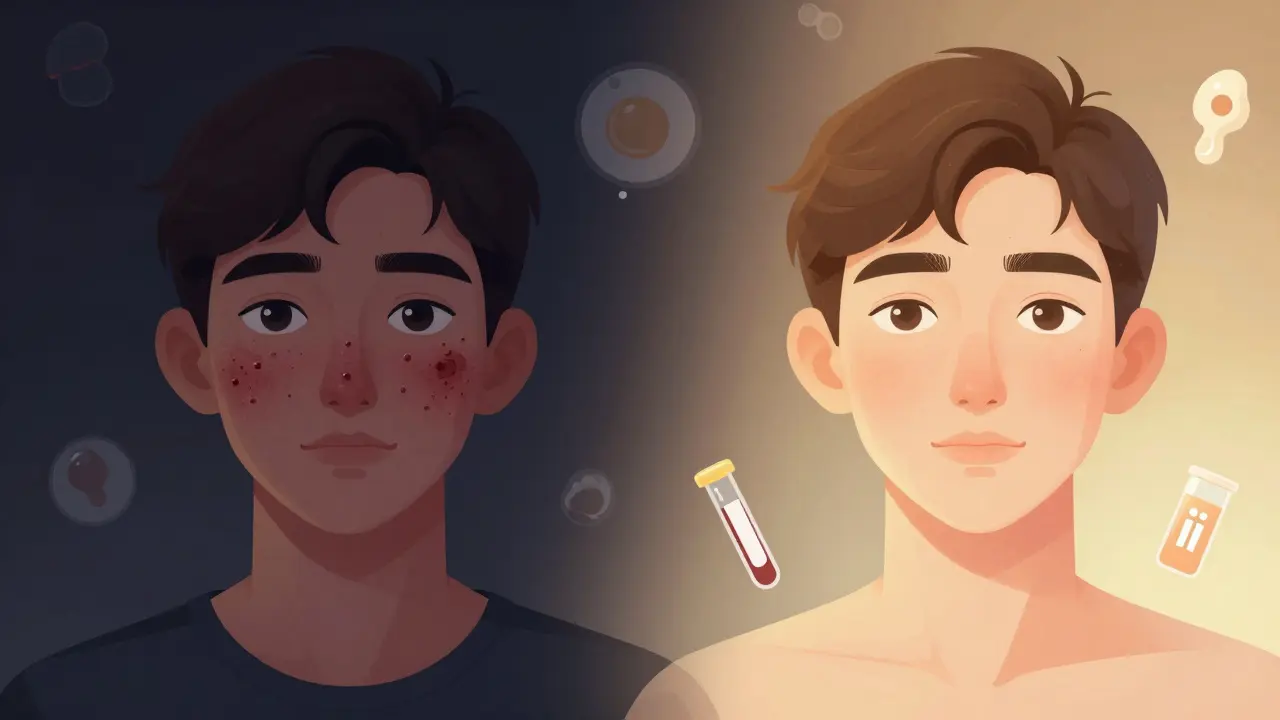
When your acne won’t quit-when cysts linger for months, scars form despite every cream and antibiotic, and your confidence is slipping-you’ve probably heard about isotretinoin. It’s not the first thing doctors reach for. It’s the last. And for good reason. Isotretinoin doesn’t just treat severe acne. It rewires it. For most people, it ends it. But it’s not simple. It’s powerful. And it demands respect.
How Isotretinoin Actually Works
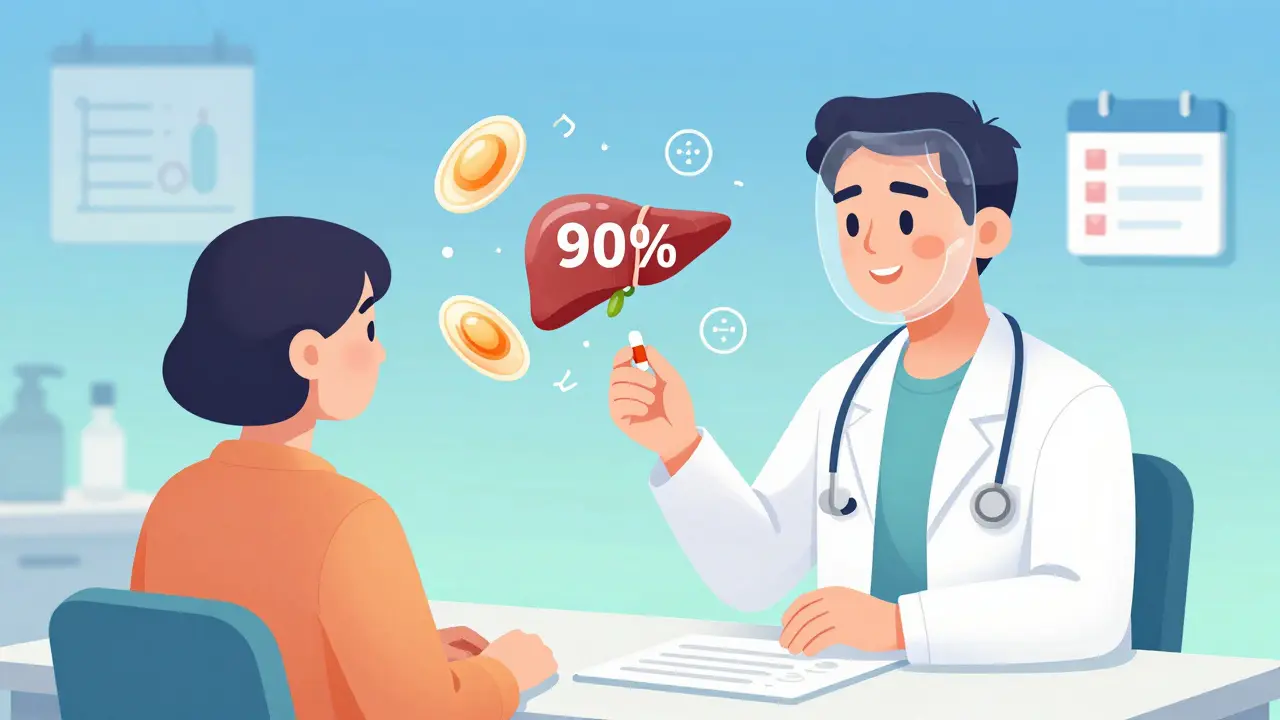
Isotretinoin is a synthetic form of vitamin A. But don’t think of it like a supplement. It’s a surgical strike on acne at every level. It shrinks your oil glands by up to 90%. That’s not a little reduction. That’s a full-scale shutdown of the main fuel source for acne. Less oil means fewer clogged pores, fewer bacteria (Cutibacterium acnes), and less inflammation. It also fixes the way skin cells stick together inside pores, stopping the plug that turns into a pimple before it even forms.Most treatments-topical retinoids, antibiotics, birth control pills-only manage symptoms. Isotretinoin attacks the root. That’s why, after a single course, 80% of patients don’t need another treatment. Their acne stays gone. For many, it’s permanent.
Who Gets Prescribed Isotretinoin?
It’s not for mild breakouts. It’s not for occasional zits. Dermatologists reserve it for severe nodular or cystic acne-deep, painful lumps under the skin that scar easily and don’t respond to anything else. If you’ve tried three or more different treatments over six months and still have angry, inflamed lesions, you’re likely a candidate.It’s also considered if acne is causing emotional distress. The psychological toll of severe acne is real. Studies show patients report life-changing improvements in anxiety, self-esteem, and social life after treatment. That’s not just about skin. It’s about reclaiming your life.
Lab Tests: Why They’re Non-Negotiable
Before you take your first pill, you’ll need blood work. Not because isotretinoin is dangerous-it’s not, if monitored. But because it can affect your body in ways you won’t feel until it’s too late.Baseline labs include:
- Complete blood count (CBC)
- Liver enzymes (ALT, AST)
- Lipid panel (cholesterol and triglycerides)
You’ll repeat these every 4 to 8 weeks during treatment. Why? Because isotretinoin can raise triglycerides. In rare cases, they spike high enough to risk pancreatitis. It can also mildly stress the liver. Neither is common, but catching it early means you can adjust your dose or pause treatment before anything serious happens.
Some patients get a fasting lipid panel before starting. If your triglycerides are already high, your doctor might delay treatment or recommend dietary changes first. No one wants to risk pancreatitis over acne.
Dosing: More Isn’t Always Better
For years, the standard was 0.5 to 1.0 mg per kilogram of body weight per day. That meant a 70kg person might take 35 to 70 mg daily for 5 to 8 months. But new research is changing that.A 2023 review of 32 studies found that low-dose isotretinoin-just 20 mg per day for three months-worked just as well for many people with moderate to severe acne. The relapse rate? Only 4% after six months. That’s better than most antibiotics.
Another approach: 0.5 mg/kg/day, but taken every other day or in cycles. This reduces side effects without sacrificing results. For some, a total cumulative dose of 120-150 mg/kg is still the goal. But for others, even 60 mg/kg is enough if the acne clears and stays clear.
The key? It’s not about how much you take. It’s about how your skin responds. Your dermatologist will watch your progress and adjust. Don’t push for higher doses to speed things up. That just increases side effects without better results.
Side Effects: The Real Talk
Yes, isotretinoin has side effects. But most are mild and manageable. Here’s what you’ll likely experience:- Dry lips: 90% of patients. Use petroleum jelly-lots of it. Lip balm with SPF. Reapply every hour if you’re outside.
- Dry skin and eyes: 25-30% get dry, gritty eyes. Use preservative-free artificial tears. Moisturize with fragrance-free creams.
- Nosebleeds: 15-20%. Keep nasal passages moist with saline spray.
- Initial flare: 30-40% get worse before they get better. It lasts 2-8 weeks. Don’t panic. Keep using your moisturizer. Don’t pick.
- Muscle and joint pain: Rare, but real. If you feel unusual aches, tell your doctor.
More serious side effects are rare but serious:
- High triglycerides: Affects 15-20%. Can lead to pancreatitis if unchecked.
- Liver enzyme changes: Mild and reversible in most cases.
- Depression: Reported in 0.1% of cases. No proven direct link, but if you feel unusually sad, withdrawn, or hopeless-tell your doctor immediately.
- Inflammatory bowel disease: Extremely rare (0.02%). If you get persistent diarrhea, abdominal pain, or bloody stools, stop the drug and get checked.
Most side effects fade within a month after stopping. But dry skin and lips? For some, they linger. You might need to keep using moisturizer and lip balm long-term. That’s not failure. That’s just your skin adjusting to life after isotretinoin.
The iPLEDGE Program: Why It’s Necessary
In the U.S., you can’t get isotretinoin without enrolling in iPLEDGE. It’s not bureaucracy. It’s protection. Isotretinoin causes severe birth defects. Even a single dose during early pregnancy can lead to malformed skulls, hearts, and brains.The program requires:
- Two negative pregnancy tests before starting
- Monthly pregnancy tests while on treatment
- Two forms of birth control for women of childbearing age
- Waiting 30 days after stopping before trying to conceive
Men don’t need pregnancy tests. But they still need to enroll. The system is frustrating. The website is clunky. But it’s the only way to make sure no baby is exposed.
Outside the U.S., similar programs exist-Pregnancy Prevention Programs in Europe, for example. The goal is the same: no pregnancies during treatment.
Results: What to Expect
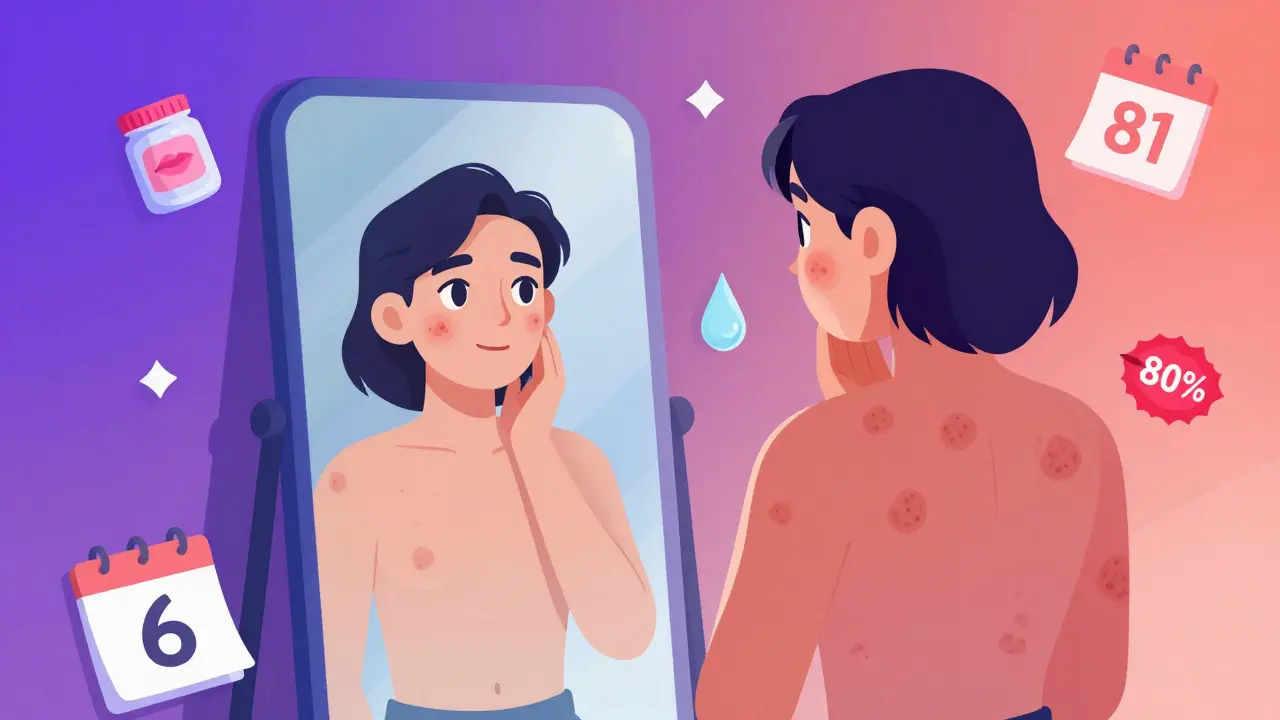
Most people start seeing improvement by week 4. By week 8, many look dramatically better. By month 4-5, most are 80-90% clear. After 6 months, 80% are in long-term remission.That means no more daily acne treatments. No more hiding behind makeup. No more avoiding mirrors. For many, it’s the first time in years they’ve looked in the mirror without cringing.
Relapse happens-but only in 10-20% of cases. And when it does, it’s usually mild. Many people can manage it with topical treatments alone. A second course of isotretinoin is rarely needed.
Is It Worth It?
Ask someone who’s been through it. The Reddit thread r/Accutane has thousands of stories. u/SkinClearJourney wrote: “90% clear after 5 months. Dry lips were the worst. Worth it.” u/AcneStruggles89 said: “I had to stop at 10 weeks because of joint pain. But I was 70% clearer-I’d do it again if I could.”The data backs them up. A 2023 study in the Journal of Cosmetic Dermatology found 85-90% patient satisfaction among those who completed treatment. The biggest complaint? The iPLEDGE paperwork. The biggest win? Clear skin for the first time in years.
Isotretinoin isn’t perfect. But for severe acne, it’s the only treatment that offers a real chance at freedom. Not control. Not management. Freedom.
What Comes After?
After you finish, your skin will still need care. It’s not “cured.” It’s reset. Use gentle cleansers. Moisturize daily. Wear sunscreen. Avoid harsh scrubs. Your skin is more sensitive now.Some people need maintenance with topical retinoids or low-dose antibiotics. Others don’t. Your dermatologist will help you decide.
And if acne comes back? Don’t panic. It’s not a failure. It’s just acne. And you’ve already proven you can beat it. You know what works. You know how to fight.
How long does isotretinoin take to work?
Most people see improvement within 4 to 8 weeks. Full results usually take 4 to 6 months. Some see dramatic changes by month 3, especially on low-dose regimens. Don’t expect overnight results-it’s a marathon, not a sprint.
Can isotretinoin cause permanent side effects?
Most side effects fade within a month after stopping. Dry skin and lips may linger for some, requiring ongoing moisturizing. There’s no evidence of permanent organ damage when monitored properly. Rare reports of persistent dry eyes or hair thinning exist, but these are not common and often improve over time.
Do I need to avoid alcohol while on isotretinoin?
Alcohol isn’t strictly forbidden, but it’s not recommended. Both isotretinoin and alcohol are processed by the liver. Drinking while on isotretinoin increases the risk of liver stress and elevated triglycerides. It’s safest to avoid alcohol during treatment.
Can I get laser treatments or chemical peels while on isotretinoin?
No. Avoid all aggressive skin procedures-lasers, peels, dermabrasion-while on isotretinoin and for at least 6 months after. Your skin heals slower and is more prone to scarring. Wait until your dermatologist gives you the green light.
Is isotretinoin safe for men?
Yes. Men can take isotretinoin safely. The main risks-liver changes, lipid spikes, dryness-are the same for all genders. The pregnancy prevention program doesn’t apply to men, but they still must enroll in iPLEDGE to receive the medication. There’s no evidence isotretinoin affects male fertility or sperm quality.
What happens if I miss a dose?
If you miss one dose, skip it and take your next dose at the regular time. Don’t double up. Missing a day won’t ruin your results. But if you miss multiple doses or stop for more than a week, tell your dermatologist. They may adjust your plan to stay on track.
Can isotretinoin be used for mild acne?
No. Isotretinoin is reserved for severe, treatment-resistant acne. For mild acne, topical retinoids, benzoyl peroxide, or antibiotics are safer and more appropriate. Using isotretinoin for minor breakouts increases risk without benefit.
How much does isotretinoin cost?
Generic isotretinoin costs between $150 and $400 for a 30-day supply, depending on dosage and pharmacy. Insurance often covers it. The iPLEDGE program is free, but some clinics charge administrative fees. Compare prices-some pharmacies offer discounts through mail-order or loyalty programs.
Final Thoughts
Isotretinoin isn’t a miracle drug. It’s a tool. A powerful, precise tool. Used right, it can change your life. Used carelessly, it can cause harm. That’s why it’s not a quick fix. It’s a partnership-with your dermatologist, with your body, with your patience.If you’ve suffered from severe acne for years, if you’ve tried everything and still feel stuck-this might be your turning point. The labs, the paperwork, the dry lips-they’re the price of freedom. And for most, it’s worth every single one.

Harry Henderson
January 27, 2026 AT 04:20Look I don't care what the studies say or how many lab tests you need - if your skin is killing your soul, you take the shot. I was 22, covered in cysts, couldn't even look at photos. Did isotretinoin. Dry lips? Yeah. Blood work every month? Hell yes. But I woke up one day and my face looked like it belonged to someone who actually slept. No more hiding. No more shame. Do it. Now. Don't wait for 'perfect timing' - there is no perfect time when your life is on pause.
Kegan Powell
January 27, 2026 AT 22:16man i just wanna say… life after accutane is like waking up from a 10 year dream where everyone was whispering about your face 😅 the dry lips? totally worth it. the iPLEDGE app? absolute trash but hey at least it’s keeping babies safe 🙏 you’re not broken you’re just in the middle of a transformation. trust the process. your future self is already thanking you. and yeah sometimes your skin feels like desert sand but that’s just your body saying ‘hey we’re resetting’… you got this 💪
April Williams
January 28, 2026 AT 03:32How can anyone even think about drinking alcohol while on this? 😒 I had a friend who ignored the warnings and ended up in the ER with pancreatitis. It’s not ‘maybe risky’ - it’s a guaranteed gamble with your liver. And don’t even get me started on people who think they can skip the birth control rules. You think you’re being cool? You’re risking a child’s life. This isn’t a trend. It’s medicine. Treat it like it’s nuclear material. Because honestly? It kind of is.
Kathy McDaniel
January 29, 2026 AT 03:11i started isotretinoin last year and honestly i didnt think i could do it but i did! the first month was rough like my lips were cracked and i cried over chapstick but now my skin is so smooth and i dont even need concealer anymore 😭 i still use moisturizer every night and its fine! also the ipledge site is a nightmare but just do it step by step youll be fine! dont listen to the scary stories too much its all about your doc watching you
suhail ahmed
January 30, 2026 AT 03:47Let me tell you something from the other side of the globe - in India, isotretinoin is like the holy grail for acne warriors. We don’t have iPLEDGE, but we have our own kind of fear: the pharmacist handing you the bottle without a single question. That’s dangerous. But here’s the truth - I saw a 17-year-old boy go from hiding behind hoodies to walking into his college interview with his head up. That’s not magic. That’s science. And yes, the side effects sting. But the silence that follows your breakout? That’s the sweetest sound. Don’t let bureaucracy scare you off. Let your skin speak. It’s been screaming for years.
Candice Hartley
January 30, 2026 AT 21:20My sister did this and said the initial flare felt like her face was rebelling. She almost quit. But she didn’t. By week 10, her cheeks were smooth. Now she’s 3 years clear. Just… keep going. Even when it sucks. Even when your lips crack. Even when you hate your reflection. It gets better. I promise.
astrid cook
February 1, 2026 AT 19:09Everyone acts like isotretinoin is this heroic cure… but what about the people it didn’t work for? What about the ones who got depression or worse? No one talks about that. You think it’s just dry skin? Try living with a fog in your brain for months while everyone tells you to ‘just be grateful.’ It’s not a miracle. It’s a gamble with your mental health. And the fact that we’re told to ‘trust the process’ while ignoring the silent suffering? That’s not medicine. That’s gaslighting.
Kirstin Santiago
February 2, 2026 AT 11:45Just wanted to add - if you’re on isotretinoin and your skin feels weirdly thin or sensitive after stopping? You’re not alone. Mine still gets red if I use anything with fragrance. But that’s okay. I’ve learned to treat my skin like a quiet friend now - gentle, patient, kind. The acne is gone. The scars faded. And honestly? I don’t miss the old version of me one bit. You’re not broken. You’re becoming.