

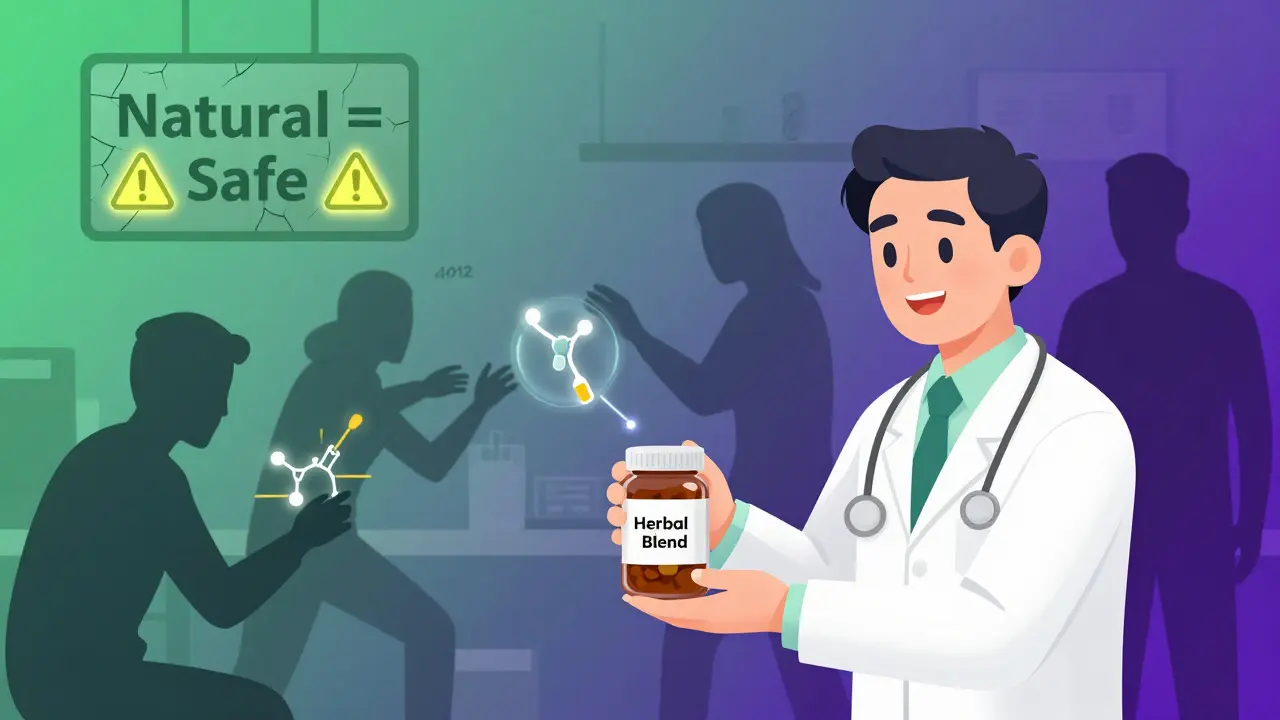
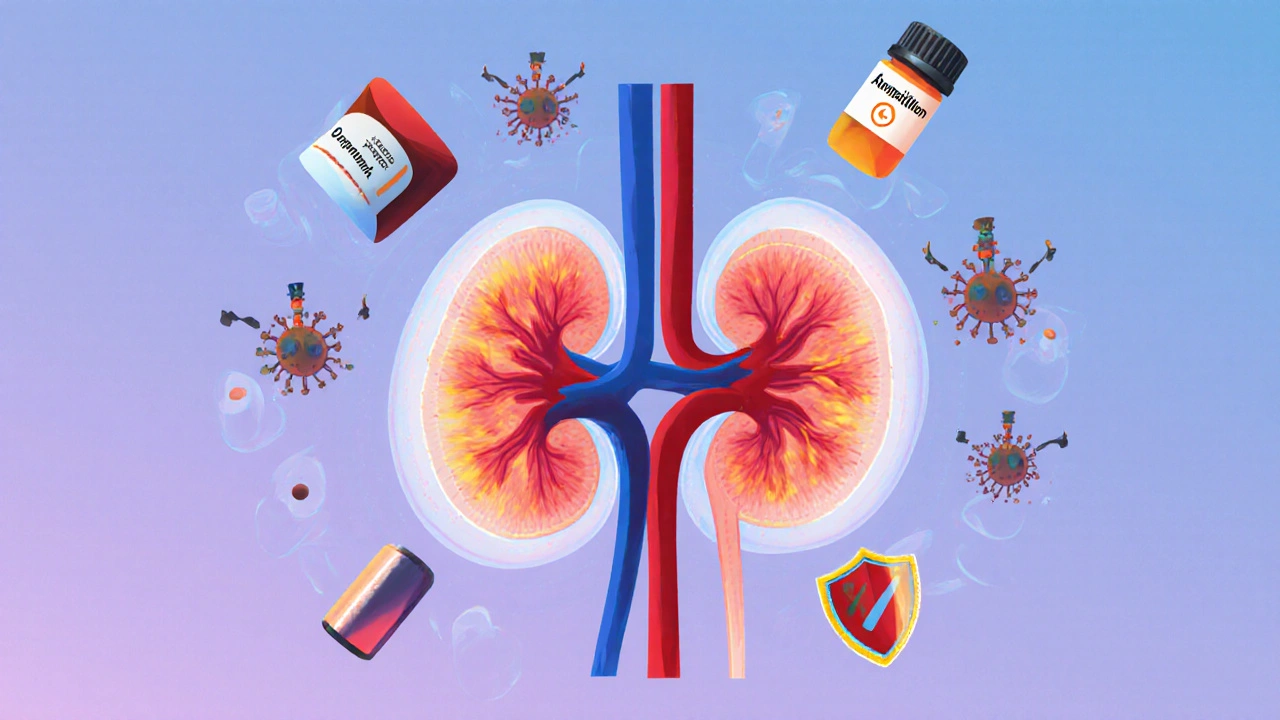
More than one in four adults in the U.S. take herbal supplements. Many believe these products are harmless because they’re "natural." But what they don’t realize is that herbal supplements can be just as powerful - and just as dangerous - as prescription drugs when mixed with them.
Take St. John’s wort, for example. It’s sold as a remedy for mild depression, but it can make birth control pills fail, cause organ rejection in transplant patients, and turn HIV medications useless. A 2014 study showed it dropped cyclosporine levels by 57% - enough to put a transplanted kidney at risk. And most people have no idea.
Here’s the hard truth: if you’re on any prescription medication and taking herbs, you’re playing Russian roulette with your health. And your doctor probably doesn’t even know you’re doing it.
How Herbs Interfere With Your Medications
Herbs don’t just float through your body like tea leaves. They actively change how your body handles drugs. The main culprits are two systems: the cytochrome P450 enzymes (CYP) and the P-glycoprotein transporter. These are your body’s way of breaking down and removing drugs. When herbs mess with them, your medication either stops working or builds up to toxic levels.
St. John’s wort is the most notorious offender. It turns on CYP3A4 and P-gp - enzymes that flush drugs out of your system. That means if you’re taking a blood thinner, an antidepressant, or a heart drug, your body might clear it too fast. The result? Your treatment stops working. In one case, a woman on birth control got pregnant after taking St. John’s wort for three weeks. She didn’t tell her doctor. Neither did her pharmacist.
On the flip side, some herbs slow down these systems. Goldenseal, for example, blocks CYP3A4 and CYP2D6. That means drugs like metoprolol (a beta-blocker) or dextromethorphan (a cough suppressant) stick around longer. Blood levels can spike by 30-50%. That’s not just a side effect - it’s poisoning waiting to happen.
High-Risk Herbal Supplements and Their Dangerous Pairings
Not all herbs are equal. Some have clear, proven risks. Here are the top offenders and what they can do when mixed with common meds:
- St. John’s wort: Reduces levels of cyclosporine, digoxin, oral contraceptives, HIV drugs, and antidepressants. Can cause organ rejection, unplanned pregnancy, or serotonin syndrome.
- Ginkgo biloba: Increases bleeding risk with warfarin, aspirin, or NSAIDs. One study found a 30% higher chance of bleeding in patients on warfarin who took ginkgo.
- Danshen (Salvia miltiorrhiza): Boosts the effect of digoxin, raising the risk of irregular heartbeat by 35%. Also increases bleeding when combined with blood thinners.
- Garlic: Lowers levels of saquinavir (an HIV drug) by 51%. Also thins blood - dangerous if you’re on anticoagulants or scheduled for surgery.
- Goldenseal: Raises levels of dextromethorphan, metoprolol, and many antidepressants. Can cause seizures or dangerously low heart rate.
- Hawthorn: Lowers blood pressure too much when taken with beta-blockers or ACE inhibitors. One patient’s systolic pressure dropped to 85 mmHg - requiring emergency care.
- American ginseng: May reduce warfarin’s effectiveness, leading to blood clots. Surprisingly, this one is often missed by doctors.
And here’s the kicker: many of these interactions aren’t listed on the bottle. The FDA doesn’t require supplement makers to test for drug interactions. Out of 23,000 herbal products on the U.S. market in 2022, only 15% included any warning about mixing with medications.
Why Doctors Don’t Know - And Why That’s Dangerous
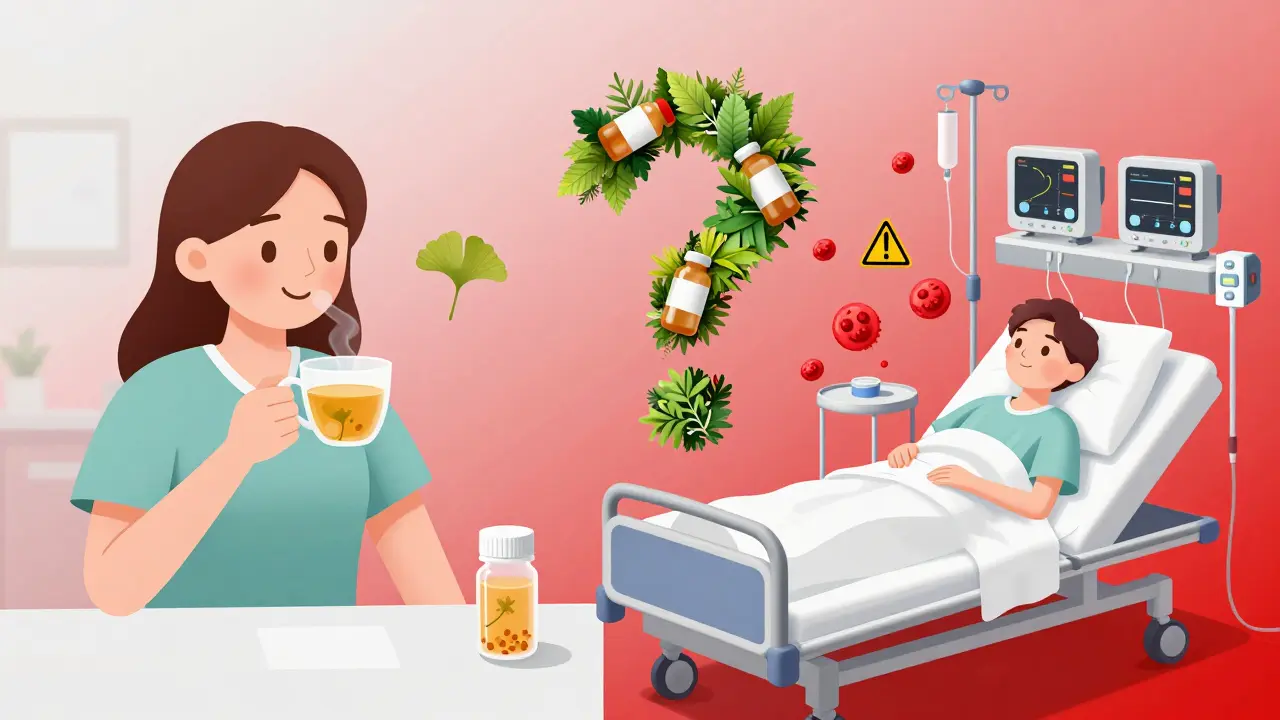
Patients rarely mention herbal supplements during medical visits. In a 2016 study of 299 hospitalized patients, 25% were taking herbs - but doctors didn’t know in 72% of cases. Why? Because they’re asked, "Are you taking any supplements?" - and people think that means vitamins or protein powder. They don’t think of tea, tinctures, or capsules labeled "herbal blend."
One hematologist in New Zealand reported three cases of unexplained bleeding in the past year - all linked to ginkgo. None of the patients had mentioned it. Another patient on warfarin had INR levels that kept dropping. Only after a pharmacist dug deeper did they find out the patient was drinking daily green tea with ginseng.
Doctors aren’t trained for this. A 2022 assessment showed that 62% of providers missed the interaction between American ginseng and warfarin. Even pharmacists, who are supposed to be experts, struggle. The University of Arizona found that after a 6-hour training course, provider accuracy jumped from 45% to 82%. That’s a gap we can’t afford.
Real Stories, Real Consequences
Reddit threads are full of warnings. One user wrote: "I took St. John’s wort for anxiety and stopped my antidepressant. Two weeks later, I had a panic attack so bad I called 911. My psychiatrist said the herb had cleared my medication out of my system." Another: "My mom took ginkgo for memory and ended up in the ER with a brain bleed. The ER doc said it was the ginkgo - but her doctor never asked."
Consumer Reports surveyed 1,200 supplement users in 2022. 68% didn’t tell their doctor. 22% had side effects they later linked to herbs. And 15% of negative reviews for warfarin on Drugs.com mentioned herbal use - mostly ginkgo or garlic.
These aren’t outliers. They’re symptoms of a broken system. We treat herbs like harmless tea, but they’re pharmacologically active compounds. The American College of Clinical Pharmacology says it plainly: "Herbal supplements carry the same dangers as other pharmacologically active compounds."
What You Should Do - Right Now
If you take any prescription medication - for blood pressure, diabetes, depression, heart disease, or anything else - here’s what you need to do:
- Make a list of everything you take. Not just pills. Include teas, tinctures, capsules, powders, and even topical oils. Write down the name, how much, and how often.
- Ask your doctor and pharmacist: "Could any of these interact with my medications?" Don’t say "supplements." Say "herbs, teas, and natural products."
- Use visual aids. Bring photos or bottles. A 2021 study found that showing pictures increased patient disclosure by 47%.
- Stop taking high-risk herbs immediately if you’re on critical meds. St. John’s wort, ginkgo, garlic, and goldenseal are not worth the risk if you’re on blood thinners, heart meds, or HIV drugs.
- Check for updates. New interactions are being discovered all the time. In January 2024, a study of 1 million patients in Taiwan found 17 new possible interactions - including ginseng making blood pressure meds less effective.
And if you’re considering starting a new herbal product? Talk to your pharmacist first. Not your friend. Not your yoga instructor. A licensed pharmacist who can check for interactions in real time.
The Bigger Problem: Regulation Is Broken
The 1994 Dietary Supplement Health and Education Act (DSHEA) lets supplement makers sell products without proving they’re safe or effective. No pre-market testing. No interaction studies. No mandatory warnings. The FDA can only act after harm is done - and even then, they issued only 12 warning letters about interaction risks in 2022, despite monitoring over 80,000 products.
Meanwhile, the global herbal supplement market hit $104.8 billion in 2023. People are spending billions on products that could be killing them. And the worst part? Most believe "natural" means safe. A 2023 survey found 77% of users think herbal supplements are safer than prescription drugs - even though 62% of them take both.
It’s time to stop treating herbs like harmless remedies. They’re drugs. They interact. They can kill. And until the rules change, the burden falls on you to protect yourself.
What’s Changing - And What’s Still Missing
There are signs of progress. The FDA released draft guidance in 2023 recommending mandatory interaction testing for new botanical drugs. The European Medicines Agency now requires full interaction studies for herbal medicines. The NIH spent $12.7 million in 2023 on herb-drug interaction research.
And new tools are emerging. The University of California’s Herb-Drug Interaction Prediction Engine, launched in March 2024, uses AI to predict risks with 87% accuracy. It’s a start.
But here’s the gap: only 3% of primary care providers routinely screen for herb-drug interactions. That’s not a lack of tools. That’s a lack of awareness. And awareness won’t come from labels or ads. It comes from patients asking questions - and doctors listening.
Can herbal supplements be as dangerous as prescription drugs?
Yes. Herbs like St. John’s wort, ginkgo, and goldenseal actively change how your body processes medications. They can make drugs ineffective or cause toxic buildup. St. John’s wort has been shown to reduce cyclosporine levels by 57% - enough to cause organ rejection. These aren’t mild side effects. They’re life-threatening.
What’s the most dangerous herbal supplement to take with medication?
St. John’s wort is the most dangerous. It induces CYP3A4 and P-gp enzymes, which flush out drugs from your system. It can reduce levels of birth control pills, HIV medications, transplant drugs, antidepressants, and blood thinners by 20-80%. There are documented cases of organ rejection, unplanned pregnancy, and treatment failure directly linked to this herb.
Do I need to tell my doctor if I take herbal teas or tinctures?
Yes. Many people don’t consider tea, tinctures, or capsules labeled "herbal blend" as "supplements." But they contain active compounds that interact with medications. In one study, 72% of patients taking herbs were not identified by their doctors because they weren’t asked the right question. Always say: "I drink herbal teas and take natural products."
Are herbal supplements regulated for safety like prescription drugs?
No. Under the 1994 DSHEA law, herbal supplements don’t need FDA approval before being sold. Manufacturers aren’t required to test for drug interactions, side effects, or purity. The FDA only acts after harm occurs - and even then, enforcement is rare. Only 12 warning letters about interaction risks were issued in 2022, despite over 80,000 products on the market.
Can I trust labels that say "natural" or "safe"?
No. "Natural" doesn’t mean safe. Many of the most dangerous interactions come from herbs labeled as natural remedies. Ginkgo, garlic, and St. John’s wort are all natural - and all carry serious risks when mixed with medications. Labels are not regulated for accuracy. Always check with a pharmacist before combining herbs with prescriptions.
What should I do if I think an herbal supplement is interacting with my medication?
Stop taking the supplement immediately. Contact your doctor or pharmacist. Don’t wait for symptoms to worsen. Keep a record of what you took, when, and what symptoms you experienced. If you’re on blood thinners, heart meds, or immunosuppressants, even mild changes like unusual bruising, dizziness, or fatigue could signal a dangerous interaction.
Final Takeaway: Your Health Is Not a Guessing Game
Herbal supplements aren’t harmless. They’re powerful. They interact. They can kill. And if you’re taking them with prescription drugs, you’re already at risk - even if you feel fine.
Don’t wait for a crisis. Don’t assume your doctor knows. Don’t trust labels. Take control. Make a list. Ask questions. Be specific. Your life might depend on it.


Allison Deming
January 13, 2026 AT 15:37It's profoundly concerning that so many individuals treat herbal supplements as benign alternatives when they are, in fact, pharmacologically active substances with documented, life-altering interactions. The notion that 'natural' equates to 'safe' is not merely misguided-it's dangerously archaic. We regulate aspirin, we regulate warfarin, we regulate insulin-why do we allow untested, unlabeled, unmonitored botanical extracts to flood the market without a single requirement for interaction testing? The 1994 DSHEA law is a regulatory abdication, and the FDA's passive enforcement only compounds the crisis. Patients are not being warned. Providers are not being trained. And the consequences? Organ rejection. Unplanned pregnancies. Serotonin syndrome. These aren't anecdotes-they're predictable outcomes of systemic negligence.
Susie Deer
January 14, 2026 AT 04:01Sarah -Jane Vincent
January 14, 2026 AT 09:09Vicky Zhang
January 15, 2026 AT 02:59Hey I just want to say-you’re not alone if you’ve been taking supplements and didn’t realize how risky they could be. I used to take ginkgo every day for my memory, thought it was totally harmless. Then I started bruising like crazy and almost passed out from dizziness. My pharmacist pulled up my med list and said, 'Oh honey, you’re on warfarin-that’s not a good combo.' I felt so stupid, but honestly? I’m so glad she caught it before something worse happened. You don’t have to be perfect. You just have to start asking. Bring your bottles. Say the words out loud. Your doctor isn’t judging you-they’re there to help. You got this.
TooAfraid ToSay
January 15, 2026 AT 15:56Dylan Livingston
January 17, 2026 AT 09:54Oh how delightfully quaint-the modern American consumer, convinced that their $12 bottle of 'organic' St. John’s wort is somehow exempt from the laws of pharmacology because it comes with a picture of a flower on the label. How noble. How tragically naive. We live in an age where people will read 200 pages of self-help about 'energy healing' but won’t Google 'cytochrome P450 interaction' because it sounds like something their dentist said during a root canal. The fact that 68% of users don’t disclose their herbal intake isn’t a failure of communication-it’s a failure of intellectual humility. And yet, we still call this 'freedom.' What a sad, beautiful, horrifying joke.
Andrew Freeman
January 19, 2026 AT 07:05says haze
January 19, 2026 AT 17:09There’s a deeper epistemological crisis here than mere herb-drug interactions. We’ve constructed a cultural mythology around 'natural' as a moral good-when in reality, nature is indifferent, often lethally so. Poison ivy is natural. Botulinum toxin is natural. The entire pharmacopeia of modern medicine was extracted from plants, fungi, and minerals. The issue isn’t that herbs are dangerous-it’s that we’ve outsourced our critical thinking to branding. A capsule labeled 'Pure Ginkgo Biloba' carries no more legitimacy than a bottle of 'Miracle Weight Loss Drops.' The burden of proof has been inverted: instead of demanding evidence of safety, we demand evidence of harm-after it’s already occurred. This isn’t ignorance. It’s a systemic surrender to placebo logic dressed in leafy aesthetics.