

When a doctor sees a child with unexplained bruises, or a nurse notices signs of neglect in an elderly patient, they don’t just have a clinical decision to make-they have a legal duty. In the U.S., healthcare providers are required by law to report certain types of harm, abuse, or danger. This isn’t optional. It’s not a suggestion. It’s a responsibility that can mean the difference between life and death.
What You Must Report: The Big Four Categories
Doctors and nurses are legally obligated to report four main types of incidents. These aren’t vague guidelines-they’re written into state laws, and failing to report can cost you your license, your job, or even lead to criminal charges.Child abuse is the most universal requirement. All 50 states and D.C. require healthcare workers to report suspected abuse or neglect. This includes physical injuries, sexual abuse, emotional harm, and severe neglect like malnutrition or leaving a child alone for days. The trigger isn’t proof-it’s suspicion. If something feels off, you report it. You don’t need to be certain. You’re not a detective. You’re the first line of defense.
Elder and vulnerable adult abuse is trickier. While every state has laws protecting children, only 47 states require reporting of elder abuse. In 10 states, there’s no legal requirement for individual providers to report it-though many facilities still do. The difference matters. In California, since 2023, every licensed provider must report suspected elder abuse. In Texas, only staff at nursing homes or hospitals are required to report. If you work in telehealth or cross state lines, you need to know the rules of the patient’s location, not just your own.
Public health threats are handled differently. These are not about individual patients but about protecting entire communities. There are 57 nationally notifiable conditions-from measles and tuberculosis to anthrax and botulism. Timeframes vary wildly. Anthrax? Report within one hour. Lyme disease? You have seven days. Most hospitals now use electronic systems that auto-fill reports when lab results come in. But if you’re in a small clinic or rural practice, you might still be faxing forms. Either way, you’re responsible for knowing what’s reportable.
Professional misconduct is the least understood. If you see a colleague stealing drugs, practicing while impaired, falsifying records, or sexually harassing a patient, you must report it. In 42 states, this is a legal duty. In Minnesota, the Chief Nursing Officer must report nurse misconduct within 30 days. In Nebraska, any provider who suspects impairment must report it. Failing to report a dangerous colleague isn’t just unethical-it’s illegal. And yes, this includes reporting yourself if you’re struggling with substance use or mental health.
How Reporting Works: From Suspicion to Submission
There’s no single national system. Every state runs its own reporting process. That means the steps, forms, deadlines, and even who you report to can change depending on where you are.For child abuse, most states require you to call a child protective services hotline immediately. Then you follow up with a written report within 24 to 48 hours. California demands reports within 36 hours. Texas says “immediate,” which most interpret as within 24. Michigan requires immediate reporting-no delay. The report must include: the child’s name, age, address, description of injuries, names of caregivers, and your contact info. Skip any of these, and your report might be rejected.
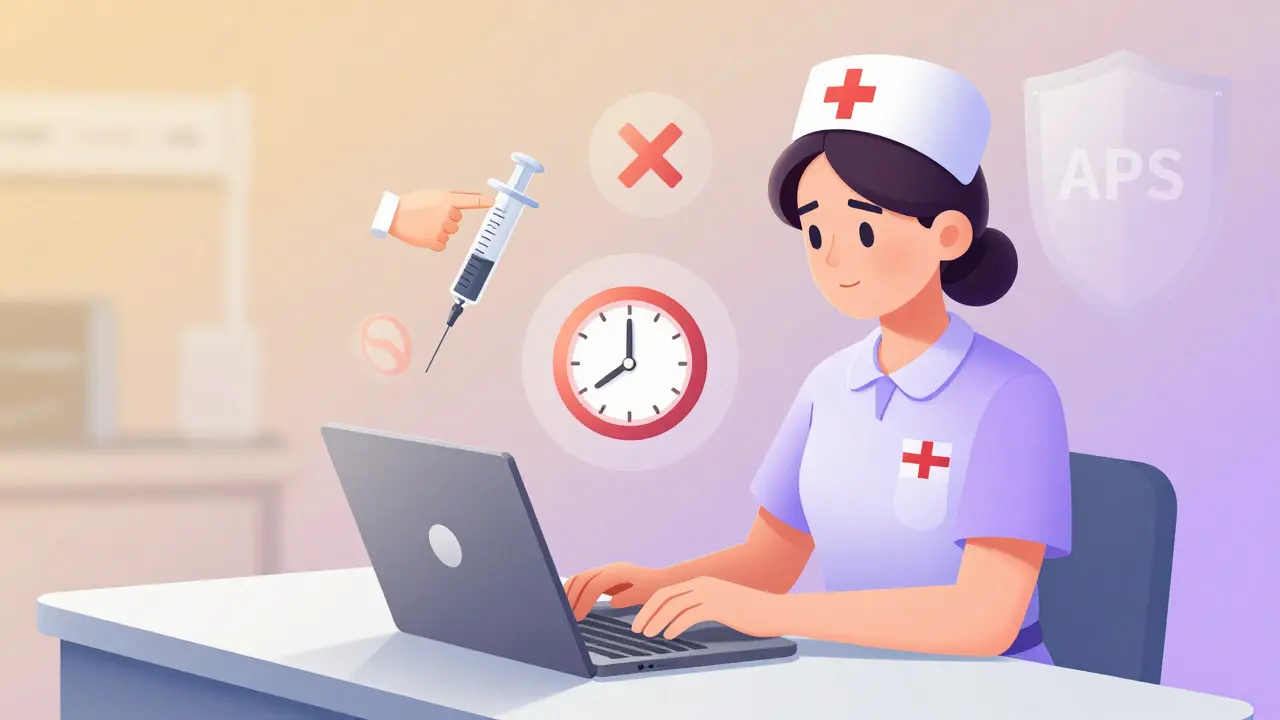
Elder abuse reports usually go to Adult Protective Services (APS). In states like New York and California, you must include the victim’s location, type of abuse (physical, financial, emotional), and whether they’re in a facility. In states without mandatory laws, you can still report-but you won’t be protected from liability if you don’t.
Public health reporting is increasingly automated. Labs send results to state health departments, and systems like eCR (Electronic Case Reporting) auto-generate reports. But if you’re the first to spot a case-say, a patient with unexplained vomiting after eating at a restaurant-you still need to call your local health department. Don’t wait for the lab.
Professional misconduct reports go to the state medical or nursing board. In Minnesota, you file a complaint with the Board of Nursing using a specific form. In Utah, you can report anonymously and are protected by law from retaliation. But in some states, you need to provide your name and license number. Know your state’s rules before you speak up.
The Ethical Tightrope: Privacy vs. Protection
HIPAA says you can’t share patient information without consent. But mandatory reporting laws create a legal exception. You’re allowed-and required-to break confidentiality when abuse is suspected.That doesn’t make it easy. Many patients trust their doctors enough to admit they’re being hit at home, or that they’re using drugs to cope. When you report, that trust can shatter. A 2020 survey by the American Medical Association found that 68% of physicians said mandatory reporting made patients less likely to disclose sensitive issues. One pediatrician on Reddit said a patient stopped coming in for opioid treatment because they feared their child would be taken away.
But here’s the flip side: reporting saves lives. A 2019 JAMA study showed states with mandatory reporting found 37% more child abuse cases than states without. In Michigan, a nurse reported a child with multiple fractures. The investigation uncovered abuse that had been going on for over a year. The child was removed from the home and placed in foster care. The parents were charged. Without that report, the child might not have survived.
The hardest part? Knowing when suspicion becomes a duty. There’s no checklist. A bruise on the arm could be from a fall. A bruise on the ear? That’s rare in accidents. A child who flinches at touch? A senior with unexplained weight loss? These aren’t diagnoses-they’re red flags. You don’t need to solve the mystery. You just need to report it.
What Happens After You Report
Once you file a report, you’re not done. You might get called for a follow-up interview. You might be asked to testify. You might be contacted by social workers or law enforcement.But you also won’t hear much back. That’s normal. Child protective services and Adult Protective Services are overloaded. You might never know if your report led to intervention. That’s okay. Your job was to flag the danger. The system takes it from there.
Some reports lead to big outcomes. In Minnesota, a nurse reported a colleague who was giving wrong doses. An investigation found the nurse had been dosing patients incorrectly for months. The colleague lost their license. Patients were saved.
Other reports lead to nothing. A child might be returned home. An elder might be left with their abuser. That doesn’t mean you failed. You did your part. The system has flaws. But without you, it wouldn’t even start.
What You Should Never Do
Don’t wait for “proof.” You’re not a cop. You’re not a judge. You’re a clinician with a legal duty.Don’t talk to the family before reporting. If you suspect abuse, don’t say, “I think someone’s hurting you.” That can tip off the abuser. Just report.
Don’t assume someone else will report. If you see it, you’re the one who has to act. Even if you’re a new nurse or a junior doctor.
Don’t report to the wrong agency. If you’re unsure, call your hospital’s compliance office or your state’s reporting hotline. Many states have 24/7 lines just for this.
Don’t fear retaliation. In 18 states, including Utah and California, it’s illegal to fire or punish someone for reporting in good faith. If you’re threatened, document it. Report it to your board. You’re protected.

How to Stay Compliant
The rules change. A law passed in California in 2023 expanded elder abuse reporting. Minnesota updated its nurse misconduct rules in 2022. You can’t rely on what you learned in school.Do this every year:
- Take your hospital’s mandatory reporting training. Most are required.
- Bookmark your state’s reporting website. Search “[Your State] mandatory reporting healthcare.”
- Know your local hotline numbers. Save them in your phone.
- Use institutional tools. Many hospitals now have apps or portals that auto-fill reports.
- Ask questions. If you’re unsure, call your risk management team. They exist to help you.
Don’t wait until you’re in a crisis to learn the rules. Learn them before you need them.
Final Thought: You’re Not Alone
Reporting abuse is one of the hardest parts of being a healthcare worker. It’s emotionally draining. It’s legally risky. It’s lonely.But you’re not alone. Thousands of doctors and nurses report every day. Some of them are your colleagues. Some of them are the ones who saved a child’s life, stopped a dangerous nurse, or alerted a health department before an outbreak spread.
Your report might not make headlines. But it might save a life. And that’s why you do it-not because it’s easy, but because it’s necessary.



Akshaya Gandra _ Student - EastCaryMS
January 3, 2026 AT 23:26so i read this and i was like… wait so if my grandma has a bruise from falling in the shower and she’s 82, do i gotta report her? lol. i mean, she’s got the balance of a drunk flamingo. also, why is it that the moment someone says ‘elder abuse’ everyone starts imagining a horror movie but no one talks about how hard it is to get help for seniors who just… need more help, not more paperwork?
Joseph Snow
January 5, 2026 AT 08:17Let me get this straight: you’re telling me that if a nurse sees a kid with a scraped knee and the mom looks tired, she has to call CPS? That’s not healthcare-that’s state-sponsored paranoia. Next they’ll make us report parents who let their kids eat sugar. Wake up. Mandatory reporting isn’t saving lives-it’s turning doctors into unpaid social workers for a broken system that doesn’t even follow up. And don’t even get me started on the fact that 10 states don’t require elder abuse reports. That’s not negligence-that’s policy failure disguised as law.
Enrique González
January 5, 2026 AT 18:13I’ve been a nurse for 14 years. I’ve reported three cases of child abuse. Two led to the kids being saved. One led to the family being torn apart and the kid placed in foster care where they got worse. Reporting isn’t black and white. But you do it anyway. Because if you don’t, and something happens? You live with that forever. No one ever thanks you. But someone out there is breathing because you spoke up.
Aaron Mercado
January 7, 2026 AT 09:14THIS. IS. A. NIGHTMARE. Do you realize what you’re asking nurses to do?! You’re asking them to become cops, detectives, therapists, and legal advisors-ALL WHILE WORKING 12-HOUR SHIFTS WITHOUT LUNCH! And HIPAA? HA! They’re telling us to break it when it’s convenient?! And then-oh, by the way-don’t tell the family! Don’t warn them! Just drop the bomb and disappear?! What kind of sick, bureaucratic nightmare is this?! I’m not a snitch-I’m a healer! And now I’m supposed to be the one who ruins families because a bruise looks ‘suspicious’?! This isn’t protection-it’s persecution!
saurabh singh
January 8, 2026 AT 01:30in india, we don’t have mandatory reporting like this-but we do have a huge problem with silent abuse. elders get neglected, kids get beaten, and no one says anything because ‘it’s family matter’. i think your system is flawed, but i also think you’re doing something brave. maybe the system is broken, but someone has to start the conversation. i wish we had this kind of structure back home. keep going, even if it’s messy.
John Wilmerding
January 9, 2026 AT 10:24As a clinical educator, I’ve trained over 200 new nurses on mandatory reporting protocols. The most critical skill isn’t knowing the statute-it’s developing clinical judgment. Suspicion is not diagnosis, but it is trigger. The key is documentation: note the location, pattern, timing, and patient’s behavior. Use your institution’s reporting portal. Know your state’s hotline number by heart. And always, always consult your compliance officer before acting if uncertain. This isn’t about fear-it’s about competence. You are not alone in this. Your institution exists to support you.
Peyton Feuer
January 9, 2026 AT 12:40i get it. reporting is heavy. but i’ve seen what happens when you don’t. my cousin’s kid was in foster care for 3 years because no one spoke up. the bruises were ‘from climbing’… until they weren’t. i’m not saying it’s easy. i’m saying silence costs more than speaking. also-yes, the system sucks. but if you wait for it to be perfect, you’ll never act. do your part. even if it’s just one report. it matters.
Cassie Tynan
January 10, 2026 AT 22:18So let me get this straight: we’re now requiring doctors to be the first line of defense against society’s failures? Because apparently, the only way to fix child neglect is to turn every pediatric visit into a witch hunt. Brilliant. Let’s just make healthcare workers the emotional garbage disposals for a government that won’t fund social services. Of course. Because nothing says ‘compassionate care’ like forcing someone to choose between their license and their conscience. I’m sure the kids are thrilled.