

When you pick up a bottle of antibiotics, blood pressure pills, or diabetes medication in the U.S., the UK, or a rural clinic in Nigeria, there’s a good chance it came from India. The country doesn’t just make medicines-it supplies the world. With over 650 U.S. FDA-approved manufacturing plants and more than 2,000 WHO-GMP certified facilities, India is the largest exporter of generic drugs by volume. It doesn’t just compete-it dominates. Roughly 20% of all pharmaceuticals shipped globally come from Indian factories. That’s not a small share. That’s the backbone of global access to medicine.
How India Became the Pharmacy of the World
It didn’t happen by accident. In the 1970s, India rewrote its patent laws. Instead of protecting drug formulas like the U.S. and Europe did, India only protected how a drug was made-not the drug itself. This opened the door for local companies to copy branded medicines after patents expired abroad. Suddenly, a life-saving HIV drug that cost $10,000 a year in the U.S. could be made in India for $100. That shift didn’t just lower prices. It saved millions of lives. By the 2000s, Indian manufacturers had built a reputation for quality. They didn’t just copy-they improved. Companies like Cipla, Sun Pharma, and Dr. Reddy’s started investing in complex formulations: extended-release tablets, injectables, and transdermal patches. These aren’t simple pills. They require precise chemistry, sterile environments, and strict controls. Yet Indian factories met the same standards as those in Germany or the U.S. Today, over 85% of Indian plants pass FDA inspections. That’s higher than the global average.The Numbers Behind the Supply Chain
The scale is hard to grasp. India produces over 60,000 different generic drugs and more than 500 active pharmaceutical ingredients (APIs). It makes more than 60% of the world’s vaccines. During the pandemic, India supplied over 70% of the global demand for COVID-19 vaccines. That’s not just manufacturing-it’s global health infrastructure. In 2023-24, India’s pharmaceutical industry was worth $50 billion. By 2030, it’s expected to hit $130 billion. Exports alone made up $25 billion last year. The U.S. gets 40% of its generic drugs from India. The UK gets 33%. In Sub-Saharan Africa, nearly 50% of all medicines come from Indian labs. In places where people pay out of pocket, cost matters. A generic cholesterol pill that costs $120 in the U.S. can be bought for $8 from India. That’s the difference between treatment and no treatment.Who Are the Key Players?
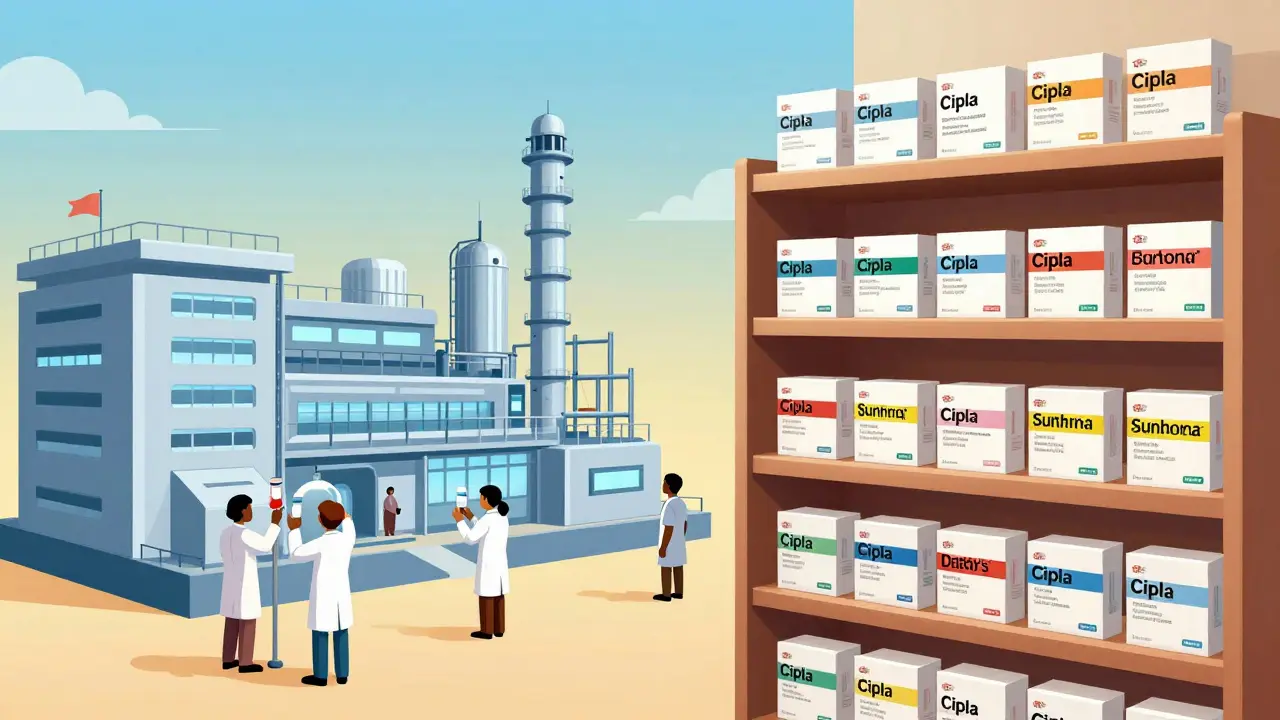
India’s pharma sector isn’t run by one giant. It’s a network of thousands-10,000 manufacturing units and over 3,000 companies. But a few names dominate exports:- Sun Pharma: The largest Indian pharma company by market cap, with over $43 billion in value. Known for complex generics and dermatology drugs.
- Cipla: Pioneered low-cost HIV drugs in the early 2000s. Still a top supplier to global health programs.
- Dr. Reddy’s: A leader in biosimilars and injectables, with strong footholds in the U.S. and Europe.
- Biocon: India’s top biotech player, now investing heavily in cancer biosimilars.
Why India Beats the Competition
China makes cheaper APIs-over 70% of India’s raw ingredients come from China. But China’s drug factories? Only 153 are FDA-approved. India has 650. That’s the real edge. Quality control. Documentation. Consistency. Indian manufacturers know how to pass inspections. They’ve trained teams, built systems, and learned from past failures. Eastern Europe and South Korea make good drugs too. But they can’t match India’s volume or price. A generic antibiotic made in Poland might cost 20% more than the same one made in Hyderabad. In global health, that difference matters. When UNICEF buys 100 million malaria pills, price isn’t just a number-it’s survival.The Weaknesses: What Keeps Indian Pharma Up at Night
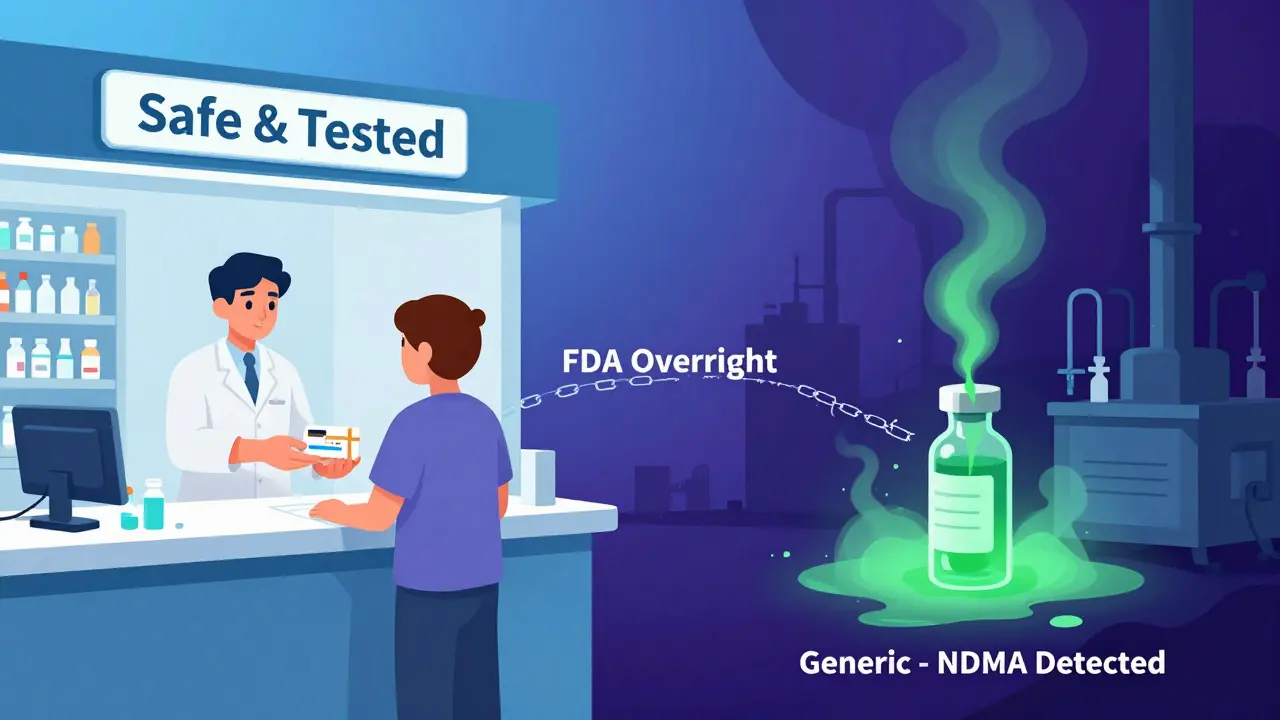
Despite its success, India’s model has cracks. First: API dependence. Over 70% of active ingredients come from China. That’s a huge risk. If trade flows stop, production halts. That’s why the Indian government launched a $400 million incentive program to build domestic API plants. The goal? 53% self-sufficiency by 2026. Second: low value. India exports by volume, not value. It makes 30% of U.S. generic drugs by volume-but only 10% of the market value. Why? Because it sells low-cost, off-patent molecules. Big pharma companies make billions on new drugs. India makes pennies on pills. The shift now is toward biosimilars-copycat biologics like insulin or cancer drugs. These are harder to make, cost more to develop, and sell for higher margins. Biocon and Dr. Reddy’s are betting big on this. Third: regulatory hiccups. Not all batches are perfect. There have been cases of contaminated or under-dosed drugs. The FDA issued warning letters. Some patients reported inconsistent effects with levothyroxine. But these are exceptions. Out of billions of pills shipped, the failure rate is less than 0.1%. Still, one bad batch can damage trust.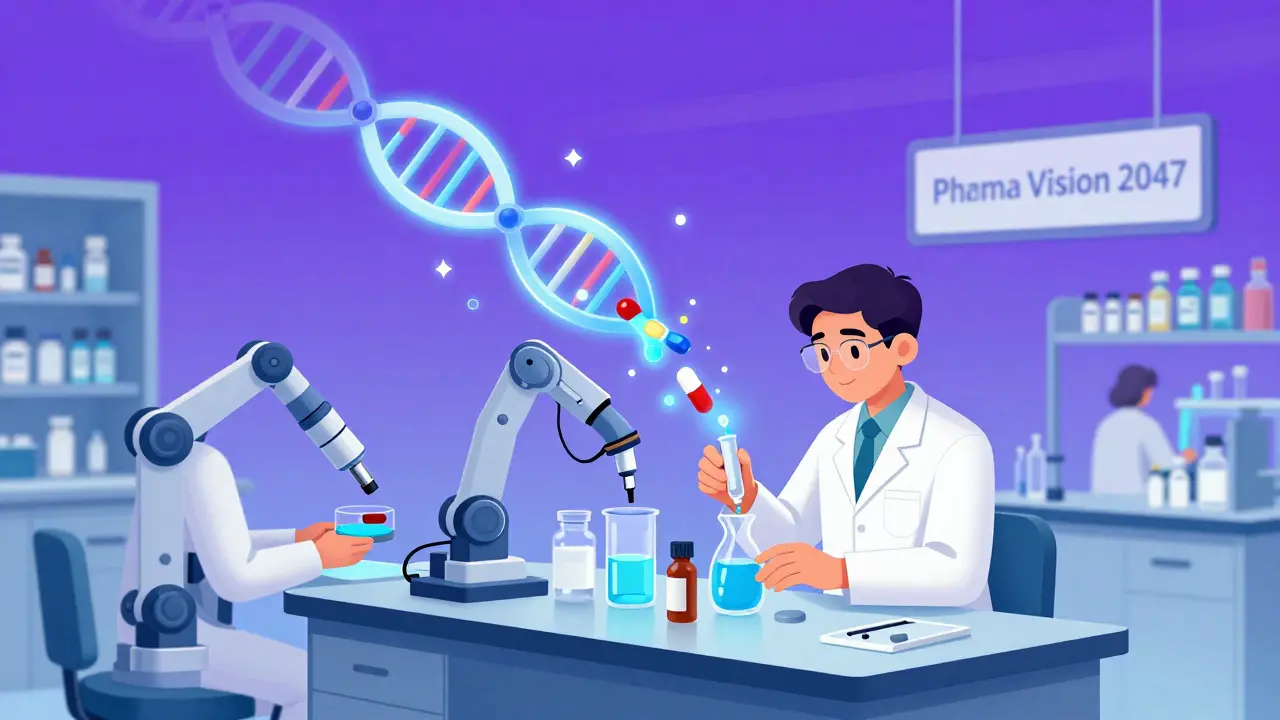
What Patients Really Think
In the U.S., 9 out of 10 prescriptions are for generics. Of those, 40% are Indian-made. On PharmacyChecker.com, 87% of users rate Indian generics as “excellent” or “good.” The top reason? Cost. “I saved $800 a year just switching to the Indian version,” one user wrote. In the UK, the NHS relies on Indian generics for 33% of its prescriptions. Patient reviews average 4.2 out of 5. Complaints? Taste differences. Packaging that doesn’t match the brand. Shipping delays. Not safety issues. In Africa, Doctors Without Borders says Indian antimalarials are 95% as effective as branded ones-and cost 65% less. That’s not just good business. That’s public health victory.The Future: From Pharmacy to Innovation Hub
India isn’t resting. Pharma Vision 2047 aims to make the country a $190 billion export powerhouse. That means moving beyond copying. It means developing its own drugs. It means becoming a source of innovation, not just supply. Biosimilars are the next frontier. India now makes 8% of its export value from these complex biologic copies-up from 3% in 2020. Companies are investing hundreds of millions in R&D. Some are even partnering with U.S. startups to co-develop new therapies. The government is pushing for better quality too. New manufacturing rules (Schedule M revision, 2024) demand stricter controls. Electronic submissions (eCTD) are now standard. Translation errors in documents? Down from 30% to 22% in just two years. The question isn’t whether India can keep supplying the world. It’s whether it can move up the value chain. Can it become not just the pharmacy-but the lab? The answer lies in API self-sufficiency, biosimilar leadership, and unwavering compliance. If India gets those right, its role won’t just be essential. It’ll be revolutionary.What This Means for You
If you’re a patient: Indian generics are safe, effective, and affordable. Talk to your pharmacist. Ask if your prescription has an Indian-made version. You could save hundreds. If you’re a policymaker: Support supply chain resilience. Invest in domestic API production. Don’t fear Indian imports-partner with them. If you’re in healthcare: Understand that low cost doesn’t mean low quality. India’s system works. It’s scaled, tested, and trusted by billions. The world doesn’t just need medicine. It needs affordable medicine. India delivers that. Not as a charity. As a business. And it’s doing it better than anyone else.Are Indian generic drugs safe?
Yes, the vast majority are safe. Over 650 Indian manufacturing plants are approved by the U.S. FDA, and more than 2,000 meet WHO-GMP standards. Compliance rates for inspections now sit at 85-90%, matching global averages. While isolated incidents of quality issues have occurred, they represent far less than 0.1% of total exports. Indian generics are used daily by millions in the U.S., Europe, and Africa with proven effectiveness.
Why are Indian generic drugs so much cheaper?
India doesn’t enforce product patents on drugs like the U.S. or EU do. This allows local manufacturers to copy medicines after patents expire abroad. Combined with lower labor and operational costs, this system cuts prices by 30-80% compared to branded versions. Indian companies focus on high-volume production, not marketing or R&D for new drugs-keeping overhead low.
Does the U.S. rely on Indian generic drugs?
Yes. India supplies about 40% of all generic drugs consumed in the United States. That includes common medications for blood pressure, cholesterol, diabetes, and antibiotics. In fact, nine out of ten prescriptions in the U.S. are for generics, and nearly half of those come from India. Major pharmacy chains and wholesalers depend on Indian manufacturers for cost-effective supply.
Is India dependent on China for drug ingredients?
Yes, India imports roughly 70% of its active pharmaceutical ingredients (APIs) from China. This creates a supply chain vulnerability, especially during global disruptions. To fix this, India launched a $400 million Production Linked Incentive (PLI) scheme to boost domestic API production. The goal is to reach 53% self-sufficiency by 2026.
What’s the difference between Indian generics and biosimilars?
Generics are exact copies of small-molecule drugs-like aspirin or metformin-that have simple chemical structures. Biosimilars are copies of complex biological drugs-like insulin or cancer treatments-that are made from living cells. Biosimilars are harder to produce, require more testing, and cost more to develop. India is now a global leader in biosimilars, with companies like Biocon and Dr. Reddy’s investing billions to compete in this high-value market.
How can I tell if my medicine is made in India?
Check the label or packaging. The manufacturer’s name and location are usually listed. Common Indian companies include Sun Pharma, Cipla, Dr. Reddy’s, and Lupin. You can also search the drug’s National Drug Code (NDC) on the FDA website. Many Indian-made generics are sold under store brands (like Walmart’s Equate or CVS Health) or as private-label products-so they may not say "Made in India" on the box, but the manufacturer will.
Do Indian generic drugs have the same effectiveness as brand-name drugs?
Yes, by law, generic drugs must be bioequivalent to their brand-name counterparts. That means they deliver the same amount of active ingredient into the bloodstream at the same rate. Studies from the FDA, WHO, and independent researchers confirm this. Some patients report minor differences in side effects or taste due to inactive ingredients, but clinical effectiveness is the same. In fact, many hospitals and public health systems around the world use Indian generics because they’re proven to work.

brooke wright
January 16, 2026 AT 08:41My grandma takes her blood pressure meds from India and swears by them. She saved $600 a year switching from the brand-name stuff. I used to think 'generic' meant 'cheap junk'-turns out I was wrong. These pills work just as good, and my wallet thanks me every month.
Riya Katyal
January 17, 2026 AT 15:07Oh wow India’s the pharmacy of the world? Guess that’s why your government lets you copy drugs like it’s a TikTok remix. Meanwhile we pay $1200 for insulin and you sell it for $5. Congrats on capitalism with a conscience. Or is it just capitalism with better lawyers?
Henry Ip
January 18, 2026 AT 06:27Really appreciate how this breaks down the real numbers. The FDA approval stats alone are eye-opening. 85% pass rate? That’s better than a lot of places. And the shift to biosimilars? That’s the next big leap. India’s not just filling gaps-it’s building new pathways in pharma.
waneta rozwan
January 19, 2026 AT 05:51Let me get this straight-India makes 40% of our meds, and we’re still acting like they’re some kind of shady back-alley pharmacy? Meanwhile, Big Pharma is charging people rent on their own bodies. This isn’t just about cost. It’s about morality. And India’s winning that war while we’re busy arguing about patent rights like toddlers with toys.
Cheryl Griffith
January 19, 2026 AT 15:47I used to work in a clinic in rural Georgia. We gave out Indian-made diabetes meds to half our patients. No complaints. No side effects. Just relief. One woman told me, 'If it wasn’t for these pills, I’d be dead.' That’s not a statistic. That’s a life. And India’s giving millions of them.
swarnima singh
January 21, 2026 AT 06:23why do we even care about patents anyway? life is suffering. medicine is a right. but nooo, some rich guy in new jersey owns the formula for metformin. like its his first born. i mean… really? we let corporations own biology? sad. so sad. the world is broken. but india? india is quiet hero. no fanfare. just pills. so many pills.
Isabella Reid
January 22, 2026 AT 19:41My cousin in Lagos got her HIV meds from India. She told me the packaging looked different, but the effect? Same. She cried when she found out how much cheaper it was. I didn’t realize how much privilege I had until I saw someone choose between food and medicine-and then realize India made that choice easier.
Joie Cregin
January 23, 2026 AT 21:16India’s pharma scene is like the quiet genius in the back of the class who aced the test without studying. No hype. No press releases. Just pure, unadulterated, no-BS science. And now they’re leveling up into biosimilars? That’s not just playing the game-they’re rewriting the rulebook. Respect. 🙌
Chelsea Harton
January 25, 2026 AT 08:14api from china is a time bomb. india needs to fix this or its all gonna crumble. one trade war and boom no meds. simple.
vivek kumar
January 26, 2026 AT 14:05Let’s be real-China makes the ingredients, but India turns them into life-saving products with precision, compliance, and scale. That’s not luck. That’s discipline. And if you think this is just about price, you’re missing the point. It’s about reliability. We’ve shipped 50 billion tablets without breaking stride. That’s not a miracle. It’s engineering.