
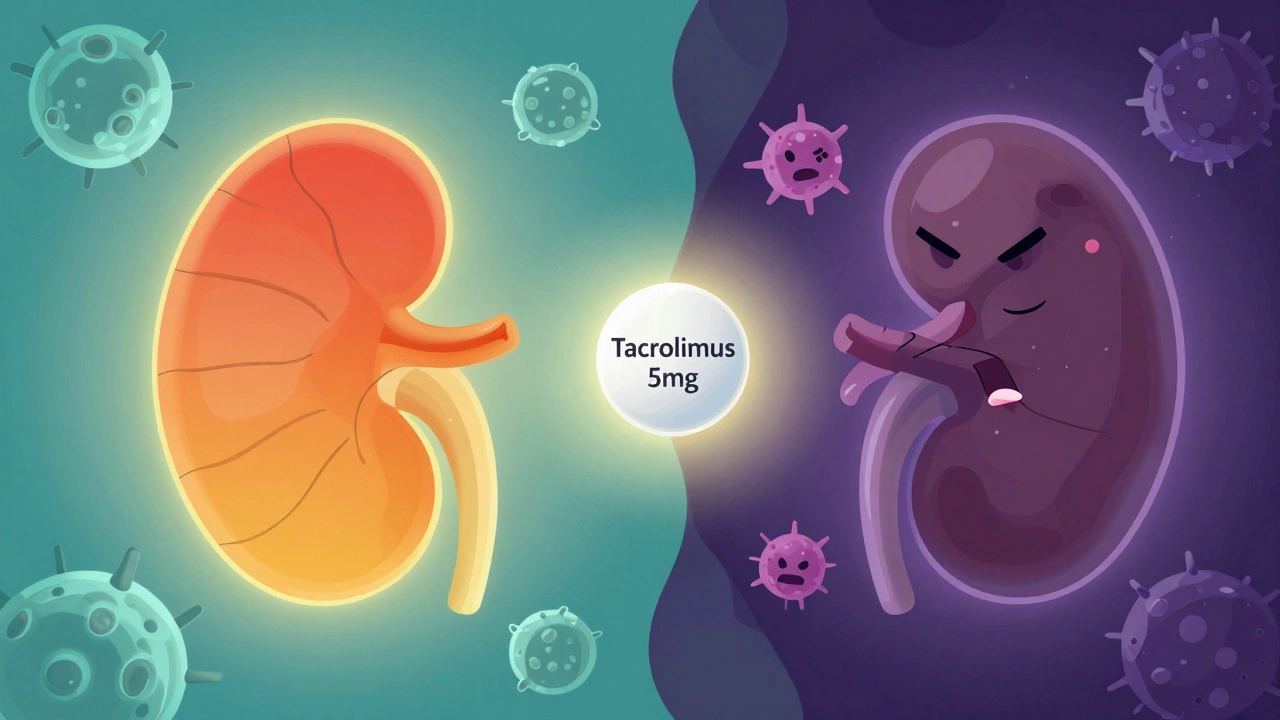
When you’ve had a kidney, liver, or heart transplant, your life depends on a delicate balance. One pill, taken at the wrong time or switched to a different generic version, can trigger rejection - even if it’s labeled the same. Cyclosporine and tacrolimus aren’t just any drugs. They’re life-saving, but they sit in a dangerous category: narrow therapeutic index (NTI) medications. That means the difference between a safe dose and a toxic one is tiny. And when you switch from brand to generic - or between different generic brands - that thin line can shift without warning.
Why These Drugs Are So Tricky
Both cyclosporine and tacrolimus work by blocking calcineurin, a protein that tells your immune system to attack the new organ. But they do it in different ways. Cyclosporine binds to cyclophilin; tacrolimus binds to FKBP proteins. Both end up shutting down T-cells, but tacrolimus does it at 20 to 100 times lower concentrations. That’s why a typical daily dose of tacrolimus is around 5 mg twice a day, while cyclosporine needs 150 mg twice a day. Sounds simple, right? Not when your blood levels need to stay between 5-15 ng/mL for tacrolimus, or 100-200 ng/mL for cyclosporine. Miss by just 2 ng/mL, and you’re either at risk of rejection or kidney damage.Generic Switches Are Riskier Than You Think
Generic versions of both drugs are cheaper - sometimes 70-80% less than brand names like Neoral or Prograf. That’s why insurance companies push them. But here’s the catch: bioequivalence doesn’t mean biological equivalence. The FDA says a generic must deliver 80-125% of the active ingredient compared to the brand. That’s a 45% window. For most drugs, that’s fine. For tacrolimus? It’s wide enough to cause rejection. Real patients report it. One transplant recipient on Reddit switched from brand Prograf to a generic tacrolimus and saw his blood levels drop from 8.5 to 5.2 in two weeks. He had a mild rejection episode. Another user said his nephrologist refused to let him switch to generic cyclosporine because his levels kept swinging. A 2022 survey of over 1,200 transplant patients found 42.7% noticed new side effects after switching to generics. Nearly 1 in 5 needed a dose adjustment.Formulation Differences Matter More Than You’d Expect
Cyclosporine used to come in an oil-based capsule called Sandimmune. It was unreliable - absorption varied wildly based on food, bile, and even gut bacteria. The newer microemulsion version (Neoral) fixed most of that. But generics? Some still use old formulations. One study found that switching between different generic cyclosporine brands caused blood levels to fluctuate by up to 30% - enough to trigger rejection. Tacrolimus is even more sensitive. It’s absorbed in the small intestine, and small changes in how the pill breaks down - the coating, the filler, the particle size - can alter how much gets into your blood. A 2023 analysis found only 41.7% of generic manufacturers provide full bioequivalence data to doctors. That means your transplant team is flying blind.
Who’s Most at Risk?
Not everyone reacts the same. People with poor gut motility, liver disease, or those taking other drugs that interact with CYP3A4 - like antifungals, antibiotics, or even grapefruit juice - are more vulnerable. Older adults and those with diabetes are also at higher risk for toxicity. But even healthy, young transplant recipients aren’t safe. The European Medicines Agency warned in 2020: switching between generic tacrolimus products without monitoring can lead to rejection or kidney damage. A 2021 guideline from the American College of Clinical Pharmacy says this: after any switch - brand to generic, or generic to generic - you need weekly blood tests for at least four weeks. That’s not optional. That’s standard care. Yet many clinics still don’t have protocols in place. A 2022 survey found only 67% of transplant centers have formal policies for managing generic switches.What You Can Do
If you’re on one of these drugs, here’s what works:- Stick to one generic brand. If your pharmacy switches your prescription to a different generic without telling you, ask for the original. Many pharmacies will honor your request if you ask.
- Take it the same way every time. Tacrolimus should be taken either always with food or always without. Do it consistently. Same with cyclosporine.
- Avoid grapefruit. It blocks the enzyme that breaks down both drugs. One grapefruit can double your blood levels.
- Track your levels. Know your target range. Ask your pharmacist for a printed copy of your therapeutic range. Keep it on your phone.
- Report changes. If you feel more tired, shaky, or notice swelling, or if your urine output drops - call your transplant team immediately. Don’t wait.
The Bigger Picture
The market is flooded with generics. As of 2024, there are 14 FDA-approved generic tacrolimus products from eight manufacturers, and 11 generic cyclosporine versions. Over 92% of prescriptions in the U.S. are generic. That’s great for cost savings - generic tacrolimus costs $300-$500 a month, compared to $1,200-$1,500 for Prograf. But the cost of a rejected transplant? Hundreds of thousands of dollars. And a second transplant? Much harder to get. Some centers are now using “single-source” contracts. That means they buy only one generic brand for all patients. It reduces switching. A 2023 survey showed 67% of major transplant programs have adopted this approach. It’s working. One hospital reported a 40% drop in rejection episodes after locking in a single generic supplier.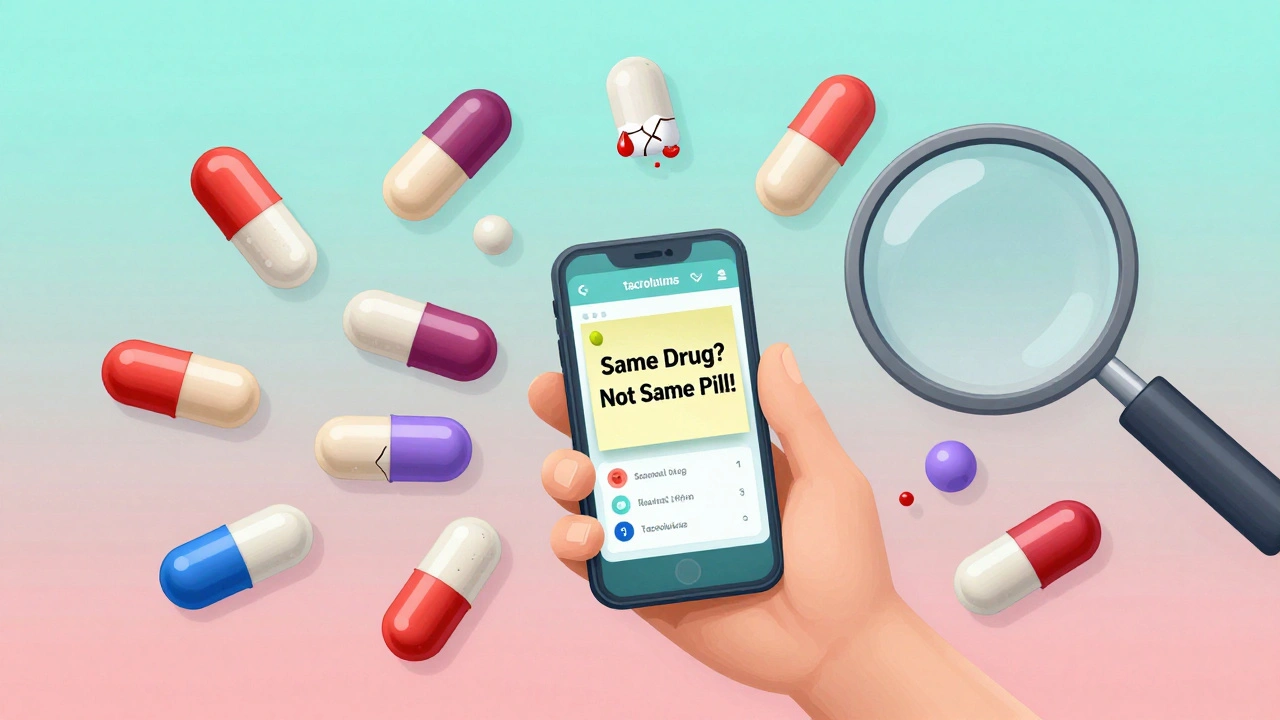
What’s Changing?
New developments are trying to fix this. In late 2023, Astellas got FDA approval for a new extended-release tacrolimus called LCP-tacrolimus. It releases the drug slowly, smoothing out peaks and valleys in blood levels. That could make switching between generics safer. The European Medicines Agency now requires generic makers to test their products in actual transplant patients - not just healthy volunteers. That’s a big step. And in 2023, a JAMA study showed that testing a patient’s CYP3A5 gene before starting tacrolimus can cut the time to reach the right dose by 63%. Genetic dosing is coming - but it’s still not routine.Bottom Line
Generic cyclosporine and tacrolimus are not interchangeable. They’re not the same. Even if they’re labeled “tacrolimus 5 mg,” the pill you get today might not act like the one you got last month. The savings are real. But so are the risks. Your transplant team doesn’t want to play Russian roulette with your new organ. If your insurance forces a switch, ask for a monitoring plan. Demand weekly blood tests for the first month. Keep a log of your levels, symptoms, and doses. If you feel off - speak up. Your life isn’t a cost-cutting experiment.Can I switch between different generic brands of tacrolimus safely?
No, not without close monitoring. Switching between different generic versions of tacrolimus can cause your blood levels to drop or spike, increasing the risk of rejection or toxicity. Even if both are labeled the same strength, differences in formulation can change how your body absorbs the drug. Always notify your transplant team before any switch and expect weekly blood tests for at least four weeks.
Why is tacrolimus more sensitive than cyclosporine to generic switches?
Tacrolimus has a narrower therapeutic range (5-15 ng/mL) and is absorbed more inconsistently than cyclosporine. It’s also more affected by small changes in pill formulation - like coating or fillers - because it’s absorbed in the upper intestine. Even minor differences between generic batches can lead to big changes in blood levels. Cyclosporine has more variability overall, but tacrolimus’s smaller safety margin makes it more dangerous to switch.
Does it matter if I take my generic immunosuppressant with or without food?
Yes. Tacrolimus absorption is affected by food - especially high-fat meals. Taking it inconsistently can cause your levels to swing. Pick one way - always with food or always without - and stick to it. Cyclosporine is also affected, though less dramatically. The key is consistency. Never change your routine without talking to your pharmacist or doctor.
How often should my blood levels be checked after switching generics?
At least once a week for the first four weeks after any switch - whether from brand to generic, or generic to generic. Some centers extend this to six weeks. After that, monthly checks are usually enough if your levels are stable. But if you feel unwell, have a new medication added, or get sick, get tested immediately. Don’t wait for your next scheduled appointment.
Are there any alternatives to cyclosporine and tacrolimus?
Yes, but they’re not direct replacements. Belatacept is an option for kidney transplant patients and doesn’t require blood level monitoring. But it’s given by IV, costs more, and has higher rejection rates in the first year. Sirolimus and everolimus are also used, but they come with their own side effects like high cholesterol and poor wound healing. For most patients, tacrolimus remains the best balance of effectiveness and manageability - even with generic issues.
What should I do if my pharmacy switches my generic without telling me?
Call your transplant center immediately. Ask them to check your blood levels. Then call your pharmacy and ask them to note on your profile that you must receive the same generic brand - no substitutions without approval. Many pharmacies will honor this if you request it in writing. Keep a printed copy of your medication name and manufacturer on hand. You have the right to request consistency.



ian septian
December 10, 2025 AT 19:39Stick to one brand. Period. Your life isn't a chemistry experiment.
Michael Robinson
December 10, 2025 AT 19:41It's wild how we let corporations decide who lives and who dies just to save a few bucks. These drugs aren't aspirin. They're the glue holding people together after surgery.
Tiffany Sowby
December 12, 2025 AT 11:50I switched generics and ended up in the hospital. Now my insurance won't cover the brand. So I'm stuck paying out of pocket or dying slowly. Thanks, capitalism.
Elliot Barrett
December 13, 2025 AT 12:28Stop crying about generics. If you can't afford the brand, maybe you shouldn't have had the transplant in the first place. People die waiting for organs - you got lucky, now deal with it.
Kathy Haverly
December 13, 2025 AT 16:19Everyone's acting like this is news. I've been screaming about this since 2018. No one listens until someone dies. Then they act surprised. Classic.
Sabrina Thurn
December 13, 2025 AT 22:36As a transplant pharmacist, I see this daily. The bioequivalence window (80-125%) is a joke for NTI drugs. We've had patients go from 12 ng/mL to 4.8 ng/mL after a pharmacy switch - no warning, no consent. Single-source contracts aren't just ideal - they're ethical. And yes, we track CYP3A5 genotypes now. It's not magic, it's science.
Patients need to demand the same brand. Write it on your prescription. Call your center if they switch it. You have rights. And if your doc says 'it's fine,' ask for the lab data. If they can't show it, escalate.
Asset Finance Komrade
December 15, 2025 AT 20:50One might posit that the commodification of life-sustaining pharmaceuticals reflects a deeper ontological crisis in Western healthcare - where the body is reduced to a cost-benefit equation, and biological fidelity is sacrificed for market efficiency. The FDA’s 80–125% bioequivalence standard, while statistically acceptable for ibuprofen, becomes grotesque when applied to tacrolimus - a molecule whose efficacy hinges on nanoscale precision. One might ask: if we can land probes on Mars, why can’t we engineer consistent pill formulations? The answer, of course, is profit.
Sarah Gray
December 16, 2025 AT 16:33Let’s be clear: if your pharmacist switches your generic without your written consent, it’s malpractice. Not negligence. Malpractice. You’re not a statistic. You’re a person who survived surgery, and now you’re being treated like a line item on a balance sheet. And if your doctor doesn’t know the difference between Neoral and a no-name generic? Find a new one.
Also, ‘tacrolimus 5mg’ is not a drug. It’s a label. The active ingredient is the same - but the excipients? The coating? The particle size? Those are what kill you. And no, your pharmacist doesn’t care. They’re paid by volume, not by outcome.
Tejas Bubane
December 18, 2025 AT 13:06Bro in India we get generics that cost 50 bucks a month. No one checks levels. People just take it and hope. Some die. Some live. No one talks about it. Your system is broken. Ours is just… quiet.
Carina M
December 19, 2025 AT 22:40It is profoundly disturbing that the American healthcare apparatus has permitted the substitution of life-critical medications based upon arbitrary regulatory thresholds that were never intended for pharmacokinetically volatile agents. The FDA’s bioequivalence parameters, established for antihypertensives and antidepressants, are wholly inappropriate for calcineurin inhibitors. This is not a market failure - it is a moral failure.
William Umstattd
December 20, 2025 AT 09:32I lost my transplant because a pharmacy swapped my Prograf for a generic I’d never heard of. I called them. They said, ‘It’s the same thing.’ I died on the table. My wife still has the receipt. It says ‘tacrolimus 5mg.’ That’s all it says. That’s all it needs to say, apparently. RIP.
Ajit Kumar Singh
December 20, 2025 AT 17:00Here in India we have 10 different brands of tacrolimus and no one checks levels because no one has money for labs. My cousin took a generic and his creatinine went from 1.2 to 4.8 in 10 days. He got a new kidney. Now he’s on brand. Why? Because he survived. That’s the system. No one cares until you’re dead.
But hey - at least the pills are cheap. And that’s what matters right? 😔
Courtney Black
December 21, 2025 AT 06:54It’s funny how we treat drugs like they’re interchangeable commodities. But your immune system doesn’t care about the label. It cares about what’s actually in your bloodstream. And when you switch generics, you’re basically playing Russian roulette with your new organ - except the gun has 10 chambers, and the bullet is invisible. No one tells you this until it’s too late. And by then, your transplant team is scrambling to save you - while your insurance company is still arguing over which generic they’ll cover next month.
I used to think generics were the answer. Now I know they’re the trap. The real solution? Single-source contracts. Mandatory pre- and post-switch labs. And maybe - just maybe - a law that says you can’t swap these drugs without the patient’s signed consent and a 30-day monitoring window. But that’s too much to ask, isn’t it? Profit comes first. Always.