
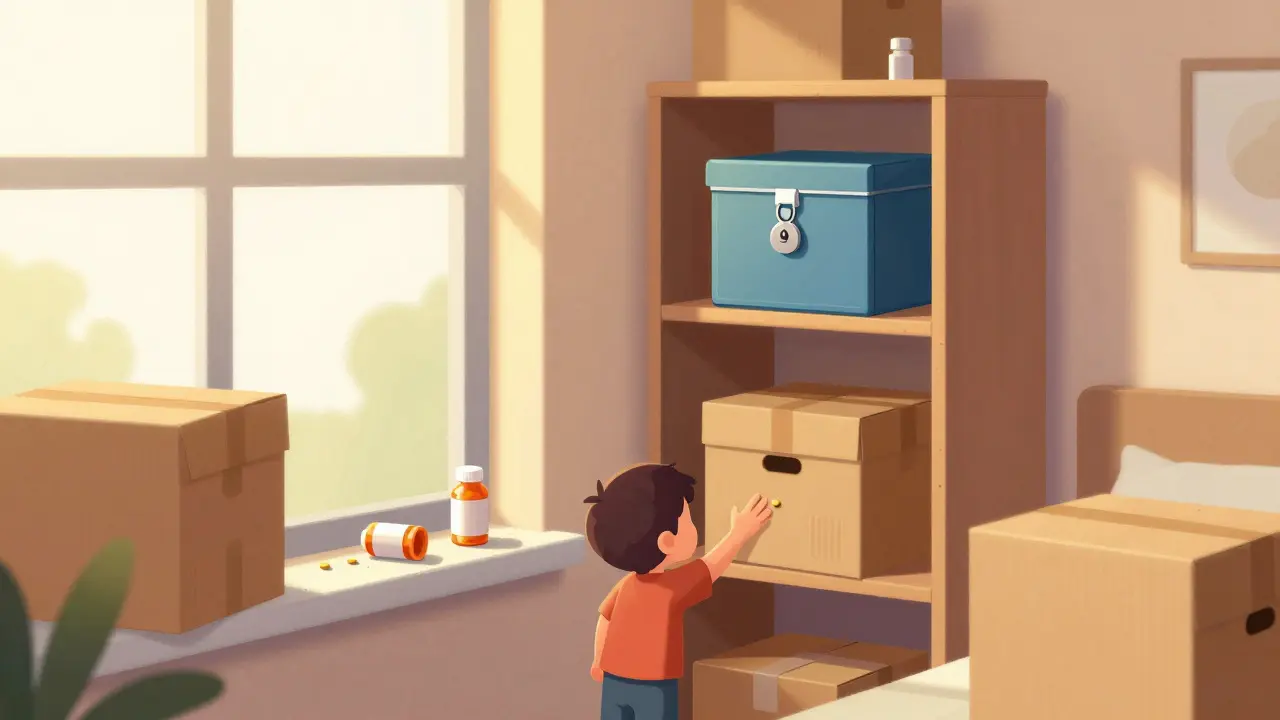
When you’re tearing down walls or packing up your life for a new home, your medications shouldn’t be an afterthought. A bottle of painkillers left on a dusty shelf, insulin sitting in a hot car, or a child finding a pill bottle tucked under a pile of boxes - these aren’t just risks. They’re preventable accidents that happen every day during home transitions. You wouldn’t leave your wallet unattended during a move. Why treat your medications any differently?
Keep Medications in a Cool, Dry Spot - Always
Most pills and liquids need to stay between 59°F and 77°F (15°C-25°C). That’s room temperature. Not your garage. Not your car trunk. Not the bathroom, even if it’s the only clean space left during renovations. Humidity from showers and steam can break down medicine fast. Blood glucose strips, insulin, and even antibiotics can lose effectiveness if they get too damp or too hot. During renovations, pick a spot that’s not being touched - a hall closet, a locked kitchen cabinet, or a bedroom drawer. Avoid anything near a heater, radiator, or window. Sunlight doesn’t just fade labels - it degrades the active ingredients. If you’re moving, pack medications in a cooler with a cold pack if you’re traveling more than a few hours, especially if you’re carrying insulin, epinephrine, or other temperature-sensitive drugs. Don’t just toss them in the moving truck with the dishes. They need protection, too.Lock Them Up - Even Temporarily
The EPA says 55% of Americans take prescription meds. And yet, most homes keep them in open medicine cabinets. That’s fine until your home turns into a construction zone. Kids, guests, or even cleaning crews can easily find and mistake pills for candy. One accidental dose of a strong opioid like oxycodone or fentanyl can be deadly for a child. During renovations or moves, lock your meds in something secure. A locked toolbox, a small safe, a gun safe, or even a locked file cabinet will do. If you don’t have one, buy a cheap medicine lockbox from a pharmacy - they’re under $20. Don’t rely on a “high drawer” if it’s not locked. Kids climb. Curiosity wins. And if you’re staying in a temporary rental or hotel while your house is being redone, bring your lockbox with you. Don’t leave meds in an unlocked dresser.Never Mix Pills or Remove Labels
It’s tempting to dump all your pills into one container to save space. Don’t. Original prescription bottles have the name, dosage, instructions, and pharmacy info. If you mix them, you risk giving yourself the wrong med - or worse, someone else’s. That’s how overdoses happen. If you’re moving and need to pack efficiently, keep each bottle in its original container. Put them in a clear plastic bin with dividers - like a tool organizer - so you can see everything at a glance. Label the bin clearly: “MEDICATIONS - DO NOT DISCARD.” If you’re short on space, ask your pharmacist if they offer transfer labels. Some will re-label your meds into a single container with all the info intact - legal and safe.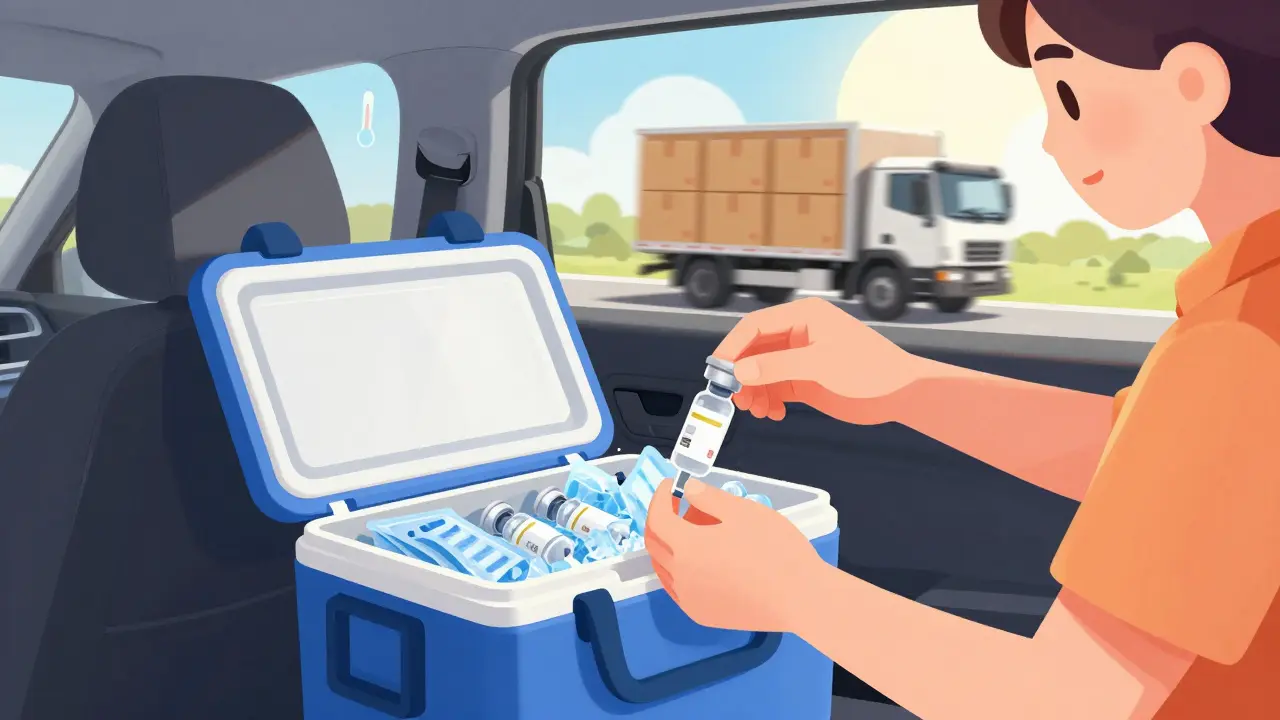
Dispose of Expired or Unneeded Meds Before You Move
Moving is the perfect time to clean out your medicine cabinet. If a pill is expired, discolored, or you haven’t touched it in over a year, it’s time to get rid of it. But don’t flush it. Don’t toss it in the trash. And don’t pour it down the sink. The safest way? Use a drug take-back program. In New Zealand, pharmacies like Pharmacy2U and Countdown offer free disposal bins for unwanted medications. Check with your local pharmacy - most have them. If there’s no drop-off nearby, the EPA and FDA say you can mix pills with cat litter, coffee grounds, or dirt in a sealed plastic bag before throwing them away. This makes them unappealing and hard to recover. But here’s the exception: if you have fentanyl patches, hydrocodone, or other high-risk opioids, flush them. The FDA says it’s the only safe way to prevent accidental overdose in homes with children or pets.Refrigerated Medications Need Special Care
Insulin, some antibiotics, and biologic injections need to stay cold - between 36°F and 46°F. Freezing them ruins them. You can’t tell by looking if they’ve been damaged. One study found that insulin exposed to freezing temperatures can still look normal but lose up to 80% of its effectiveness. If you’re moving in hot weather, pack refrigerated meds in a small insulated cooler with ice packs. Keep the cooler with you in the car, not in the moving truck. If you’re staying somewhere overnight, ask the hotel if they can store it in their fridge. Most will say yes if you explain it’s medical. Never leave insulin in a car during the day - even in winter. Temperatures inside a parked car can hit 120°F in minutes.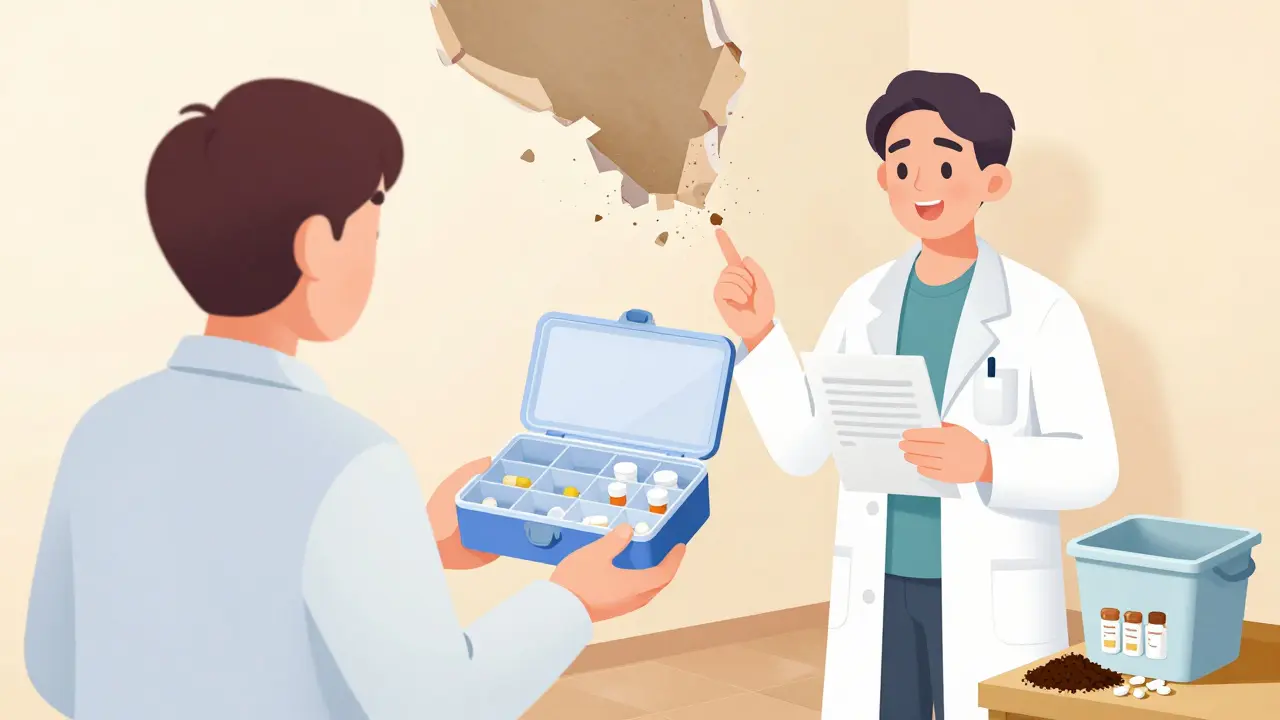
Plan Ahead - Talk to Your Pharmacist
Before you start packing or demoing your kitchen, call your pharmacist. Tell them you’re moving or renovating. Ask:- Which of my meds need special handling?
- Can you repackage my meds into a travel-friendly container?
- Do you have a take-back bin I can use before I move?
- Can you help me get a new prescription if I’m running low during the transition?
What to Do After You Move
Once you’re settled, don’t just toss your meds into the new cabinet. Take a day to:- Check expiration dates on everything.
- Reorganize into a secure, locked space.
- Confirm all refrigerated meds are stored properly.
- Dispose of anything you didn’t move - or anything you didn’t need.
Medications aren’t just stuff. They’re your health. And during a time when your home is in chaos, they need extra care - not less. A little planning now stops a crisis later.
Can I store my medications in the bathroom during renovations?
No. Bathrooms are too humid. Steam from showers and sinks can damage pills, capsules, and liquid meds, making them less effective or even unsafe. Even if the bathroom isn’t being renovated, avoid it. Store meds in a cool, dry place like a bedroom drawer or locked kitchen cabinet instead.
What should I do with my medications if I’m staying in a hotel during renovations?
Bring your medications with you in a locked container. Ask the hotel front desk if they can store them in a fridge (for refrigerated meds) or in a secure cabinet. Never leave them unattended in a hotel room, especially if children or cleaning staff have access. Keep them with you at all times if possible.
Is it safe to move medications in the moving truck?
Only if they’re in a climate-controlled, locked container and you’re certain the truck won’t be left in extreme heat or cold. For most people, it’s safer to carry medications in your personal vehicle. Insulated coolers with ice packs are recommended for temperature-sensitive drugs like insulin. Never leave them in the back of an open trailer or unattended vehicle.
How do I know if my insulin has been damaged by heat or cold?
You can’t tell by looking. If insulin has been frozen or exposed to temperatures above 86°F, it may look clear but won’t work properly. If you suspect damage, stop using it and get a new prescription. Always carry a backup supply when moving or traveling. When in doubt, throw it out and replace it - it’s cheaper than risking a bad dose.
Can I flush my old pills down the toilet?
Only if they’re on the FDA’s flush list - like fentanyl patches, oxycodone, or hydrocodone. These are high-risk drugs that can be deadly if found by children or pets. For all other medications, mix them with cat litter or coffee grounds in a sealed bag and throw them in the trash. Flushing non-listed drugs pollutes waterways and is not recommended.
What if I run out of medication during the move?
Call your pharmacy at least two weeks before your move. Ask for a refill or a temporary supply. Many pharmacies will give you an emergency 7-14 day supply if you’re between homes. Don’t wait until you’re out. Keep a list of your meds and dosages handy - it helps pharmacists help you faster.



Edith Brederode
January 20, 2026 AT 02:10Thank you for this!! 🙏 I just moved last month and accidentally left my mom’s insulin in the garage for two days-thankfully I caught it before she used it. This post saved us from a disaster. Locking meds in a toolbox is genius. I’m buying a lockbox tomorrow! 💊🔒
Arlene Mathison
January 20, 2026 AT 09:35Let’s be real-most people don’t care until someone gets hurt. I’ve seen grandparents forget their meds in a suitcase during a move and end up in the ER. This isn’t ‘nice to know’ info-it’s life-or-death. If you’re reading this and haven’t secured your meds yet, stop scrolling and do it now. Your future self will thank you. 💪
Art Gar
January 21, 2026 AT 08:25While I appreciate the intent, this article fundamentally misunderstands the nature of personal responsibility. Medications are not inherently dangerous; they are tools. To treat them as if they are radioactive is to infantilize adults. If a child ingests a pill, that is a failure of parental supervision-not a flaw in medication storage policy. The real issue is the erosion of personal accountability in modern society. Why are we outsourcing safety to lockboxes and pharmacists? We should be teaching children not to touch unknown substances, not locking everything away like it’s a state secret.
Furthermore, the suggestion to use a cooler for insulin during transit is excessive. If you are traveling with a life-sustaining medication, you are responsible for its integrity. This is not a grocery run. It is medical care. The fact that this is even a topic of discussion reflects a culture of complacency.
And why do we assume every person is either a thief or a child? My grandmother took her pills from an open drawer for 40 years. She lived to 98. Perhaps the problem isn’t the storage-it’s the fear-based marketing of safety products.
There is no scientific consensus that humidity in a bathroom cabinet significantly degrades most oral medications. The FDA’s own guidelines state that room temperature storage is acceptable for the vast majority of prescriptions. This article reads like fearmongering dressed as public service.
Let us not confuse caution with paranoia. And let us not punish responsible adults because of the actions of the irresponsible few.
clifford hoang
January 21, 2026 AT 23:37Okay, but have you considered that this is all a psyop? 🤔 The pharmaceutical industry *wants* you to buy lockboxes and coolers. Why? Because they profit from fear. They know if you think your insulin is ‘unsafe,’ you’ll buy more. They also know if you think your bathroom is ‘contaminated,’ you’ll replace your cabinet with a $150 ‘medical-grade’ storage unit. And who sells those? The same companies that make the pills. 🧪💸
Also-why is the EPA cited? That’s a government agency. Are you aware that the EPA has been infiltrated by Big Pharma lobbyists since 2015? The ‘flush list’? That’s not for safety-it’s to control waste disposal so they can track your medication usage. They’re building a database. They know who’s taking what. And now they want you to ‘call your pharmacist’ like it’s a support group. That’s not advice-that’s surveillance.
Don’t trust the system. Store your meds in a tin can buried under your porch. That’s the only way to stay off the grid. 🌱🔒
Crystal August
January 22, 2026 AT 01:22Why is this even a thing? People are so dramatic. My cousin took his meds in a Ziploc bag for 10 years and never had an issue. And now we’re talking about locked boxes and coolers like we’re smuggling nuclear material? This is ridiculous. Also, why is everyone so obsessed with ‘children finding pills’? Kids don’t just eat random pills-they’re not dogs. If your kid is eating pills, maybe the real problem is your parenting. Stop blaming the medicine cabinet.
Also, I live in Arizona. My bathroom is hotter than the inside of a car. I keep my blood pressure meds there. It’s fine. I’m alive. I’m fine. Stop scaremongering.
Renee Stringer
January 23, 2026 AT 23:31I’m sorry, but I have to say this: the suggestion to flush fentanyl patches is irresponsible. The FDA’s ‘flush list’ was created because of a handful of tragic cases, but it’s still a last resort. Water contamination is a real crisis. I live near a river that’s now unsafe for fishing because of pharmaceutical runoff. We need better take-back programs-not more flushing. And if your pharmacy doesn’t have a bin, call your city council. Demand one. Don’t just accept the easy way out.
This isn’t about convenience. It’s about stewardship. Our medications are part of a larger ecosystem. We owe it to the planet to dispose of them properly.
Andy Thompson
January 25, 2026 AT 14:37Okay, but what if you’re poor? 🤨 You think I’m buying a $20 lockbox? I’m lucky I have a fridge that works. And a car that doesn’t break down. You want me to buy an insulated cooler too? For what? So I can look like a TSA agent on a road trip? My meds are in a plastic bag in my backpack. I’ve had them for 3 years. I’m still here. You’re overcomplicating this. This isn’t a movie. It’s life. And life is messy. Stop making people feel guilty for surviving.
Thomas Varner
January 26, 2026 AT 18:57Just a quick note: I’m a paramedic. I’ve seen too many kids get into their grandpa’s painkillers during a move. One time, a 4-year-old swallowed half a bottle of oxycodone because it was in a ‘high drawer’-that drawer was on wheels. Kids are climbers. They’re curious. They’re fast. And they don’t care about labels. I’ve held a child who almost died because someone thought ‘it’s fine’-and I’ll tell you this: it’s not fine. Lock the meds. Use the lockbox. It’s $15. It’s not about paranoia. It’s about not being the reason a child dies. Period.
Emily Leigh
January 27, 2026 AT 15:13Wow. So now we’re treating medication like nuclear waste? Next they’ll tell us to wear gloves when we open our pill bottles. 😒 This is the most overblown, anxiety-inducing ‘guide’ I’ve ever read. People used to store meds in their nightstands for decades. Nobody died. The world didn’t end. Now we need coolers, lockboxes, and a 10-minute call to the pharmacist just to move houses? This isn’t helpful. It’s exhausting. Just… chill. Your pills are fine. You’re fine. Stop buying into the fear.