

Most people don’t think much about their eyelids-until they start feeling like sand is grinding in their eyes every morning. If you wake up with crusty lashes, red, swollen lids, or a gritty sensation that won’t go away, you’re not alone. About blepharitis affects nearly half of all people who visit an eye doctor. It’s not rare. It’s not dangerous to your vision. But it’s persistent, annoying, and often misunderstood.
What Blepharitis Actually Is
Blepharitis is chronic inflammation along the edge of your eyelids, where your eyelashes grow. It’s not an infection you catch from someone else. It’s not caused by poor hygiene alone. It’s a stubborn condition that flares up because of how your eyelid glands work-or don’t work. There are two main types. The first, anterior blepharitis, affects the outer edge of the lid, near the lashes. This is often tied to skin conditions like dandruff or rosacea. The second, posterior blepharitis (also called meibomian gland dysfunction), happens deeper inside the lid, where tiny oil glands get clogged. These glands normally make the oily layer of your tear film. When they’re blocked, your eyes dry out faster, and irritation follows. Symptoms are unmistakable if you’ve had them: eyelids that feel sticky or glued shut in the morning, redness along the lid margin, flakes like dandruff stuck to your lashes, burning or itching, and tears that look foamy instead of clear. In chronic cases, eyelashes may fall out or grow crooked. A slit-lamp exam by an eye professional can confirm it-look for collarettes (cylindrical debris around lashes) or visible blood vessels.Why Warm Compresses Are the First Step
Every major eye health organization-the National Eye Institute, Mayo Clinic, American Academy of Ophthalmology-agrees on one thing: warm compresses are the starting point for treating blepharitis. Not antibiotics. Not drops. Not expensive creams. Heat. The reason is simple: the oil in your meibomian glands gets thick and waxy when it’s not flowing properly. Think of it like honey in the fridge. It’s solid. But warm it up, and it flows. That’s exactly what warm compresses do. They melt the hardened oil so your glands can start working again. Studies show that applying heat at 40-45°C (104-113°F) for 10-15 minutes twice a day reduces symptoms in 73% of people within the first few weeks. That’s not magic. That’s physics. Heat liquefies the oil. And once it’s liquid, you can clear it out.How to Do Warm Compresses Right
Most people try warm compresses and give up because they don’t do them correctly. It’s not just about holding a warm cloth to your eye. It’s about temperature, timing, and technique. Here’s the proven 4-step method:- Heat: Use a microwavable gel pack, a clean washcloth soaked in hot (not boiling) water, or a medical-grade warming mask. Make sure the temperature is between 40-45°C. Too cold? No effect. Too hot? You risk burning your skin. Test it on your wrist first-it should feel comfortably warm, not scalding.
- Apply for 10 minutes: Set a timer. Most people stop after 5 or 6 minutes. That’s not enough. You need at least 10 minutes of continuous heat to soften the oil deep in the glands. Gel packs hold heat longer than washcloths-on average 12 minutes versus 9.
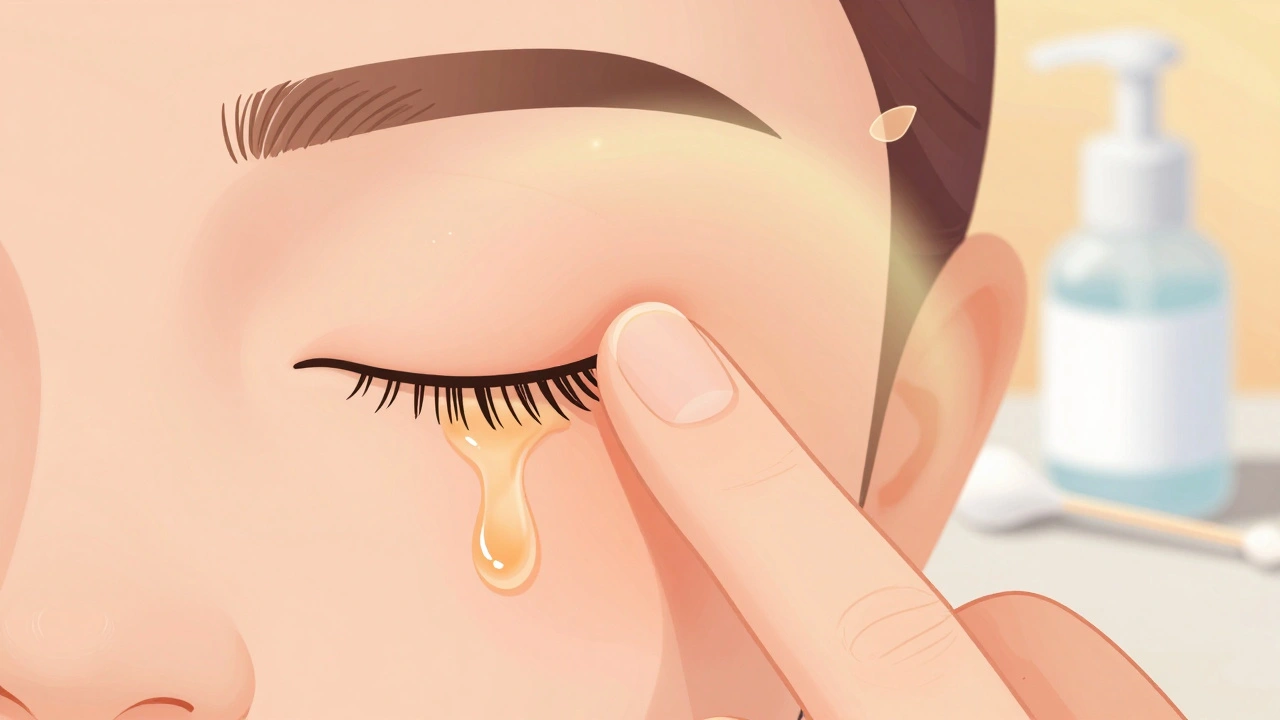
- Massage: Right after heating, gently massage your eyelids. Use your clean index finger. On your upper lid, press down toward your lashes. On your lower lid, press up. Do a slow windshield wiper motion for 30 seconds. This helps squeeze out the melted oil. Studies show this step boosts gland function by 81%.
- Clean: Use a preservative-free lid scrub or a diluted baby shampoo on a cotton swab to wipe the lash line. Don’t scrub hard. Just remove flakes and debris. Then, if your eyes feel dry, use artificial tears.
What Goes Wrong-and How to Fix It
People fail at warm compresses for three main reasons:- Not hot enough: If the compress cools too fast, you’re wasting your time. Use a gel pack. Or microwave your washcloth for 20 seconds after the first minute to reheat it.
- Inconsistent timing: Doing it once a week won’t help. You need twice daily, every day, for at least 30 days. Morning application is most important-it clears the overnight buildup.
- Skipping the massage: Heat alone only does half the job. Without gentle pressure to express the glands, the oil stays trapped. That’s why 81% of patients who improved did so after adding massage.
What Tools Work Best
You don’t need fancy gear. But if you’re serious about sticking with it, tools matter.- Washcloths: Cheap and accessible. But they cool fast. Only 46% of users keep using them after 90 days.
- Medical-grade warming masks: Brands like Bruder or EyeGiene maintain steady heat for 10-15 minutes. They’re reusable, easy to use, and 73% of users stick with them long-term.
- Smart devices: New FDA-cleared tools like the TearCare System deliver precise 43°C heat for exactly 15 minutes. These are used in clinics but are becoming available for home use. They’re pricier ($80-$150), but compliance is 92% in trials.

When to See a Doctor
Warm compresses help most people. But if you’ve done them correctly for 3-4 weeks and still have:- Severe pain
- Blurred vision
- Sores or ulcers on the eyelid
- One eye suddenly worse than the other
The Bigger Picture
Blepharitis isn’t going away. With aging populations and more screen time, it’s becoming more common. The global market for treatments is growing fast-projected to hit $2 billion by 2030. But the real breakthrough isn’t a new drug. It’s better education. For decades, doctors just said “use warm compresses.” Now, they’re teaching exact temperatures, timing, and massage techniques. Research from the 2023 ARVO conference even shows combining warm compresses with 2,000 mg of omega-3s daily improves results by 34%. That’s a simple, low-cost addition. The bottom line? Blepharitis is manageable. It’s not curable, but it’s controllable. You don’t need to live with crusty, burning eyes every morning. The tools are simple. The science is clear. And the fix starts with a warm cloth, a timer, and 10 minutes of your day.What to Expect
Don’t expect overnight results. After 14 days of consistent compresses and massage, most people notice less crusting. By day 30, 85% of compliant users report significant improvement. Your eyes won’t feel perfectly normal right away-but they’ll get better. And the better they feel, the more likely you are to keep doing it.Can blepharitis cause permanent damage?
No, blepharitis does not cause permanent vision loss. However, if left untreated for years, chronic inflammation can lead to eyelash loss, misdirected lashes, or scarring of the eyelid margin. These changes are rare with proper daily care. The main risk is ongoing discomfort and dry eyes, not blindness.
Can I use a heating pad for my eyes?
No. Regular heating pads get too hot and aren’t designed for the eye area. They can burn your skin or damage the delicate tissue around your eyes. Always use something designed for eyelids-like a microwavable gel pack, a warm washcloth, or a medical-grade warming mask. Test the temperature on your wrist first.
Should I use baby shampoo for cleaning my eyelids?
Yes, but only if it’s diluted. Mix one drop of tear-free baby shampoo with half a cup of warm water. Use a cotton swab to gently wipe your lash line-don’t rub. Rinse with clean water afterward. Avoid products with fragrances or alcohol. For best results, use a preservative-free lid scrub made for blepharitis.
Do I need to do warm compresses forever?
Yes, if you want to keep symptoms under control. Blepharitis is a chronic condition, like dandruff or acne. Once you start seeing results, you can reduce from twice daily to once a day for maintenance. But stopping completely will likely bring symptoms back within weeks. Think of it like brushing your teeth-regular care prevents flare-ups.
Can makeup make blepharitis worse?
Yes. Eyeliner, mascara, and eye shadow can clog glands and trap bacteria. If you have blepharitis, avoid eye makeup until your symptoms improve. When you resume, use fresh, clean products. Replace mascara every 3 months. Never share eye makeup. Clean your brushes weekly with mild soap.
Is there a link between blepharitis and screen time?
Yes. Staring at screens reduces blinking by up to 60%, which means your tear film evaporates faster. This worsens dryness and makes blepharitis symptoms feel worse. If you use screens all day, set reminders to blink consciously every 20 minutes. Take 20-second breaks to look away from the screen. Combine this with warm compresses for the best results.



Taya Rtichsheva
December 9, 2025 AT 09:11so i tried the warm compress thing and honestly thought it was a joke at first like why would i rub my eyes with a warm sock but wow like day 3 my lids stopped feeling like sandpaper and now i just do it while watching netflix its basically my new morning ritual
Chris Marel
December 9, 2025 AT 12:43thanks for breaking this down so clearly. i’ve had this for years and always thought it was just me being tired. the part about the oil thickening like honey in the fridge? that actually made sense. i’m gonna start tomorrow with a washcloth and see how it goes.
Evelyn Pastrana
December 11, 2025 AT 01:59ok but can we talk about how the real MVP here is the massage step? like i did the heat for weeks and was like 'this is useless' then my sister was like 'you’re not massaging you’re just holding a cloth' and boom-3 days later i could blink without crying. also baby shampoo works if you don’t wanna buy fancy stuff. just dilute it. i use my old baby shampoo from 2018. no judgment.
Arun Kumar Raut
December 12, 2025 AT 21:08i live in india and we use warm coconut oil on eyelids sometimes but never thought of it as medical. this makes me feel like our grandma’s tricks were smarter than we gave them credit for. thank you for explaining the science behind what we just did because it felt right.
Sabrina Thurn
December 13, 2025 AT 11:57the meibomian gland dysfunction mechanism is clinically validated and aligns with the 2023 ARVO guidelines on evaporative dry eye. the 40–45°C thermal threshold optimizes lipid fluidity without denaturing proteins, and the adjunctive massage significantly enhances gland expression efficiency-81% improvement in secretion volume per recent RCTs. pairing this with omega-3 supplementation at 2000mg/day further modulates inflammatory cytokines like IL-1β and TNF-α. compliance remains the primary barrier, not efficacy.
iswarya bala
December 13, 2025 AT 20:14i did this for 2 weeks and thought it wasnt working but then i started doing it every morning and now my eyes dont feel like theyre full of dirt all day. also i use a washcloth and microwave it for 20 sec after 5 min and its perfect. thanks for the tip!!
Simran Chettiar
December 14, 2025 AT 15:40one cannot help but contemplate the existential implications of this condition: our eyelids, those delicate membranes that shield the windows to our souls, are simultaneously the very locus of our daily suffering-a paradox of biological design. the warmth we apply is not merely thermal, but symbolic: a ritual of self-care in an age of relentless digital intrusion, where blinking has become a forgotten art. we are not merely treating glands-we are reclaiming our humanity, one 10-minute compress at a time.
Philippa Barraclough
December 15, 2025 AT 17:35the data on compliance with washcloths versus medical-grade masks is compelling, particularly the 46% attrition rate after 90 days. i’m curious whether this correlates with the physical discomfort of reheating or simply the psychological burden of routine. the 92% compliance with TearCare suggests that automation reduces cognitive load, which may be the real innovation-not the heat itself.
Tim Tinh
December 17, 2025 AT 00:25man i tried this for like 3 days then forgot about it. then my dog jumped on my face and i was like oh right my eyes are still burning. so i got the bruder mask and now i do it while scrolling tiktok. best $30 i ever spent. also dont use baby shampoo with fragrance. i did and my eyes felt like they were on fire. lesson learned.
Tiffany Sowby
December 18, 2025 AT 22:25so you’re telling me the reason my eyes hurt is because i’m not doing some 10-minute spa routine? and i thought i was just lazy. also why is this even a thing? why do we have glands that just clog like a sink? america’s healthcare system is broken and now my eyelids are too.
Shubham Mathur
December 19, 2025 AT 05:09the massage is everything. i used to skip it. i thought heat was enough. no. you need to press down on the upper lid and up on the lower like you’re squeezing toothpaste. 30 seconds. do it. if you don’t you’re wasting your time. i’ve been doing this for 6 months and my eyes are fine now. no more crust. no more burning. just do it. no excuses.
Stacy Tolbert
December 20, 2025 AT 16:48i used to wear eyeliner every day. now i don’t even own any. it’s been 8 months and my eyes haven’t felt this good since college. i miss the look but i miss the pain more. i’m not going back.
Ryan Brady
December 22, 2025 AT 02:49lol america spends billions on eye drops but the fix is a washcloth and 10 minutes. also i used a heating pad once. my eyelid was red for a week. don’t be me.