
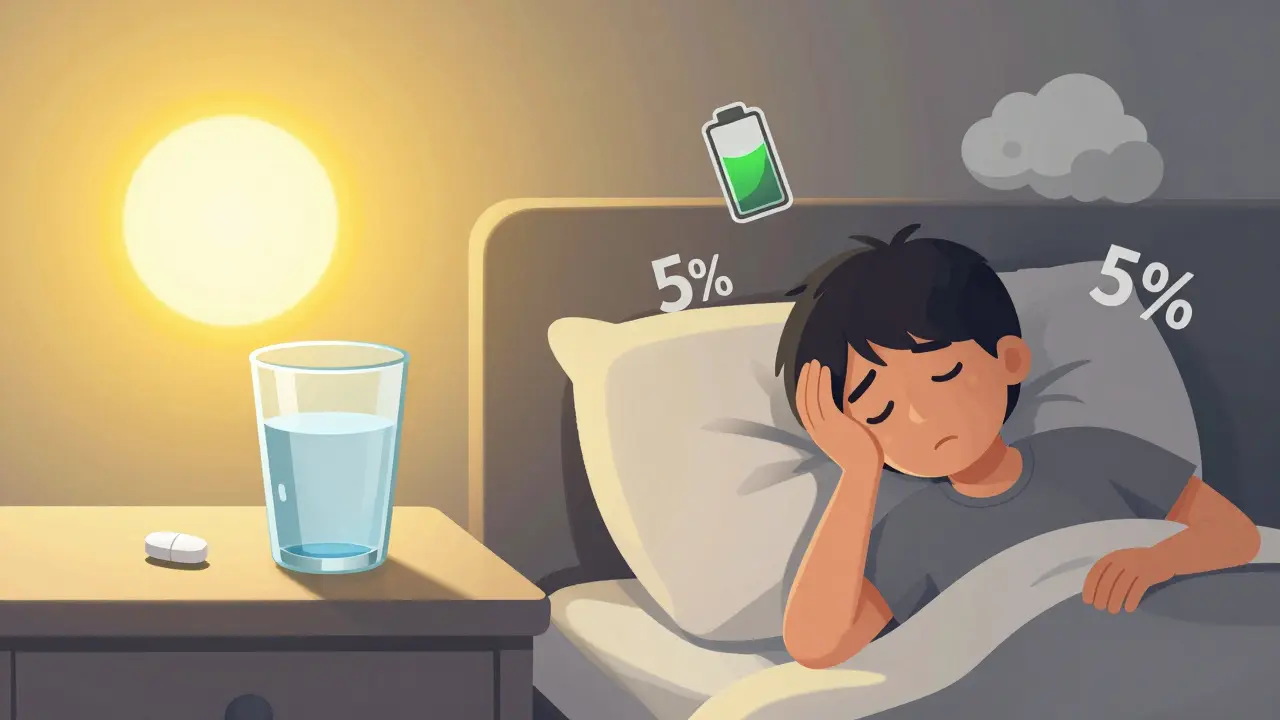
Quick Guide to Better Absorption
- The Gold Standard: Take your pill 30-60 minutes before breakfast with water.
- The Danger Zone: Avoid coffee, calcium, and iron for at least 4 hours.
- The Alternative: Bedtime dosing can work, but only if you wait 3-4 hours after your last meal.
- The Warning: Never switch your dosing time without talking to your doctor, as it can shift your TSH levels.
Why Timing Matters for Your Thyroid
Your body doesn't just soak up thyroid medication anywhere; absorption happens primarily in the upper small intestine. For this to work, the environment in your gut needs to be just right. When you eat, you change the pH levels and introduce substances that physically block the medication from entering your bloodstream. To put this into perspective, research in the Journal of Clinical Endocrinology & Metabolism showed a staggering difference in TSH concentrations. Patients who took their meds in a fasting state had a mean TSH of 1.06 mIU/L, while those who took it with breakfast jumped to 2.93 mIU/L-a 176% increase. Essentially, eating breakfast too soon can trick your body into thinking it needs more hormone, even though you've already taken your dose.The "Absorption Killers": What to Avoid
Not all foods are created equal. Some specific supplements and drinks act like magnets, binding to the medication and pulling it straight through your system without letting it get absorbed.| Substance | Estimated Absorption Drop | Required Gap |
|---|---|---|
| Iron Supplements | ~39% reduction | 4 hours |
| Coffee | ~36% reduction | 30-60 minutes |
| Calcium Supplements | 27-36% reduction | 4 hours |
| Proton Pump Inhibitors (Omeprazole) | Variable (pH change) | 3-4 hours |
Morning vs. Night: Which is Better?
For decades, the morning-before-breakfast routine was the only way. However, many people find this nearly impossible. Between rushing kids to school or dealing with an upset stomach, the "30-60 minute wait" can be a struggle. This has led to a debate about bedtime dosing. Some studies, including a systematic review in the Journal of Clinical Medicine, suggest that taking medication in the evening actually results in lower TSH levels and higher free T4 levels compared to morning dosing. This suggests that for some, the gut may be more receptive at night. Other research, like the Rajput et al. study, found no significant difference between morning and evening dosing, implying that consistency is more important than the specific time of day. If you're struggling with morning routines, switching to bedtime can be a lifesaver-provided you take it at least 3 to 4 hours after your last meal. If you take it right after a late dinner, you're back to the same absorption issues you had with breakfast.
Special Cases: Pregnancy and Cancer Therapy
For most of us, a slight fluctuation in TSH is an annoyance. For others, it's a critical risk. Pregnant women must be incredibly strict with their timing. Thyroid hormone is essential for fetal brain development, and the American Thyroid Association suggests keeping TSH below 2.5 mIU/L in the first trimester. Even a small dip in absorption can have consequences for the baby. Similarly, people receiving suppressive therapy for thyroid cancer need to keep TSH levels extremely low (often below 0.1 mIU/L) to prevent cancer recurrence. In these cases, there is zero room for error. Taking the pill with a snack or a coffee isn't just a "bad habit"; it's a clinical risk that could compromise their treatment.Practical Tips for Staying Consistent
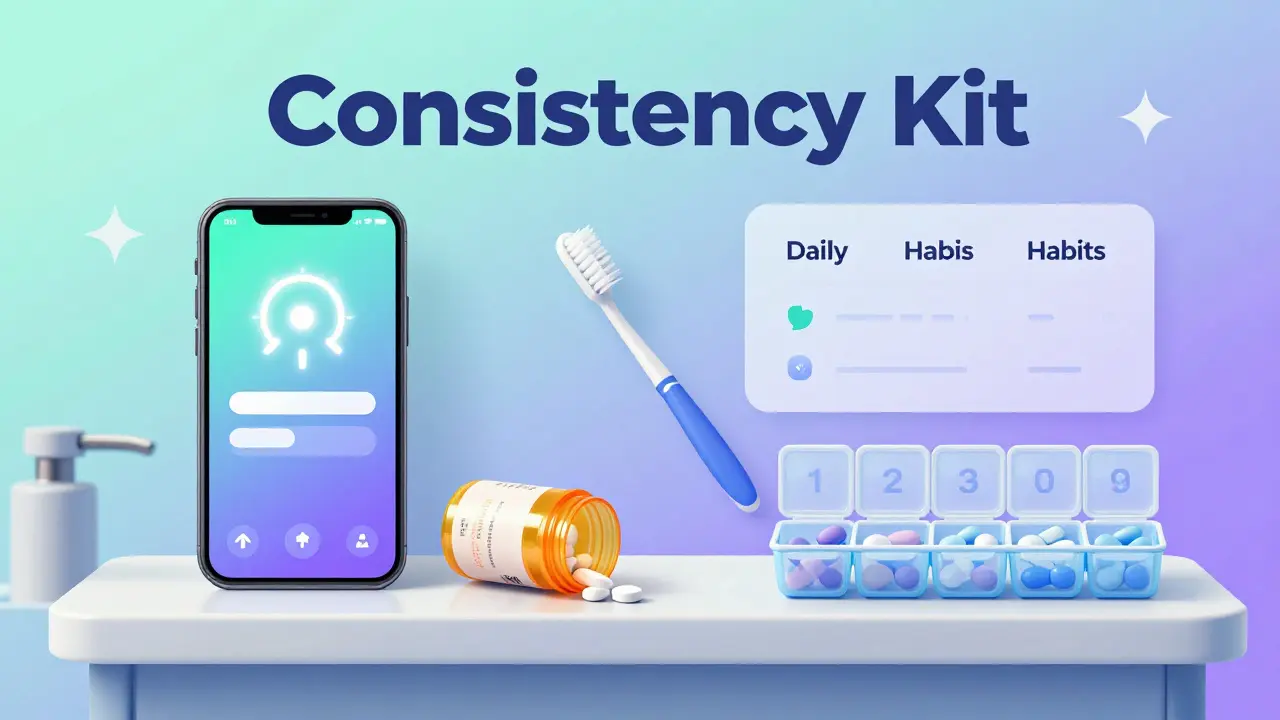
Knowing the rules is one thing; following them every single day is another. If you find yourself forgetting your dose or accidentally taking it with food, try these strategies:- The Visual Cue: Place your pill bottle next to your toothbrush or your car keys. If you can't leave without your keys, you won't leave without your meds.
- The Upside-Down Trick: Turn your medication bottle upside down after you take your dose. This gives you an instant visual confirmation that you've taken it for the day.
- Tech Support: Use smartphone reminders. Research shows that digital alerts increase timing adherence by 38% compared to old-school pillboxes.
- The Weekly Prep: Use a pill organizer to avoid the "did I take it today?" panic.
Looking Toward the Future
Fortunately, we aren't stuck with tablets forever. The FDA approved Tirosint-SOL, an oral solution that bypasses many of the food-interaction problems associated with tablets. It allows for more flexibility in how and when it's taken without the same drastic TSH swings. There are also delayed-release formulations currently in phase 3 trials. The goal is to create a pill that releases the hormone in a way that makes it immune to whether you've just eaten a bagel or a full English breakfast. Until then, the traditional tablet remains the standard for nearly 90% of patients, meaning your routine is still your best tool for health.Can I take my thyroid medication with coffee?
No. Coffee can reduce the absorption of levothyroxine by as much as 36%. You should wait at least 30 to 60 minutes after taking your medication before drinking coffee to ensure the drug is properly absorbed into your bloodstream.
What happens if I accidentally take my pill with food?
A single instance likely won't cause a crisis, but doing it consistently will raise your TSH levels and may bring back symptoms like fatigue and brain fog. If you've been doing this for weeks, you should notify your doctor as your dosage may need adjusting or your TSH may need re-testing.
Is it okay to switch from morning to evening dosing?
Yes, but only under a doctor's supervision. Switching the time of day can change how much of the drug your body absorbs, which can shift your TSH levels. Your doctor will likely want to test your blood every 6 to 8 weeks after the switch until your levels stabilize.
Why do I have to wait 4 hours to take calcium or iron?
Calcium and iron are "binders." They attach to the levothyroxine molecule in the gut, creating a complex that the body cannot absorb. This can reduce your medication's effectiveness by up to 39% for iron and 36% for calcium.
What is a normal TSH range?
For most adults, the target TSH range is between 0.4 and 4.0 mIU/L. However, this varies based on age and health goals-for example, pregnant women in their first trimester often need to keep TSH below 2.5 mIU/L.
Next Steps for Different Situations
If you are a stable patient: Keep doing what works. If your TSH is consistently in range, don't change your timing unless it's causing you significant stress or gastrointestinal issues.
If your TSH is erratic: Audit your morning. Are you taking your pill with a splash of juice? Do you take a multivitamin right after? Try a strict 60-minute water-only window for one month and see if your levels stabilize.
If you are pregnant: Prioritize your timing above all else. Set multiple alarms and ensure you are fasting for the full window before breakfast to support fetal neurodevelopment.
If you take multiple medications: Map out your day. Group your "binding" supplements (calcium, iron) in the evening and your thyroid medication in the early morning to ensure a clear 12-hour gap.


Divine Manna
April 6, 2026 AT 05:09It is quite telling that the masses struggle with a basic pharmacological requirement. The necessity of a fasting state is not a suggestion but a biological imperative rooted in the pH-dependent nature of the upper gastrointestinal tract. One must realize that the body is a temple of chemical reactions, and to introduce coffee-a complex mixture of alkaloids and acids-into that equation is simply an exercise in futility. If you cannot manage a sixty-minute window of abstinence, you are essentially fighting against your own physiology. True wellness requires a level of discipline that most simply lack in this era of instant gratification.