
Steroid Acne Treatment Guide
Personalized Treatment Recommendations
This tool suggests appropriate treatments based on your specific steroid type and breakout characteristics. Always consult your dermatologist before starting new treatments.
Personalized Treatment Plan
Key Considerations
Important Warning
When you're managing a serious health condition with steroids, the last thing you expect is a sudden, frustrating breakout. But steroid acne is a common side effect for many people, and it's not like regular acne. This condition develops directly from steroid exposure and requires specific treatment strategies. Understanding what causes it and how to treat it can make a real difference in your skin health.
What Is Steroid-Induced Acne?
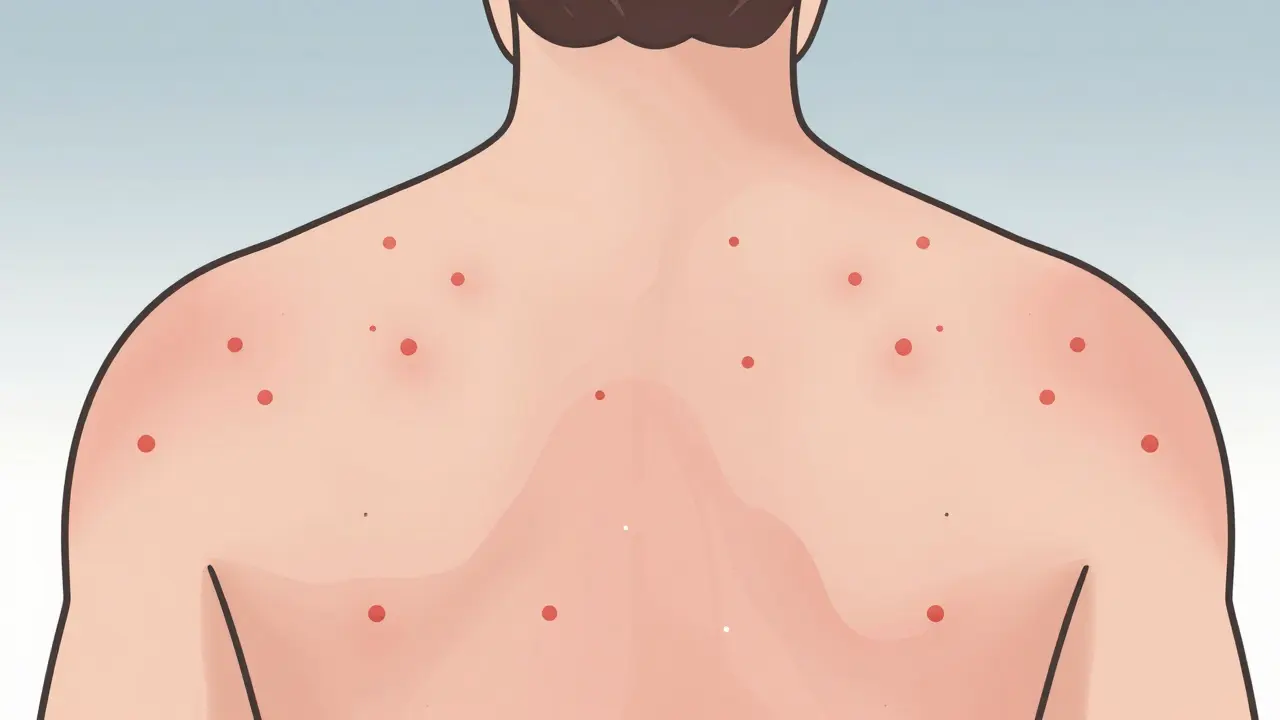
Steroid-induced acne is a specific dermatological condition caused by corticosteroid or anabolic steroid use. Unlike regular acne, it develops as a direct side effect of these medications. The first clinical documentation came from a 1973 study in Archives of Dermatology by Mills, Leyden, and Kligman. They found that steroid acne forms dense clusters of uniform red bumps that quickly turn into whiteheads and blackheads. It typically affects the chest and upper back more than the face, which is a key difference from common acne vulgaris.
According to MedicalNewsToday (2023), about 10-20% of patients on high-dose corticosteroids develop this condition. Younger people are more susceptible, but anyone on steroids can get it. The onset usually happens several weeks after starting treatment, depending on the steroid dose and type. For example, prednisone at 20mg/day or higher significantly increases the risk.
How It Differs from Regular Acne
Corticosteroids like prednisone are often prescribed for asthma, autoimmune diseases, or after organ transplants. Meanwhile, Anabolic steroids used in bodybuilding can also trigger severe acne. Both cause similar skin issues, but steroid acne has unique characteristics. Unlike regular acne with varied lesion sizes, steroid acne lesions are uniform in appearance. They often appear as dense clusters of red papules that progress to whiteheads and blackheads. The face isn't always the main area-chest and back breakouts are more common.
Some cases of steroid acne are actually Malassezia folliculitis. This is caused by yeast overgrowth and presents as itchy, uniform bumps without comedones. DermNet NZ (2014) notes that 30-40% of steroid acne cases fall into this category. It's important to distinguish between the two because treatment differs significantly.
Effective Topical Treatments
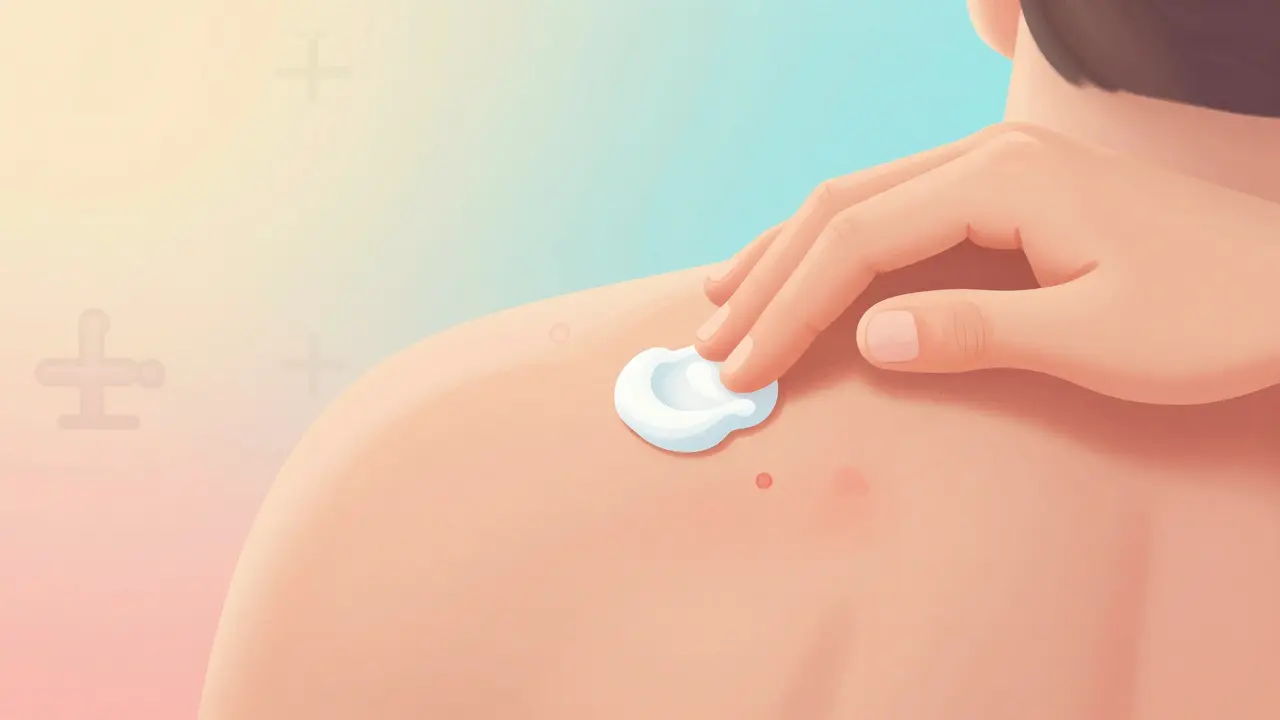
Tretinoin is a game-changer for steroid acne. A landmark 1973 study showed 85-90% effectiveness in clearing lesions within two to three months, even while continuing steroid therapy. Apply a 0.05% solution once or twice daily. Start slowly to avoid irritation-maybe every other night at first. This is especially helpful for patients who can't stop their steroid treatment.
Another top option is Benzoyl peroxide. Use a 5% concentration as a cleanser on affected areas. It reduces bacteria and inflammation. However, it can dry out the skin, so pair it with a non-comedogenic moisturizer. For Malassezia folliculitis, apply ketoconazole shampoo (2%) to affected areas for 5-10 minutes before rinsing. DermNet NZ reports this works in 70-80% of yeast-related cases.
Oral Medications and Their Risks
For moderate cases, doctors may recommend oral antibiotics like doxycycline. The Cleveland Clinic (2023) warns against long-term use due to antibiotic resistance risks. Maximum treatment duration should be 3-4 months. For women, oral contraceptives with ethinyl estradiol and progestin can help by reducing androgen levels. Spironolactone (25-50mg daily) is another anti-androgen option.
Isotretinoin is effective for severe cases. But there's a major caveat for anabolic steroid users. A 2021 PMC study documented cases where isotretinoin triggered acne fulminans-severe, ulcerated lesions-in bodybuilders. This can require hospitalization. Always discuss risks with a dermatologist before starting isotretinoin.
Lifestyle Changes for Healthier Skin
Managing steroid-induced acne isn't just about treatments. Lifestyle adjustments play a big role. Here's what works:
- Avoid harsh scrubs that irritate the skin and worsen inflammation.
- Use sunscreen daily-steroids and acne treatments increase sun sensitivity.
- Choose non-comedogenic moisturizers to protect your skin barrier.
- Manage stress through exercise or mindfulness practices.
- Wear loose clothing to reduce friction on affected areas.
Recent research from Curology (2023) highlights the role of the TLR2 pathway. Corticosteroids affect this pathway, which interacts with Propionibacterium acnes bacteria on the skin. This triggers inflammation pathways similar to regular acne. Future treatments may target this mechanism directly.
Real Patient Experiences
On Reddit's r/SkincareAddiction (October 2022), user 'GymBro420' shared how prednisone for asthma caused hundreds of red bumps on his chest. 'Tretinoin cleared 80% of my lesions in eight weeks despite continuing prednisone,' he said. Another user, 'TransplantSurvivor' (March 2023), found clindamycin stopped working after two weeks. But tretinoin kept working while they continued prednisone for a kidney transplant.
Bodybuilding communities tell a different story. User 'SteroidCycleGuru' on Bodybuilding.com (January 2023) warned that isotretinoin during or after anabolic steroid cycles can trigger 'catastrophic acne fulminans.' Two of their training partners required hospitalization after trying this approach. These real-world experiences show why personalized treatment matters.
When to See a Dermatologist
If your acne doesn't improve after 4-6 weeks of treatment, or if it's causing scarring, see a dermatologist. They can adjust your treatment plan based on your specific case. The American Academy of Dermatology's 2023 guidelines emphasize that delaying treatment beyond 8 weeks significantly increases scarring risk. For patients on long-term corticosteroids, a dermatologist can help balance skin health with necessary medical therapy.
How long does steroid acne last after stopping steroids?
Typically, steroid acne resolves within 4-8 weeks after discontinuing steroid therapy. However, for patients who need ongoing steroid treatment for medical reasons, the condition may persist longer. Dermatologists like Dr. Amanda Oakley of DermNet NZ confirm that while the acne usually clears up after stopping steroids, it's crucial to manage it properly during treatment to prevent scarring.
Can I use regular acne treatments for steroid acne?
Not always. Regular acne treatments may not work for steroid-induced acne because the underlying cause is different. For example, benzoyl peroxide helps some cases, but isotretinoin can worsen bodybuilding acne. Always consult a dermatologist before trying new treatments.
Is steroid acne contagious?
No, steroid acne is not contagious. It's caused by medication side effects, not by bacteria or viruses that spread between people. You can safely touch or share items with someone who has steroid acne without risk of transmission.
What's the best moisturizer for steroid acne?
Choose non-comedogenic moisturizers labeled 'oil-free' or 'for sensitive skin.' Look for ingredients like hyaluronic acid or ceramides that hydrate without clogging pores. Avoid products with heavy oils, fragrances, or alcohol. DermNet NZ recommends products specifically designed for acne-prone skin to counteract steroid-induced barrier disruption.
Can diet affect steroid acne?
While diet isn't the main cause of steroid acne, some foods may worsen inflammation. High-glycemic foods like sugary snacks or white bread can increase insulin levels, potentially triggering breakouts. Focus on whole foods, vegetables, and lean proteins. However, medication management remains the priority over dietary changes alone.



Savannah Edwards
February 6, 2026 AT 14:47When I started on prednisone for my lupus, steroid acne hit me hard. Those uniform red bumps on my chest and back were so frustrating, totally different from regular acne. I tried OTC treatments first, but nothing worked until I started tretinoin. Starting slow with it every other night helped avoid irritation. Switching to non-comedogenic moisturizers was a game-changer. The article mentioned the TLR2 pathway, which makes sense why regular acne products fail here. Managing stress through yoga also helped since anxiety worsens breakouts. Wearing loose cotton clothes reduced friction on affected areas. It's crucial to consult a dermatologist early to prevent scarring. This journey has been tough, but knowing it's a side effect of necessary meds helps. I'm glad the post included real patient stories-it makes you feel less alone. Everyone's experience is different, but there are effective ways to manage it. Consistency and patience are key. This information is invaluable for anyone on long-term steroids.
Mayank Dobhal
February 8, 2026 AT 10:36Prednisone acne is brutal. Tretinoin helped a bit but still struggling. It's tough dealing with this on top of my other health issues.
Marcus Jackson
February 9, 2026 AT 13:20Just FYI, benzoyl peroxide at 5% is way better than tretinoin for steroid acne. Tretinoin can cause too much irritation. I've used it for years and it's the only thing that works. Also, avoid anything with alcohol.
Natasha Bhala
February 11, 2026 AT 09:09this helpped me a lot thx
Gouris Patnaik
February 11, 2026 AT 19:27In India, we've used neem and turmeric for centuries to treat skin issues. Why rely on Western medicine when traditional remedies work better? This whole steroid acne thing is a symptom of overmedication. We should focus on natural solutions instead.
Jesse Lord
February 13, 2026 AT 18:19Hey ive been through this too its tough but there are ways to manage it using tretinoin carefully and moisturizing well really helped me dont give up
AMIT JINDAL
February 13, 2026 AT 23:53OMG, you guys are so wrong about steroid acne! I've been using anabolic steroids for 5 years and my skin is perfect! 😎 The key is to use a specific serum I developed myself. It's a blend of rare herbs from my family's estate in India. You should all follow my regimen. Also, stop using tretinoin-it's for weak people. My method is scientifically proven (though I haven't published it yet). Trust me, I know what I'm talking about. 🤓
Catherine Wybourne
February 15, 2026 AT 18:44Wow, another post about Western medicine solutions. Meanwhile, Ayurveda has been solving this for millennia. But hey, whatever helps you feel better, right? 😏
Ashley Hutchins
February 16, 2026 AT 13:50you should stop taking steroids altogether its not worth it for a litle acne. its your fault for not taking care of your skin properly. i know better than you do
Lakisha Sarbah
February 17, 2026 AT 13:30i found that using a gentle cleanser and non-comedogenic moisturizer really helped. also, sunscreen is a must. thanks for the tips
Ariel Edmisten
February 19, 2026 AT 07:46good tips! tretinoin works if you use it right. keep it up
Niel Amstrong Stein
February 20, 2026 AT 04:13cool post! i love how it connects science with real-life experiences. the tlr2 pathway thing is fascinating. also, in my culture we use aloe vera for skin issues. 🌿✨
Paula Sa
February 21, 2026 AT 10:24i agree with the tretinoin advice. it's really effective. also, maybe try some natural remedies like chamomile tea compresses. just a thought
Mary Carroll Allen
February 21, 2026 AT 20:51this is so important! i had no idea steroid acne was so different. the tretinoin info was a game changer. sugar definitely makes it worse for me