
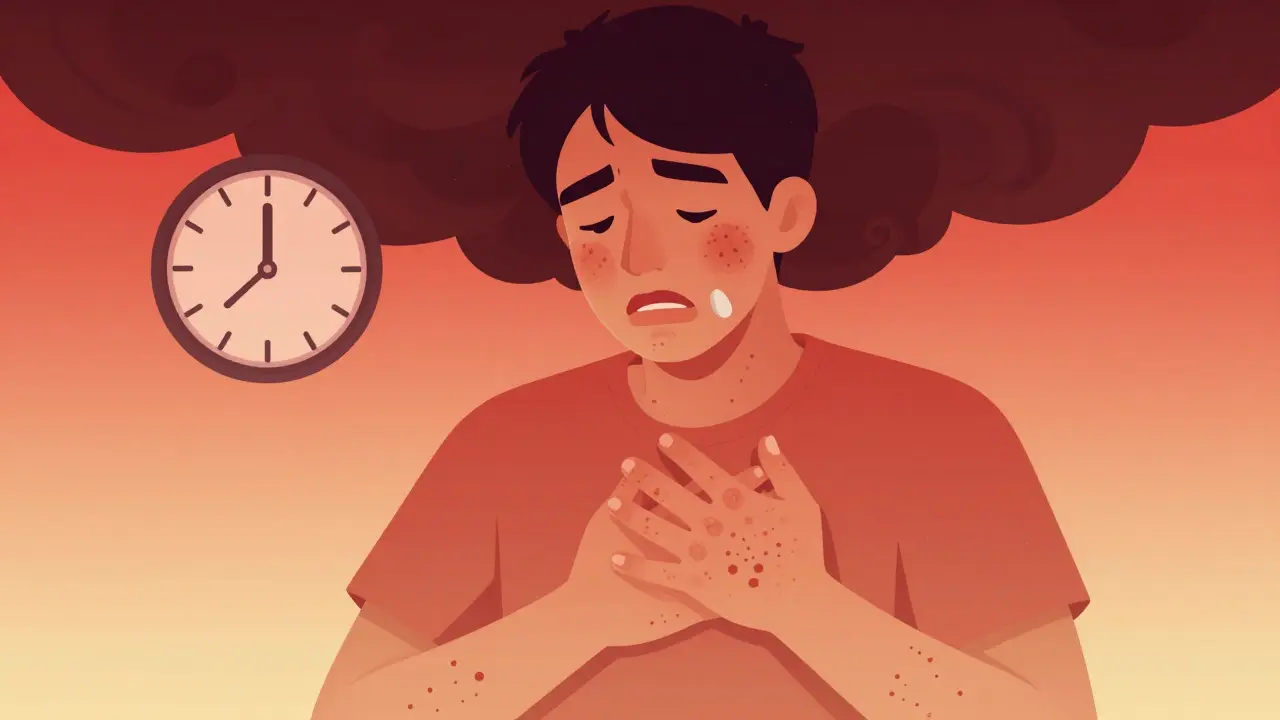
What a Drug Allergy Really Is
A drug allergy isn’t just a bad side effect. It’s your immune system overreacting to a medication, treating it like an invader. That’s different from nausea or dizziness from a drug - those are side effects, not allergies. Only about 5-10% of people who think they’re allergic to a drug actually are. The rest are mislabeled, often because a rash appeared after taking medicine, and someone assumed it was an allergy. But a rash doesn’t always mean an allergy. And missing the real thing? That’s dangerous.
Common Signs You Might Be Having an Allergic Reaction
The most obvious sign is a skin reaction. Think red, itchy hives - raised, swollen patches that look like mosquito bites but spread fast. Itching is almost always there, too. Swelling isn’t rare either. Lips, tongue, eyelids, even your throat can puff up. That’s not just uncomfortable - it can block your airway.
Other signs include coughing, wheezing, or trouble breathing. If you’re taking a pill and suddenly feel tightness in your chest or can’t catch your breath, don’t wait. Nausea, vomiting, or diarrhea can also happen. But here’s the key: if you have more than one of these at the same time - say, hives and trouble breathing - that’s not just a reaction. That’s anaphylaxis. And it can kill you in minutes.
Timing Matters: When Symptoms Show Up
Some reactions hit fast. Like within an hour. That’s usually IgE-mediated - your body’s quick-response system going off. Penicillin, sulfa drugs, and some painkillers like ibuprofen or naproxen often trigger these. You might feel fine after taking the pill, then within 30 minutes, your skin breaks out and your throat starts closing.
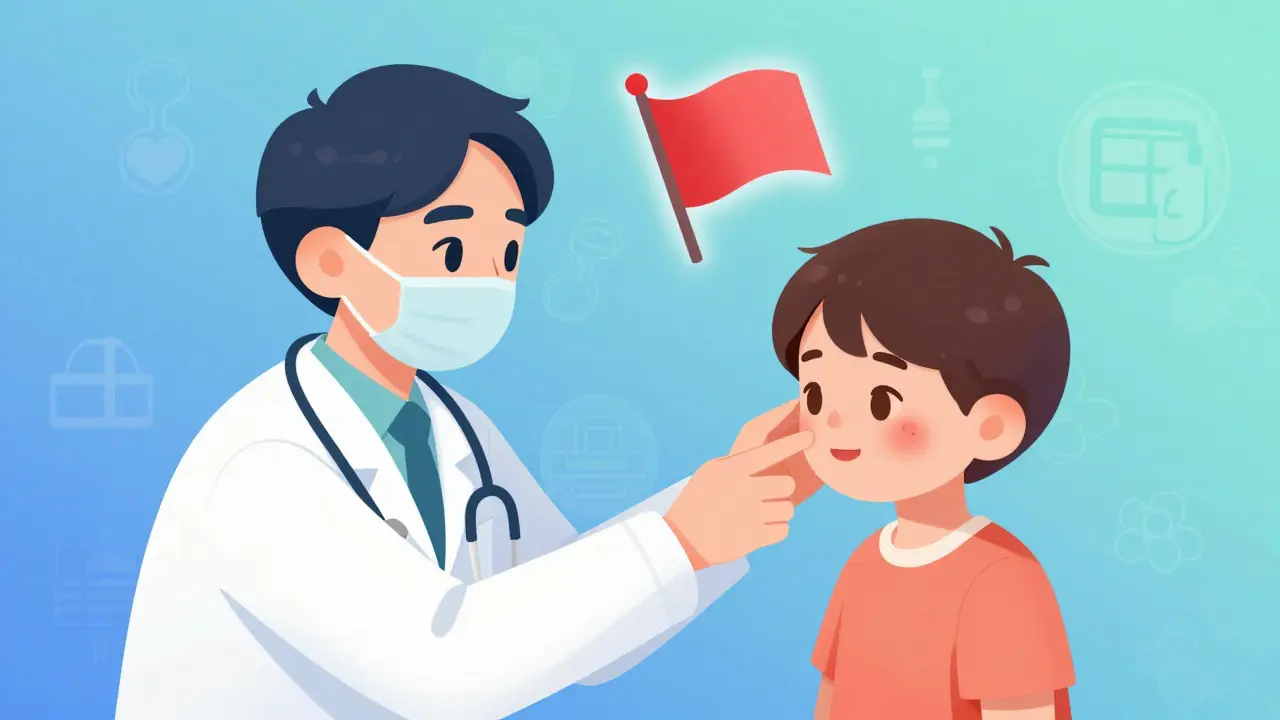
Other reactions take their time. A rash from a drug like amoxicillin or allopurinol might not show up for days - sometimes even weeks. These are delayed reactions. They often look like a flat, red, itchy rash all over your body. They’re less likely to be life-threatening right away, but they can still be serious. DRESS syndrome, for example, can cause fever, swollen glands, liver damage, and a rash that spreads slowly. It’s rare, but if you develop a rash after a new drug and also feel sick with fever or swollen lymph nodes, get checked.
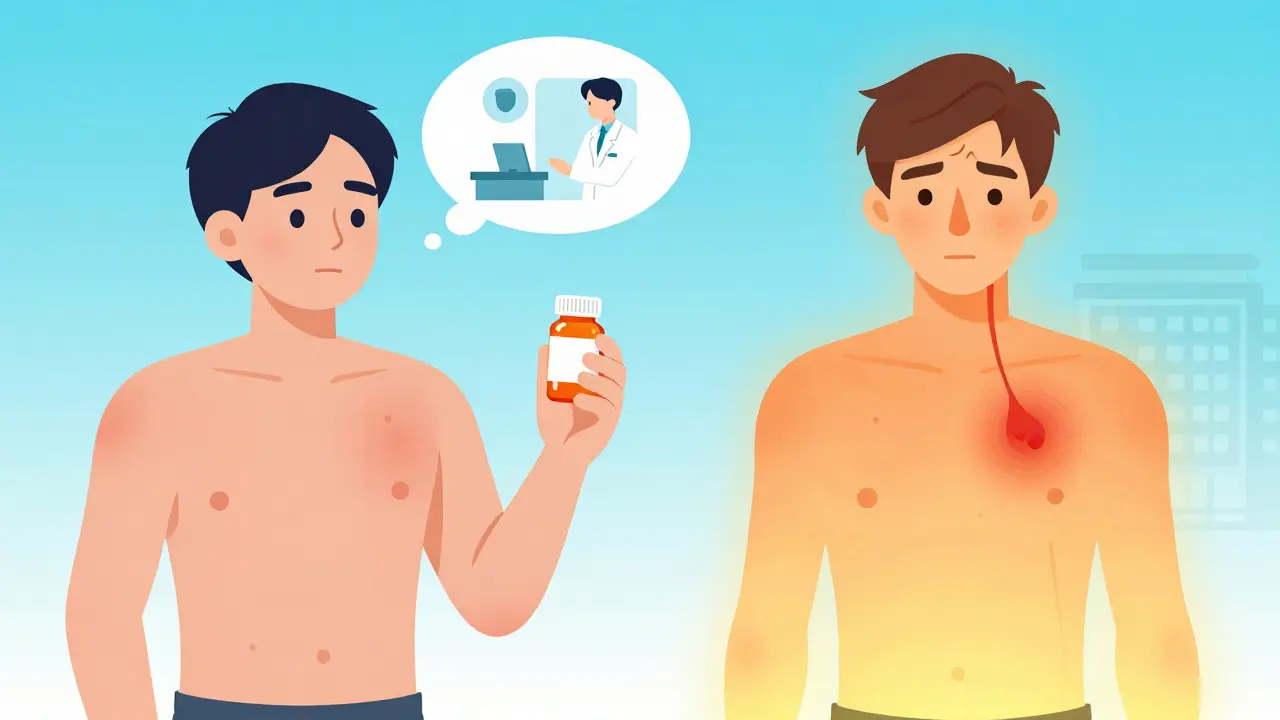
When to Call 911 - Not Wait
If you have symptoms that involve two or more body systems at once, act immediately. Skin rash + breathing trouble? Call 911. Swelling of the tongue or throat + vomiting? Call 911. Dizziness, fainting, or a rapid pulse along with a rash? Call 911.
Anaphylaxis doesn’t wait. It doesn’t care if you’re at home, at work, or in the middle of the night. It can start mild and turn deadly in under 10 minutes. Don’t try to tough it out. Don’t wait to see if it gets better. If you have an epinephrine auto-injector (like an EpiPen), use it right away - then call for help. Even if you feel better after the shot, you still need emergency care. Symptoms can come back.
What to Do If It’s Not an Emergency
If you get a rash or mild itching after starting a new drug and you’re not having trouble breathing or swelling, stop the medication. Don’t take another dose. Take a photo of the rash. Write down when you started the drug, when the rash appeared, and what else you were taking. Then call your doctor.
Don’t assume it’s harmless just because it’s not urgent. A rash could be the first sign of something worse. Your doctor will ask you detailed questions: Was it the first time you took the drug? Did you take it with food? Did you have any other symptoms? They might refer you to an allergist. Don’t ignore this step. Getting it right matters.
Penicillin Allergy: The Most Common Mislabel
More than 10% of people in the U.S. say they’re allergic to penicillin. But studies show over 90% of them aren’t. Why? Because they had a rash as a kid, or felt sick after taking it, and were told, “You’re allergic.” That label sticks - even if you haven’t taken penicillin in 20 years.
That’s a problem. Doctors avoid penicillin and reach for stronger, pricier antibiotics. Those can cause more side effects, including deadly infections like C. diff. The good news? Penicillin allergy can be tested. Skin tests are reliable. If they’re negative, you might get a small oral dose under supervision to confirm you’re safe. If you’ve been told you’re allergic to penicillin, talk to your doctor about getting tested. You might be able to use safer, more effective drugs again.
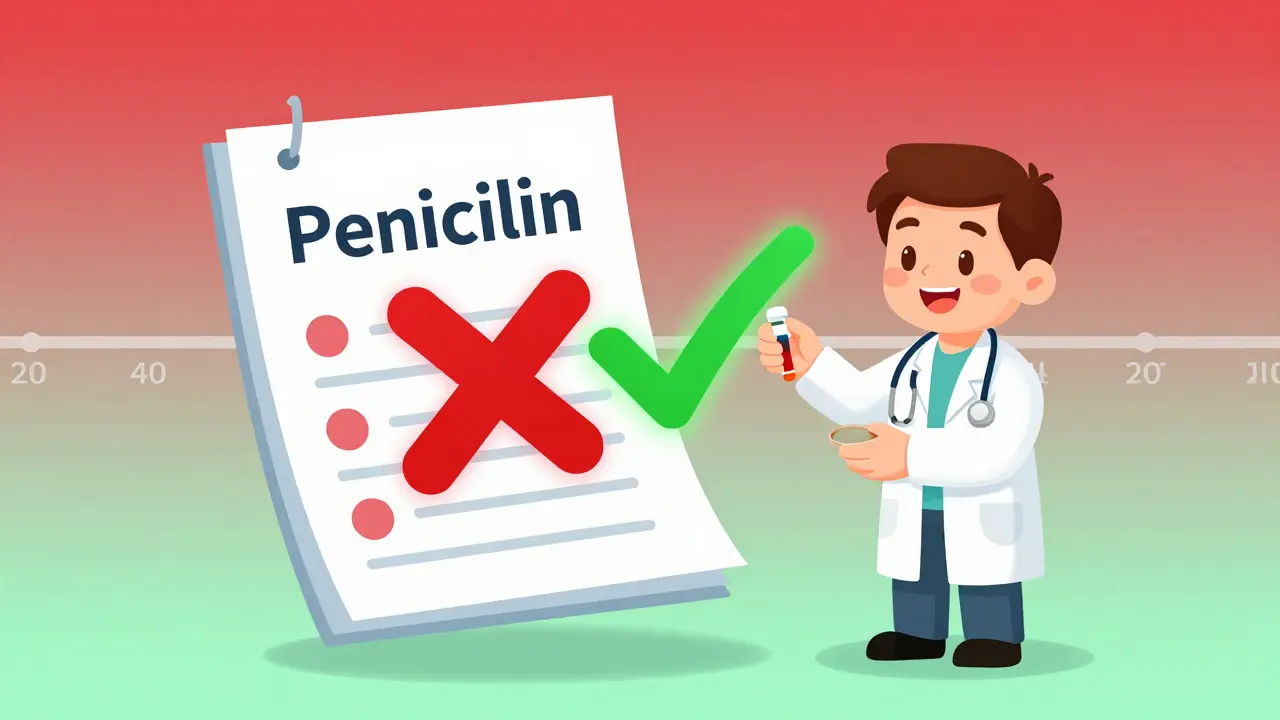
Testing for Drug Allergies - What’s Possible
Right now, skin testing only works well for penicillin. That’s the exception. For most other drugs - like antibiotics, seizure meds, or chemotherapy - there’s no simple test. Diagnosis relies on your story. That’s why details matter. What did the rash look like? When did it start? Did you have a fever? Did your eyes or mouth get sore?
For serious delayed reactions like DRESS or Stevens-Johnson Syndrome, doctors might order blood tests to check for high white blood cell counts or liver damage. But even then, it’s not a direct allergy test. It’s a clue. The only way to be sure about some drugs is a controlled challenge - taking a tiny dose under medical supervision. That’s done in allergy clinics, not ERs. Never try this at home.
Why Getting It Right Saves Lives - and Money
Mislabeling a drug allergy isn’t just a paperwork error. It changes your treatment for life. You might be denied the best drug for your infection. You might get a stronger one with more side effects. You might end up in the hospital because the alternative caused a worse reaction.
Health systems in the U.S. spend over $1.3 billion a year dealing with adverse drug events. A big chunk of that comes from mislabeled allergies leading to unnecessary hospitalizations and expensive substitute drugs. Correcting those labels - through proper testing - saves money, reduces risk, and gives you better care.
What to Do Next
If you’ve ever had a reaction to a drug, write it down. Include the drug name, what happened, and when. Keep that list with your medical records. Share it with every doctor you see. If you’ve been told you’re allergic to penicillin, ask if you can be tested. If you’ve had a severe reaction - even once - see an allergist. They’re trained to sort out real allergies from side effects.
And if you’re ever unsure? When in doubt, err on the side of caution. A rash and a cough? Call your doctor. Rash and trouble breathing? Call 911. You can’t overreact to an allergy - but you can die from underreacting.
Can you develop a drug allergy after taking a medication for years without problems?
Yes. Drug allergies can develop at any time, even after taking the same medication for months or years. Your immune system can suddenly start reacting to a drug you’ve tolerated before. This is especially true with antibiotics like penicillin or anti-seizure drugs. If you notice new symptoms like a rash, swelling, or breathing trouble after a long period of use, stop the drug and contact your doctor.
Is a rash always a sign of a drug allergy?
No. Many rashes after taking medication are not allergic. They can be side effects, viral infections, or unrelated skin conditions. A true drug allergy rash is often itchy, raised (hives), and appears within hours to days after taking the drug. It may also come with other symptoms like swelling, fever, or trouble breathing. Only a doctor can tell the difference - don’t assume a rash is an allergy without evaluation.
Can I outgrow a drug allergy?
Yes, especially with penicillin. Many people lose their allergy over time - sometimes within a few years. That’s why it’s important to get retested if you were labeled allergic as a child or decades ago. An allergist can perform skin or oral challenge tests to confirm if you’re still allergic. Never assume you’re still allergic without testing.
What should I do if I have a drug allergy and need surgery?
Tell your surgeon and anesthesiologist about your allergy before any procedure. Bring a written list of the drugs you’re allergic to and what reaction you had. Avoid any medication you’ve reacted to - even if it’s in a different form. If you’ve had a severe reaction, ask your allergist for a medical alert bracelet. Hospitals have protocols to avoid triggering drugs, but only if they know the risk.
Are there any drug allergies that are more dangerous than others?
Yes. Reactions like anaphylaxis, Stevens-Johnson Syndrome (SJS), and Toxic Epidermal Necrolysis (TEN) are life-threatening. SJS and TEN cause severe skin blistering and peeling, often with mouth and eye damage. They’re rare but require immediate hospitalization. Penicillin, sulfa drugs, anticonvulsants like carbamazepine, and some chemotherapy agents are most commonly linked to these reactions. If you’ve had one, you’re at higher risk of another - avoid those drugs for life unless tested by a specialist.

Johanna Pan
February 5, 2026 AT 10:49so many people are just stuck with bad antibiotics because of a kid rash. so glad i figured it out.
Jenna Elliott
February 7, 2026 AT 09:34Elliot Alejo
February 8, 2026 AT 09:20Arjun Paul
February 10, 2026 AT 03:21one hamzah
February 11, 2026 AT 08:10if you’re scared, get tested - not googled. allergists are wizards. #DrugAllergyMyths #SaveYourAntibiotics
Tehya Wilson
February 12, 2026 AT 17:25Brendan Ferguson
February 13, 2026 AT 05:13jan civil
February 13, 2026 AT 16:39Kate Gile
February 15, 2026 AT 02:05Gregory Rodriguez
February 15, 2026 AT 04:38Meanwhile, the CDC is probably crying in a corner while the pharmaceutical industry throws a parade.