
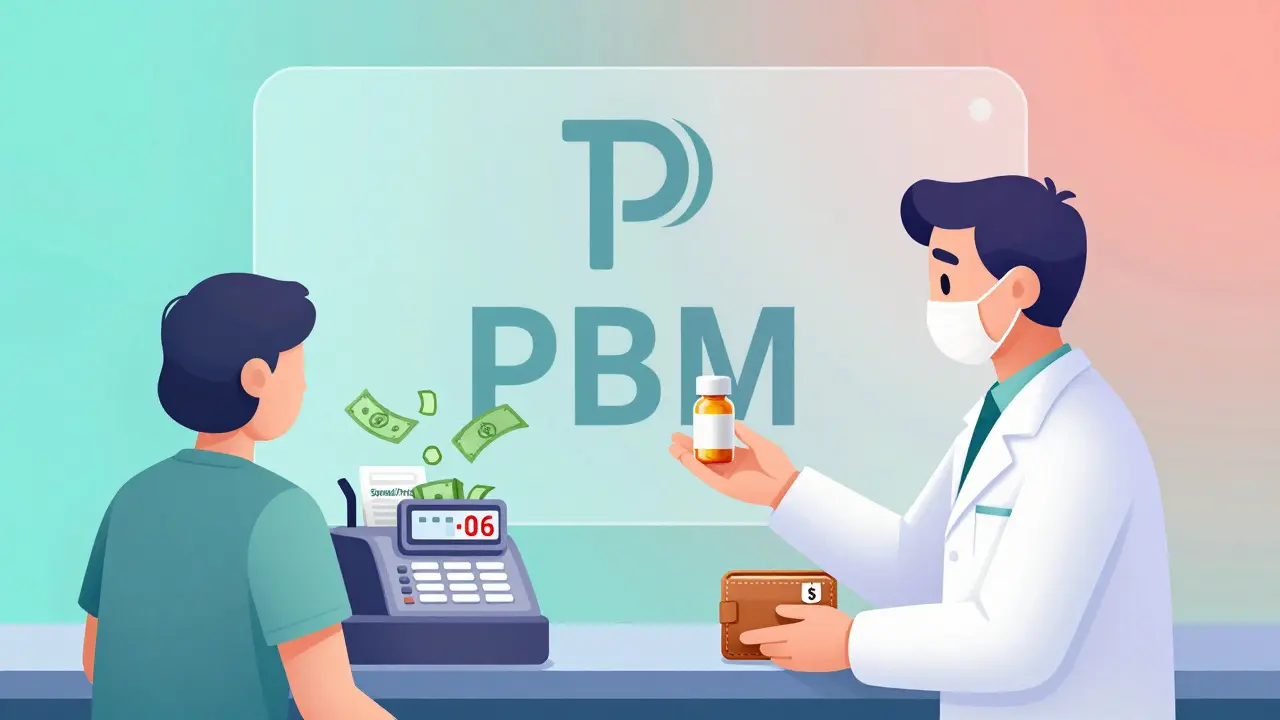
When a pharmacist hands you a generic pill instead of the brand-name version, it’s not just a simple swap. Behind that decision is a complex financial system that determines how much the pharmacy gets paid, how much you pay at the counter, and who actually profits from the switch. In 2026, over 92% of prescriptions filled in the U.S. are for generic drugs. That’s up from just 33% in 1993. But the money flow around these switches isn’t as straightforward as it seems. In fact, the way pharmacies get paid can make the cheapest generic the most expensive option-for patients and the system alike.
How Pharmacies Get Paid for Generics
Pharmacies don’t just get paid what they pay for the drug. They’re reimbursed by insurance plans or Pharmacy Benefit Managers (PBMs) using one of two main models: cost-plus or Maximum Allowable Cost (MAC). Cost-plus means the pharmacy gets a fixed percentage above what they paid for the drug, plus a small dispensing fee. MAC is a list set by PBMs that says, “We’ll pay up to this amount for this generic.” The problem? MAC lists are secret. Pharmacies don’t always know what the maximum is until after they’ve filled the prescription. And PBMs can change those numbers at any time. Some MACs are based on outdated pricing data, meaning a pharmacy might buy a generic for $2 and get reimbursed $10-even if the drug actually costs $3. Other times, the MAC is set lower than the pharmacy’s actual cost. That means the pharmacy loses money on the sale and has to make it up elsewhere.Why Generics Don’t Always Save Money
The whole point of generic substitution is to cut costs. And it does-sometimes. But not always in the way you’d expect. PBMs often put higher-priced generics on their formularies, even when cheaper, clinically identical alternatives exist. Why? Because of spread pricing. Spread pricing is when a PBM tells the insurance plan it’s paying $15 for a generic, but the pharmacy only paid $5 for it. The PBM pockets the $10 difference. The higher the reimbursement rate they set, the bigger the spread. So PBMs have a financial incentive to pick generics that cost more, not less. A 2022 study found that some generics substituted within the same drug class had prices 20 times higher than their cheaper equivalents. That’s not a mistake. That’s a business model. This isn’t just about big companies making money. It affects real people. A patient might be told their copay is $5 for a generic. But if the PBM reimbursed the pharmacy $12 for a drug that only cost $2, the insurance plan (and ultimately, the patient through higher premiums) is paying $10 more than needed. The pharmacy might break even or lose money. The patient thinks they’re saving. They’re not.Therapeutic Substitution: The Real Savings Opportunity
Most people think “generic substitution” means swapping one brand-name drug for its generic version. But the bigger savings come from therapeutic substitution-switching to a completely different drug in the same class that works just as well but costs far less. For example, instead of switching from brand-name Lipitor to generic atorvastatin, a patient could be switched from atorvastatin to rosuvastatin, which is often cheaper and equally effective. The Congressional Budget Office estimated that in 2007, switching brand-name prescriptions to lower-cost generics in just seven therapeutic classes would have saved $4 billion. Switching between generic versions? Only $900 million. Yet, most reimbursement systems don’t reward therapeutic substitution. They’re built to incentivize simple generic swaps, not smarter, cost-saving switches. Pharmacists know this. Many want to make these switches-but they’re blocked by formulary rules, PBM policies, and lack of access to real-time pricing data.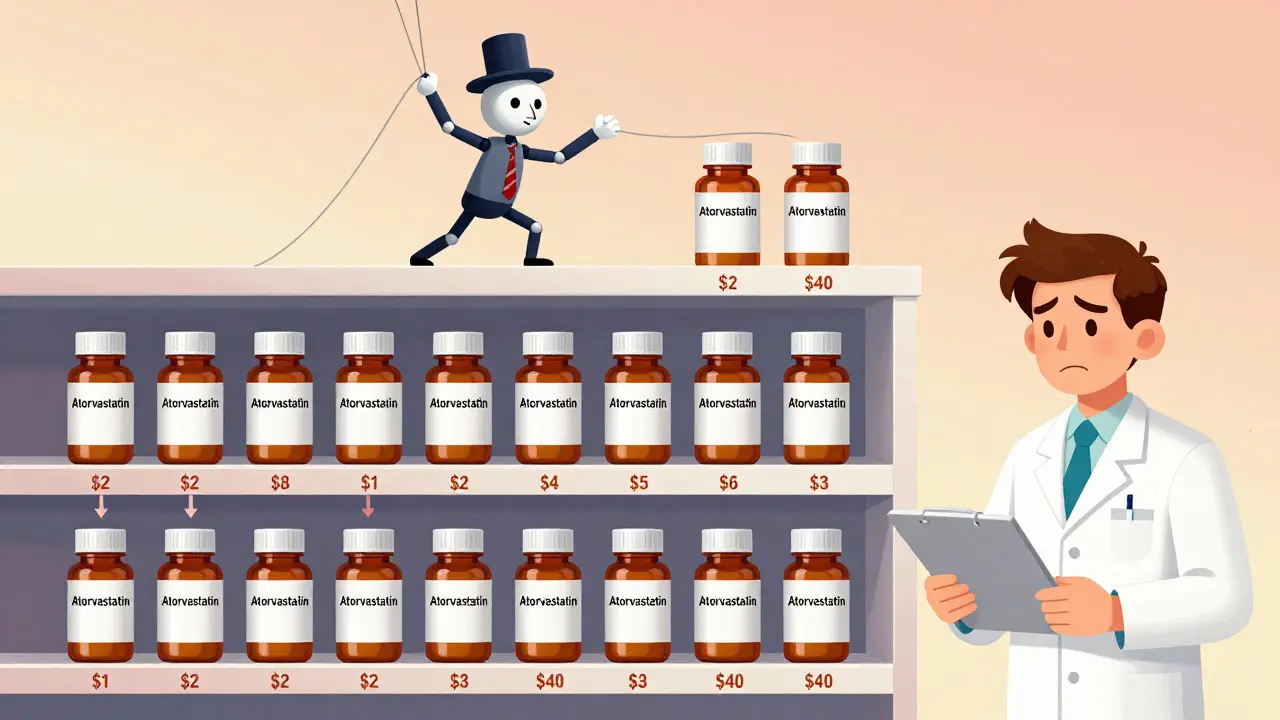
The Impact on Independent Pharmacies
Independent pharmacies are getting squeezed. The average gross margin on generic drugs is around 42.7%, but that’s only if the reimbursement rate is fair. When MAC lists are set too low, or when PBMs delay payments or charge hidden fees, margins vanish. Between 2018 and 2022, more than 3,000 independent pharmacies closed in the U.S. Many weren’t driven out by competition-they were driven out by reimbursement. Big PBMs-CVS Caremark, Express Scripts, and OptumRx-control about 80% of prescription claims. They set the rules. They control the MAC lists. They negotiate directly with manufacturers and get bulk discounts that small pharmacies can’t access. Independent pharmacies are left with the leftovers. Some have started refusing to fill certain prescriptions because they know they’ll lose money on them.What’s Changing? Regulatory Pressure and Transparency
There’s growing pushback. The Federal Trade Commission launched investigations into PBM spread pricing in 2023. They’re asking: Why are MAC lists hidden? Why are higher-priced generics favored? Why are pharmacies not told the true cost of the drugs they’re dispensing? The Inflation Reduction Act of 2022 forced Medicare Part D to disclose drug pricing, and that transparency is starting to spill over into commercial insurance. Fifteen states now have Prescription Drug Affordability Boards that can set Upper Payment Limits-essentially capping how much PBMs can charge for certain drugs. That’s forcing PBMs to reconsider which generics they list. Some pharmacies are pushing back too. A growing number are using direct pricing tools that show them the real acquisition cost of drugs in real time. They’re negotiating better contracts. Some are even forming buying groups to compete with PBM pricing.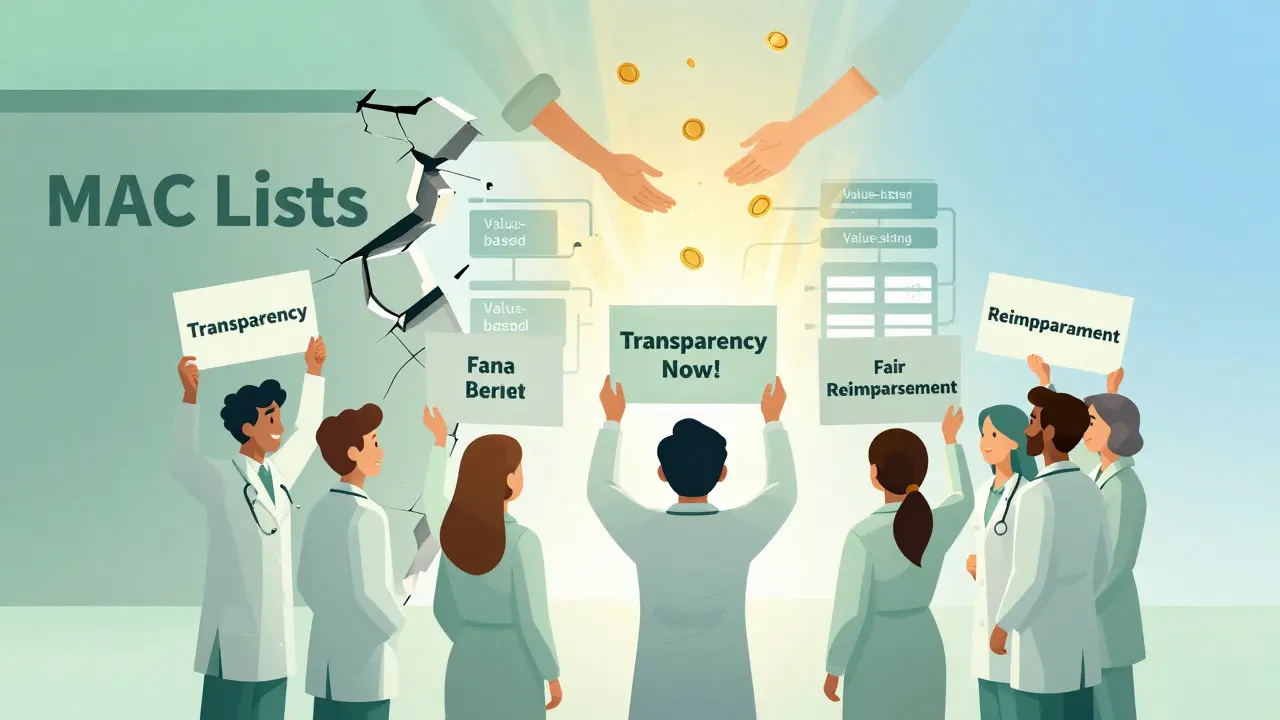
What Patients Should Know
You don’t need to understand MAC lists or spread pricing to get the best deal. But you do need to ask questions. When your pharmacist says, “We’re giving you a generic,” ask: “Is this the lowest-cost option in its class?” Sometimes, the generic they hand you isn’t the cheapest. Another generic, or even a different brand, might cost less with your insurance. Ask if they can check. Also, ask if you can pay cash instead of using insurance. In many cases, the cash price for a generic is lower than your insurance copay. That’s because the insurance system adds layers of fees and markups. Paying cash cuts through the noise.What Pharmacists Can Do
Pharmacists are on the front lines. They see the financial strain on patients and the system. They can advocate for better choices. Many now use tools that show real-time drug pricing across all available generics in a class. They can flag high-cost substitutions to prescribers. They can educate patients on cash pricing options. And they can demand transparency from PBMs-whether through direct negotiation, state advocacy, or joining pharmacy coalitions. The system isn’t broken because pharmacists aren’t trying hard enough. It’s broken because the incentives are misaligned. Until reimbursement rewards true cost savings-not just generic labels-the potential of generic substitution will remain untapped.The Future of Reimbursement
The Congressional Budget Office predicts that by 2031, new pricing models could reduce average drug prices by 5% to 15%. But that won’t happen unless reimbursement structures change. Value-based payments-where pharmacies are rewarded for choosing the most cost-effective drugs, not just the most profitable ones-are gaining traction. Some pilot programs are already paying pharmacists for conducting medication reviews that lead to therapeutic substitutions. Others are tying reimbursement to patient outcomes, not just the number of pills dispensed. These models could finally align the financial incentives with patient health. For now, the system still favors complexity over clarity. But change is coming. And it starts with asking the right questions-by patients, pharmacists, and policymakers alike.Why do some generics cost more than others even if they’re the same drug?
Different manufacturers make the same generic drug, and PBMs often choose the one that gives them the biggest spread-meaning the difference between what they charge the insurer and what they pay the pharmacy. Even if two generics are chemically identical, one might be priced $10 higher just because the PBM profits more from it. This isn’t about quality-it’s about profit.
Can I ask my pharmacist to switch to a cheaper generic?
Yes. Pharmacists can often substitute a different generic within the same therapeutic class if it’s clinically appropriate and your insurance allows it. Ask if there’s a lower-cost alternative. Many pharmacists now have access to tools that show real-time pricing across all available generics, so they can find the best deal for you.
Why does my copay sometimes go up when I switch to a generic?
Your copay is based on your insurance plan’s formulary and how the PBM structures reimbursement. If your plan uses a high-cost generic on its formulary, your copay might be higher than expected-even though the drug is technically “generic.” It’s not about the drug; it’s about the PBM’s pricing rules. Always check the cash price-it’s often cheaper than your copay.
Do PBMs make more money from brand-name drugs or generics?
PBMs make the most money from generics-not because they’re expensive, but because they’re used so often. With brand-name drugs, rebates and discounts are negotiated directly with manufacturers. But with generics, PBMs control the reimbursement price and can set it higher than the actual cost. That’s where spread pricing thrives. Generics account for over 90% of prescriptions, so even small spreads add up to billions.
Are there any laws helping patients fight high generic prices?
Yes. Fifteen states now have Prescription Drug Affordability Boards that can cap how much insurers pay for certain drugs. The Inflation Reduction Act also requires Medicare to disclose drug pricing, which is pushing transparency into commercial markets. Some states now require PBMs to disclose their MAC lists to pharmacies and plan sponsors. These are early steps, but they’re starting to change how drugs are priced.



Renee Stringer
January 19, 2026 AT 05:43It's infuriating how pharmacies are forced to lose money just to keep the lights on. I work in healthcare administration, and I've seen the MAC lists-some are from 2018. How is that legal? Patients think they're saving, but the system is rigged. And no one talks about how PBMs profit from the gap between what they charge insurers and what they pay pharmacies. It's not just unethical-it's predatory.
Independent pharmacies are being driven out not by competition, but by corporate greed masked as efficiency. And we wonder why rural areas have no pharmacies left.
Someone needs to hold these companies accountable. Not just regulators-patients need to demand transparency. Ask your pharmacist: 'Is this the cheapest option?' Don't let them get away with just handing you the first generic on the list.
It's not about brand loyalty. It's about justice.
And if you're paying cash? You're probably still getting ripped off. But at least you're not funding the PBM's yacht.
I'm done pretending this is a free market. It's a cartel with a pharmacy counter.
Stop normalizing this.
Start asking questions.
It's the only power we have left.
Crystal August
January 21, 2026 AT 04:15This whole system is a joke. PBMs are middlemen who do literally nothing but take money. They don’t manufacture drugs, they don’t dispense them, they don’t even know what’s in them. Yet they get to decide what’s ‘affordable’? That’s like a guy who works at a gas station telling you how much you should pay for fuel-and then pocketing the difference. And we call this healthcare?
And don’t get me started on ‘therapeutic substitution.’ That’s just corporate speak for ‘we’re swapping your medicine for a cheaper one without telling you.’
It’s not innovation. It’s exploitation. And everyone’s too busy scrolling to notice.
Nadia Watson
January 21, 2026 AT 19:22Thank you for this incredibly thorough breakdown. As someone who works with elderly patients on fixed incomes, I see the confusion every day. They think ‘generic’ means ‘cheaper’-but they’re often handed a version that costs more than the brand-name drug they were on before, just because the PBM’s list says so. Many don’t even know they can ask for a different generic.
One woman I helped last week was paying $18 copay for atorvastatin-cash price was $4. She cried. Not because she couldn’t afford it, but because she felt stupid for not knowing.
Pharmacists are heroes here. They’re the only ones with real-time data, yet they’re often silenced by contract terms. We need to empower them-not just with tools, but with legal backing to speak up.
Also, thank you for mentioning cash pricing. It’s the quiet revolution. I’ve started telling my patients: ‘Don’t use insurance unless it’s cheaper.’ It’s not always intuitive, but it’s often true.
And yes, the 3,000 closures? That’s not a statistic. That’s a neighborhood losing its healthcare anchor.
I hope this gets shared in every pharmacy waiting room.
And please, if you’re a policymaker reading this-stop talking about ‘transparency’ and start enforcing it.
Art Gar
January 22, 2026 AT 22:59Let me be the contrarian here: this entire narrative assumes that PBMs are the problem, rather than the symptom. The real issue is the lack of price competition in pharmaceutical manufacturing. Why do we allow multiple generic manufacturers to exist yet still have price disparities? Because the market is distorted by government intervention, not corporate malice.
Pharmacies are paid based on negotiated contracts-just like every other industry. If you don’t like the reimbursement model, open your own PBM. Or better yet, lobby for deregulation of drug pricing.
Also, ‘spread pricing’ is not inherently unethical. It’s a pricing mechanism. The real scandal is that insurers don’t pass savings on to consumers. That’s a failure of insurance design, not PBM greed.
And before you blame PBMs for closing pharmacies, consider that many independent pharmacies failed due to poor management, not reimbursement rates.
Corporations don’t create incentives-they respond to them. The incentive here is to maximize profit within a broken system. Blaming PBMs is like blaming the weather for a flood.
Edith Brederode
January 24, 2026 AT 03:00Thank you for writing this. 💙 I had no idea any of this was happening. I always thought generics = cheap = good. Now I’m going to ask my pharmacist every time. And I’m definitely checking cash prices. I just paid $12 for a generic that costs $3 cash. I feel so dumb.
Also-pharmacists are angels. I’ve seen them spend 20 minutes explaining options to my grandma. They deserve better. Let’s support them.
Also, if anyone knows of a petition or state campaign pushing for MAC transparency, please drop it below. I’ll sign it. And share it. And yell about it at family dinners.
Arlene Mathison
January 25, 2026 AT 23:20Okay, I’ve been waiting for someone to say this out loud. The system is rigged. And the worst part? We’re all complicit. We take the generic because it’s ‘cheaper’-but we never ask which one. We never check the cash price. We let the pharmacy just hand us a pill and assume it’s the best deal.
Here’s what I do now: I ask, ‘Is this the cheapest version?’ If they hesitate, I say, ‘Can you check the cash price?’ Half the time, it’s cheaper. And I pay cash. No insurance. No middlemen.
And I tell everyone I know. My mom, my coworkers, my book club. We’re not just patients-we’re consumers. And consumers have power.
Pharmacists? You’re not alone. We see you. We’re trying to help. And we’re not going to stop asking questions.
Let’s turn this into a movement. Not a protest. A conversation. One pharmacy counter at a time.
Emily Leigh
January 27, 2026 AT 18:12So... PBMs are just... middlemen who make money off the gap between what they charge and what they pay? And they do it with secret lists? And no one’s surprised? This is like if Amazon told you the price of a book, then bought it from the publisher for less, kept the difference, and called it ‘efficiency.’
And we’re supposed to be grateful because it’s a ‘generic’? What a joke. It’s not a drug-it’s a financial instrument.
Also, why do we even have PBMs? Who thought this was a good idea? Who signed off on this? Who’s in charge of this nightmare? And why is no one in prison?
It’s not broken. It’s designed this way. And we’re the suckers.
Also, I just paid $20 for a generic that costs $5 cash. I’m never using insurance again. Ever. I’m done being a revenue stream.
Carolyn Rose Meszaros
January 28, 2026 AT 16:12My pharmacist just told me last week that she can’t switch me to the cheaper generic because her system doesn’t show it until after the claim is processed. So she’s stuck. 😔
I asked if I could pay cash instead-and she said yes, and it was $3.50. I almost cried.
She’s amazing. She’s been working here 20 years. She knows everyone’s meds, their allergies, their dogs’ names. But she can’t fix the system.
So I’m telling everyone I know. And I’m writing to my state rep. And I’m going to start a little ‘Ask Your Pharmacist’ campaign at my gym.
It’s not a big thing. But it’s something.
And if you’re reading this-ask next time. You have nothing to lose.
And thank you, pharmacist. We see you. 🙏
Greg Robertson
January 29, 2026 AT 01:38I never realized how much complexity was behind something as simple as picking up a pill. This is eye-opening. I’ve always trusted that ‘generic’ meant cheaper, but now I’m going to ask questions. I think I’ll even start keeping a little note of the cash prices I see versus my copay.
And I’ll definitely tell my mom. She’s on six generics and always complains about her bills.
Thanks for breaking this down without being overly technical. It’s hard to explain this stuff, but you made it clear.
And hey-pharmacists: you’re doing the right thing. Keep pushing. We’ve got your back.
thomas wall
January 30, 2026 AT 17:52The American healthcare system is not a system-it is a labyrinth of rent-seeking entities, each extracting value from the suffering of the vulnerable. PBMs are not merely intermediaries; they are parasitic intermediaries, thriving on opacity, contractual coercion, and the moral complacency of a population conditioned to believe that ‘generic’ equates to ‘good.’
Their MAC lists are not pricing tools-they are instruments of economic violence. The fact that pharmacies are compelled to accept reimbursement rates below cost, under threat of exclusion from insurance networks, constitutes coercion. This is not market dynamics. This is feudalism with a pharmacy logo.
And yet, the public remains oblivious. Why? Because the cost is externalized: higher premiums, higher taxes, higher despair.
The solution? Nationalize PBM functions. Mandate full price transparency. Prohibit spread pricing. And hold executives criminally liable for systemic fraud.
This is not activism. This is justice.
Courtney Carra
January 31, 2026 AT 14:39It’s wild how the same drug can cost $2 or $20 depending on who’s making it. And no one talks about the fact that the active ingredient is identical. It’s like buying the same loaf of bread but paying $15 for the one with a fancy wrapper.
But here’s the deeper thing: we’ve been trained to think of drugs as commodities, not essentials. We don’t question the price because we’re told it’s ‘generic.’ But ‘generic’ doesn’t mean ‘cheap’-it means ‘unbranded.’
And the real tragedy? The people who need these drugs the most are the ones least likely to know how to fight for the cheapest option.
So maybe the real solution isn’t just transparency-it’s dignity. Everyone deserves to know they’re not being played. And they deserve to know they have power.
Even if it’s just asking one question.
Shane McGriff
February 2, 2026 AT 07:17I’ve been a pharmacist for 18 years. I’ve watched this system destroy small businesses and erode trust. I’ve had patients cry because they couldn’t afford their meds-even though they were ‘generic.’
Here’s the truth: we want to help. We have the tools. We know which generics are cheaper. But we’re often blocked by formularies, contract clauses, and outdated software.
And when we try to switch to a better option? The PBM system flags it as ‘non-formulary’ and denies the claim. So we’re forced to pick the expensive one-even if we know it’s not the best.
It’s not about greed. It’s about being handcuffed.
But I’ve started doing something new: I hand patients a printed list of cash prices for all generics in that class. I don’t wait for them to ask. I just say, ‘Here’s what it costs if you pay cash.’
And guess what? 80% of them switch.
They’re not ungrateful. They’re uninformed.
So if you’re reading this-ask your pharmacist. Don’t wait. And if they say they can’t help, ask again. And again.
We’re here. We’re ready. We just need you to ask.
sagar sanadi
February 4, 2026 AT 05:08lol. PBMs are just the government’s puppet. They control the prices because the FDA lets them. The real reason generics cost more? Because the same company owns the brand and the generic. They just repackage it. You think your ‘generic’ is different? Nah. Same factory. Same pills. Same profit. They just changed the label.
And now you’re mad at the pharmacy? Bro. The pharmacy is broke. The PBM is laughing. The pharma company is rich.
Also, cash price? That’s just the real price. Insurance is a scam. Always has been.
They want you to think it’s complicated. It’s not. It’s just greed.
And you’re still paying for it.
kumar kc
February 4, 2026 AT 22:23Generic is not cheaper. System is broken. Ask cash price.
Renee Stringer
February 5, 2026 AT 05:12And that’s exactly why I’m writing this. The comment above? That’s what happens when people stop asking. One sentence. No context. No hope. Just resignation.
But we’re not there yet.
Not if we keep talking.
Not if we keep asking.
Not if we keep paying cash.
Not if we keep telling our pharmacists: ‘I see you.’
This isn’t just about drugs. It’s about dignity.
And dignity doesn’t come from a PBM’s spreadsheet.
It comes from us.
So keep asking.