

The Paperwork That Could Save Your Life
You get the bottle. You grab the meds. And then? You toss the white envelope into the trash. We’ve all done it. But that folded piece of paper isn’t just bureaucracy. It is a survival map. Inside, there is critical intelligence about what happens when you take too much, and exactly how doctors can bring you back.
Most patients never open that Medication Guide a mandatory document required by the U.S. Food and Drug Administration for certain prescription drugs that pose serious risks. They rely on the pharmacist’s quick summary. While pharmacists are excellent, they work fast, and details get lost. If you manage medications for yourself or a family member, learning to read this document is as important as knowing how to swallow the pill.
This isn’t about memorizing every chemical compound. It is about hunting for three specific keywords: Warning, Overdosage, and Treatment. When you know where to look, you stop worrying and start planning.
Understanding the Standard Layout
Every Prescription Drug sold in the United States follows a strict template set by regulators. Even though different drugs have different risks, the documents share the same skeleton. Imagine the guide as a building with specific rooms. If you know where the "danger zone" room is located, you can find it instantly.
First, look for the header. If a sheet says "Medication Guide" prominently at the top, it means the drug carries significant risk that requires written explanation. Not all pills come with this. Simple antibiotics often won't. Complex ones like immunosuppressants or strong painkillers will. Under the title, scan for the drug name followed by the generic name (like Morphine Sulfate).
The layout is designed to highlight risk. The first section usually explains what the drug is used for. Skip this if you already know. Scroll down immediately past "Who should not take this." Go straight to the middle or lower thirds of the page. This is where the heavy lifting happens regarding toxicity. Don't let your eyes glaze over the dense paragraphs. Look for bold headings. Regulatory bodies require high-risk sections to be visually distinct. They often use capitalized headers to signal importance.
Finding the "Black Box" and Serious Risks
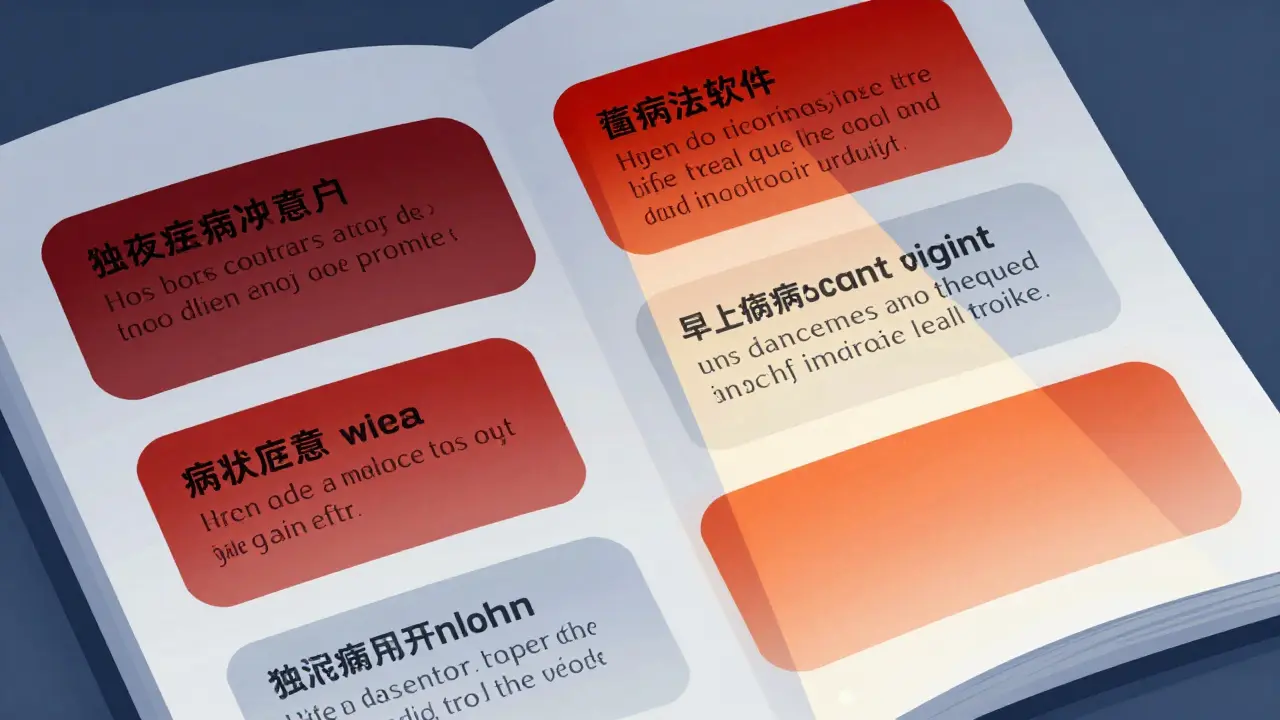
In the professional prescribing information, you might see something called a Black Box Warning. This is the highest alert level in pharmaceuticals. On the patient-facing Medication Guidedocument detailing serious side effects and risks of prescription medicines, this appears as a very clear "Warning" or "Risk" section right at the beginning.
If a drug has a potential for fatal overdose, it often triggers a boxed warning. For example, opioid pain relievers will scream about respiratory depression. This means breathing stops. The guide will explicitly state that death can occur from taking too much. This is the core overdose warning. It doesn't hide the word "death"; it tells you directly that the consequence of misuse is severe.
Pay attention to the phrasing. Sometimes the text says "Life-threatening conditions." That is code for extreme overdose. In some cases, such as with chemotherapy agents or potent heart medications, the guide warns that even small errors can cause toxicity. Knowing this distinction changes how you store the medicine. It moves it from a kitchen drawer to a locked box.
Locating Overdose Signs and Symptoms
Moving deeper into the document, usually near the bottom, you will find a section titled "Side Effects" or sometimes a dedicated "What to do if you take too much" section. Not every guide separates these perfectly, so you may need to read the subheaders carefully. Manufacturers are legally required to list symptoms associated with excessive doses.
Why does this matter? Because an overdose doesn't always look the way you think it looks in movies. One person might pass out immediately. Another might feel jittery, vomit uncontrollably, or have a racing heartbeat that won't settle. The Medication Guide lists the specific clinical signs for that drug. For instance, acetaminophen overdose initially causes little more than nausea, hiding the liver damage until days later. Reading the guide tells you that a delayed symptom timeline is possible, prompting you to seek help even if you feel okay hours after ingestion.
When scanning this section, circle the symptoms that affect breathing or consciousness. These are the immediate red flags requiring emergency care. Mark them in a permanent marker so you can spot them during a crisis. Keep the pen handy. Having the physical document with circled keywords in an emergency saves vital minutes when calling paramedics.
Identifying Antidotes and Treatments
Here is where most guides get tricky. The document rarely says "Take antidote X right now." Instead, it refers to medical management. However, skilled readers can infer the antidote information. Often, the section discussing "Contraindications" or "Warnings" will mention interactions with other drugs that reverse its effects. If the guide mentions "Naloxone reverses respiratory depression," you know the reversal agent exists.
Some guides are explicit about antidotes. Warfarin (Coumadin) guides frequently mention Vitamin K an antidote used to reverse blood thinning effects of warfarin in the context of bleeding risks. Opioid guides almost always reference naloxone availability. By spotting these references, you understand that a treatment path exists, which offers hope and reduces panic. You also learn that the antidote might be time-sensitive. If the text implies rapid action is needed, you prepare an Emergency Action Plan.
Be aware that not every drug has a specific antidote. Paracetamol does (N-acetylcysteine), but many antidepressants rely on supportive care. The guide often phrases this as "Treatment consists of gastric lavage and supportive measures." This lack of a magic bullet is information in itself-it means you cannot delay calling 911 expecting a quick fix from the pharmacy.
| Drug Class | Typical Overdose Risk | Where to Look in Guide |
|---|---|---|
| Opioids | Respiratory arrest | Boxed Warning & Usage section |
| Blood Thinners | Internal bleeding | Risk of Bleeding / Interactions |
| Benzodiazepines | Coma/Sedation | Overdosage / Precautions |
| Pain Relievers (NSAIDs) | Kidney failure/Ulcers | Side Effects / Warnings |
Creating Your Personal Safety Protocol
Reading the guide is useless if it stays crumpled in a bag. You need to integrate this data into your daily routine. Start by tearing out the guide for every new prescription. Staple them together in a binder or keep them in a waterproof folder next to your current meds.
Next, identify the emergency contact number listed on the guide. Sometimes this is specific to the manufacturer's support line, but you should always prioritize local Poison Control centers. Write the national number down separately. In the US, this is 1-800-222-1222. Put this number in your phone contacts now. Do not wait for an accident to look it up.
Check the expiration dates on your Naloxone Kit if you have one prescribed due to the medications you hold. The guide may indicate that having rescue medication available is recommended. Verify if the expiry matches your home inventory.
Handling High-Risk Situations
There are times when a patient takes two types of drugs that interact. If you read the guide and see a specific interaction warning, that is essentially a pre-warning of overdose-like symptoms. Taking a sedative with an antidepressant might drop oxygen levels even if neither dose was individually toxic. This synergy is described in the "Drug Interactions" section.
Keep a copy of the guide in your car. Accidents happen outside the house. If you have a seizure disorder or take insulin, a roadside accident could lead to complications. Paramedics often ask, "What are you taking?" A driver who hands over the Medication Guide answers that question before they even speak. It ensures the paramedic knows the antidote immediately.
Finally, educate anyone caring for you. If you live alone or spend time with elderly parents, show them the red lines on the paper. Tell them exactly what to call. A caregiver who reads the guide knows that shaking someone awake matters less than keeping airways open while waiting for help.
Is every medication guide the same length?
No. The length depends on the complexity of the drug. Simple medications may have short summaries, while complex biologics or drugs with high risks often span multiple pages. Always look at the top header to confirm it is an official guide.
What if the language is too difficult to understand?
If the text seems confusing, ask your pharmacist to translate the "Boxed Warning" into plain English. They can highlight exactly what to watch for. You can also use translation apps if your native language is different, but verify medical terms with a professional.
Does the guide tell me the exact dosage for an overdose?
No, guides do not provide instructions for self-treating an overdose. They describe symptoms to report to a doctor. Never attempt to calculate an antidote dose yourself without professional guidance.
Can I rely on the guide instead of 911?
Absolutely not. The guide is for prevention and recognition. Once an overdose is suspected, emergency services are the priority. The guide helps you provide accurate information once help arrives.
Do I need to keep guides for old prescriptions?
It is smart to keep a record, but prioritize active medications. Old guides are still useful for historical context, especially if you develop delayed reactions to drugs you took years ago.
Adryan Brown
March 30, 2026 AT 05:12It really boils down to the fact that we often overlook the small details that end up saving lives later down the road when things go south in a way that we did not expect initially. The structure of these documents is specifically designed by people who know exactly what information is critical during a high stress emergency situation where time is the most valuable resource available to the medical team responding. Ignoring the guide because it looks boring or too technical means you are throwing away the manual for your own body's chemistry reaction profile. Many folks think they understand their meds just because the pharmacist told them what the drug does generally speaking without diving into the specifics. But the guide contains the black box warnings that highlight the absolute worst case scenarios which are vital knowledge to have in your brain before a crisis happens. We need to respect the regulatory framework that puts these warning signs in bold headers so nobody misses the risk associated with respiratory depression or cardiac failure events. Keeping the physical paper near the medication ensures that paramedics can see the exact formulation rather than guessing based on the bottle label alone. This preparation step transforms a patient from being passive about their health maintenance routine to taking active ownership of their safety protocols daily. It isn't about fearing every pill you swallow but rather understanding the potential consequences if an accidental error occurs with dosing frequency. The peace of mind comes from knowing exactly what symptoms mean an immediate call to poison control is necessary versus waiting until morning. You cannot rely on memory alone when adrenaline takes over your cognitive processing abilities during an acute medical event requiring rapid intervention strategies. The guide also lists interactions that might not be obvious like combining two sedatives that look harmless individually but cause synergy issues together. Storing them in a waterproof folder makes sure water damage doesn't destroy the crucial data points regarding antidotes and treatment paths doctors might need to reference instantly. Reading through the sections helps you identify exactly which side effects warrant skipping work or calling home instead of pushing through discomfort blindly. Ultimately treating these papers as survival maps rather than junk mail changes how we view our own pharmacological intake habits permanently.
Calvin H
March 31, 2026 AT 22:47I threw mine in the trash yesterday honestly.
Debbie Fradin
April 2, 2026 AT 03:36You are playing with fire by tossing those documents away so casually when death could wait around the corner in plain sight. It feels reckless to assume everything is fine just because the doctor smiled while handing you the prescription pad today. We need to take responsibility for reading the warning labels before we decide to ignore the risk factors completely. Optimism is great but blind hope gets people hospitalized unnecessarily in rooms filled with machines. Keep the paper safe and stop acting like you are immortal enough to survive a dosage slip without help. Saving a life starts with keeping the instruction manual accessible instead of feeding the recycling bin. Being aggressive about safety is better than regretting your ignorance later on during a hospital visit. Your attitude needs a serious shift towards respecting the gravity of pharmaceutical risks involved in modern medicine usage.
emma ruth rodriguez
April 3, 2026 AT 14:01It is imperative that individuals recognize the distinction between standard side effect lists and actual black box warnings which carry severe clinical implications. One should maintain a designated location for all medication guides ensuring they remain dry, legible, and organized by date of issuance for future reference. Pharmacists can provide clarification on dense terminology yet they cannot replace the written documentation required during an emergency code blue event. Families ought to review the interaction sections together especially when multiple prescriptions are managed under one household roof. Knowledge regarding specific antidotes such as naloxone or vitamin k provides a mental framework for urgency when symptoms present themselves unexpectedly. Documentation serves as a legal record of informed consent regarding the risks assumed by accepting the therapeutic agent in question. Regular audits of stored medications against current guidelines prevent outdated information from complicating triage decisions made by first responders. Please prioritize creating a digital copy as well in case the physical paper degrades over time due to environmental exposure.
Christopher Curcio
April 4, 2026 AT 16:15The pharmacokinetics involved in overdose scenarios definitely require a nuanced understanding of receptor antagonism and metabolic clearance rates specific to hepatic function. Clinical toxicology relies heavily on recognizing early biomarkers that precede overt organ failure symptoms listed in the package insert documentation we discussed earlier. Supporting care measures become the primary intervention strategy when specific reversal agents are unavailable for certain psychotropic substances in circulation. Gastrointestinal lavage remains a historical procedure though modern management emphasizes activated charcoal administration within a specific window of ingestion timeframes. Physicians look for serum levels and ECG changes indicating sodium channel blockade effects that correlate with guide warnings we scan for regularly.
Carolyn Kask
April 5, 2026 AT 06:54This country has strict regulations for a reason and everyone should comply with federal safety standards without making excuses for skipping steps. Other nations might not have these protections in place so we should be grateful for the FDA oversight mechanisms protecting American consumers from harm. Ignoring the paperwork shows a lack of patriotism towards maintaining public health infrastructure that keeps communities safe and secure from preventable tragedies. We have access to resources that many global citizens do not enjoy regarding antidote availability and emergency response training. Stop complaining about the extra effort needed to keep a document safe when your life depends on that piece of plastic folded paper. True strength comes from following rules strictly and not cutting corners just because someone feels lazy about reading instructions properly. Americans value freedom but safety requires discipline and adherence to the protocols established by our government agencies.
Jonathan Sanders
April 5, 2026 AT 10:12Wow nothing says fun like being dragged into a patriotic debate while discussing how breathing stops during drug misuse effectively. People are dying regardless of which flag hangs in the clinic lobby so let us focus on the biological reality instead of political theater. Your optimism about national superiority does not fix a liver shutting down silently in the middle of the night somewhere. Save the lecture for a different thread and acknowledge that fear works just as hard as pride when keeping a person alive during a scare. It is exhausting trying to parse meaningful advice through layers of unnecessary nationalism attached to basic health literacy lessons.
dPhanen DhrubRaaj
April 7, 2026 AT 05:28i agree the guides are important but sometimes english is hard for me to read fully and quickly when panic sets in inside my head
Angel Ahumada
April 7, 2026 AT 09:25The existential dread surrounding mortality manifesting through chemical imbalances reflects a deeper truth about human fragility masked by technological advancement and medical industrialization complexity. We read the papers not merely for instruction but to confront the abyss staring back from the printed page warning us of cessation. Understanding the mechanics of toxicity becomes a meditation on the transient nature of biological functions relying on perfect balance. To ignore the text is to deny the self of agency over ones own inevitable journey toward entropy and decay of the physical vessel.
Brian Yap
April 8, 2026 AT 01:12Yeah reckon its worth keeping just in case mate, dont want to end up in a bind with the docos.