
Food-Medication Interaction Checker
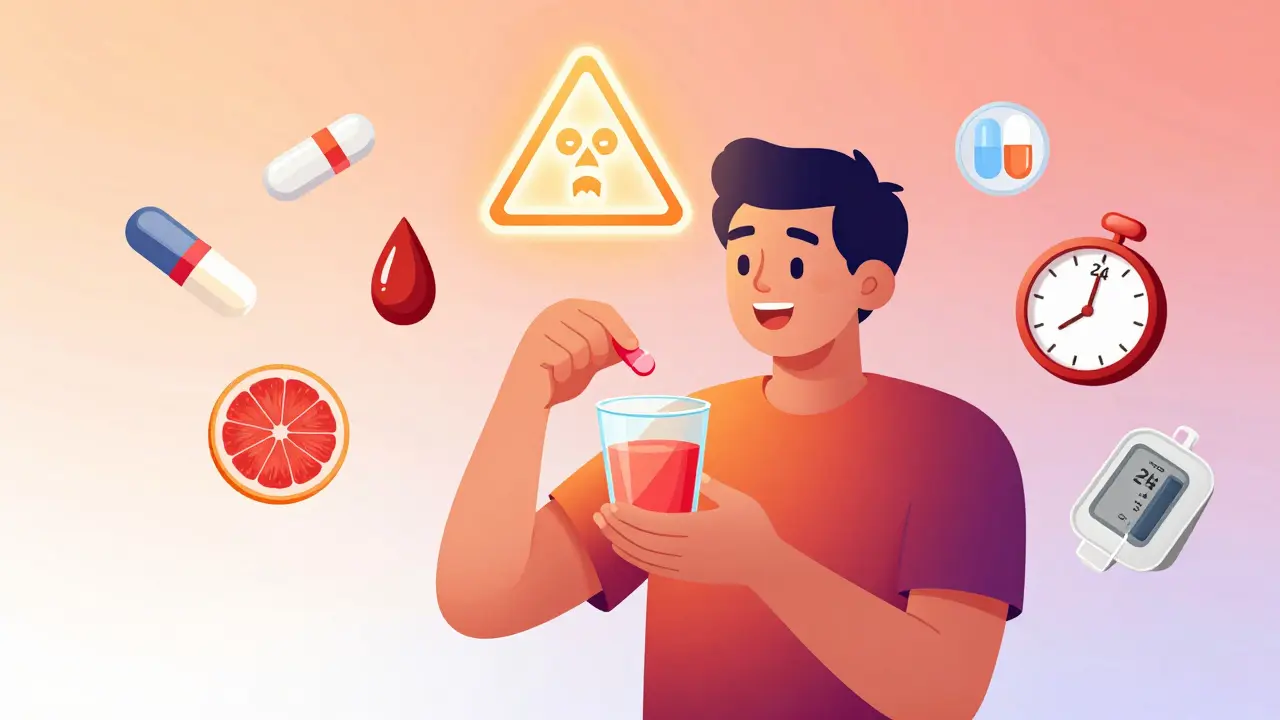
Many people don’t realize that what they eat can change how their medicine works-sometimes in dangerous ways. Taking a pill with breakfast might make it less effective. Drinking grapefruit juice could turn a safe dose into an overdose. Eating spinach every day might undo the effect of your blood thinner. These aren’t myths. They’re real, documented risks that affect millions of people every year.
Why Food Changes How Medicines Work
Food doesn’t just fill your stomach. It changes the environment inside your body. When you eat, your stomach acid level shifts. Your liver starts processing nutrients. Your gut lining reacts to fats, fibers, and minerals. All of this can interfere with how your medicine is absorbed, broken down, or cleared from your body. There are three main ways food messes with medication:- Absorption problems: Food can block your body from taking in the drug properly. Calcium in dairy, for example, binds to antibiotics like tetracycline and stops them from working.
- Metabolism changes: Some foods, like grapefruit juice, shut down enzymes in your gut that normally break down drugs. That means more of the drug enters your bloodstream-sometimes 3 or 4 times more than intended.
- Opposite effects: Certain foods directly fight the medicine’s action. Vitamin K in leafy greens reverses the blood-thinning effect of warfarin. If your intake jumps around, your blood can clot or bleed dangerously.
These aren’t rare. About 30% of all bad reactions to medications are linked to food. That’s not a small number-it’s a public health issue.
Medications That Hate Food (and What to Do)
Some medicines work best on an empty stomach. That doesn’t mean “wait until you’re hungry.” It means 1 hour before or 2 hours after eating. Here’s what that looks like in real life:- Levothyroxine (for thyroid): If you take it with breakfast, you might absorb 34% less. That means your thyroid levels stay low, and you stay tired, cold, and sluggish. Take it first thing in the morning, wait 60 minutes, then eat.
- Antibiotics like ciprofloxacin or doxycycline: Calcium, iron, magnesium, and even antacids can reduce absorption by up to 90%. That means the infection doesn’t clear. Wait 2 hours before or 4 hours after dairy, fortified cereals, or supplements.
- PPIs like omeprazole: These need to be taken 30-60 minutes before a meal to block acid production properly. Take them before breakfast, not after.
Many patients think, “I’ll just take it with food so it doesn’t upset my stomach.” But for these drugs, that trade-off isn’t worth it. You’re not protecting your stomach-you’re making the medicine useless.
Medications That Need Food (and Why)
Not all drugs hate food. Some actually need it to work-or to keep you safe.- NSAIDs like ibuprofen or naproxen: Taking these on an empty stomach increases your risk of stomach ulcers by 15%. With food, that drops to 4%. Always take them with a meal or snack.
- Griseofulvin (antifungal) and diazepam (anxiety): These are fat-soluble. Take them with a meal that has some fat-like eggs, peanut butter, or avocado-and absorption goes up by 25-35%.
- Statins like simvastatin: While food doesn’t help absorption, grapefruit juice does-dangerously. Even one glass can spike your blood levels by 330%. That raises your risk of muscle damage and kidney failure. If you love grapefruit, talk to your doctor about switching to a statin that doesn’t react with it, like pravastatin or rosuvastatin.
The rule here isn’t “always take with food.” It’s “know which ones need it.”

The Grapefruit Trap
Grapefruit juice is the most dangerous food-drug interaction most people don’t know about. It’s not just grapefruit-it’s also pomelos, Seville oranges, and some tangelos.This juice blocks an enzyme called CYP3A4 that normally breaks down over 85 medications. Without it, drugs build up in your blood like a clogged drain. Statins are the biggest concern, but it also affects:
- Some blood pressure meds (felodipine, nifedipine)
- Anti-anxiety drugs (buspirone)
- Immunosuppressants (cyclosporine)
- Some heart rhythm drugs (amiodarone)
One study found grapefruit interactions send 1,100 people to the ER every year in the U.S. alone. And it’s not about how much you drink. Even a small glass can last 24 hours. So if you take your statin at night and drink grapefruit juice in the morning, you’re still at risk.
There’s no safe amount. If you’re on one of these drugs, skip it completely-or ask your pharmacist for an alternative.
Warfarin and Vitamin K: The Delicate Balance
Warfarin (Coumadin) is one of the most common blood thinners. It’s also the most sensitive to diet. Vitamin K helps your blood clot. Warfarin stops it. So if you eat a salad with spinach for lunch one day and nothing green the next, your blood can suddenly clot-or bleed uncontrollably.It’s not about avoiding spinach. It’s about consistency. You need to eat about the same amount of vitamin K every day. One cup of cooked spinach has 483 mcg. One cup of kale? 1,062 mcg. Broccoli? 220 mcg. That’s a huge swing.
Patients who keep their vitamin K intake within 10-15% daily variation have 32% fewer dangerous INR fluctuations. That’s the difference between a hospital visit and staying home.
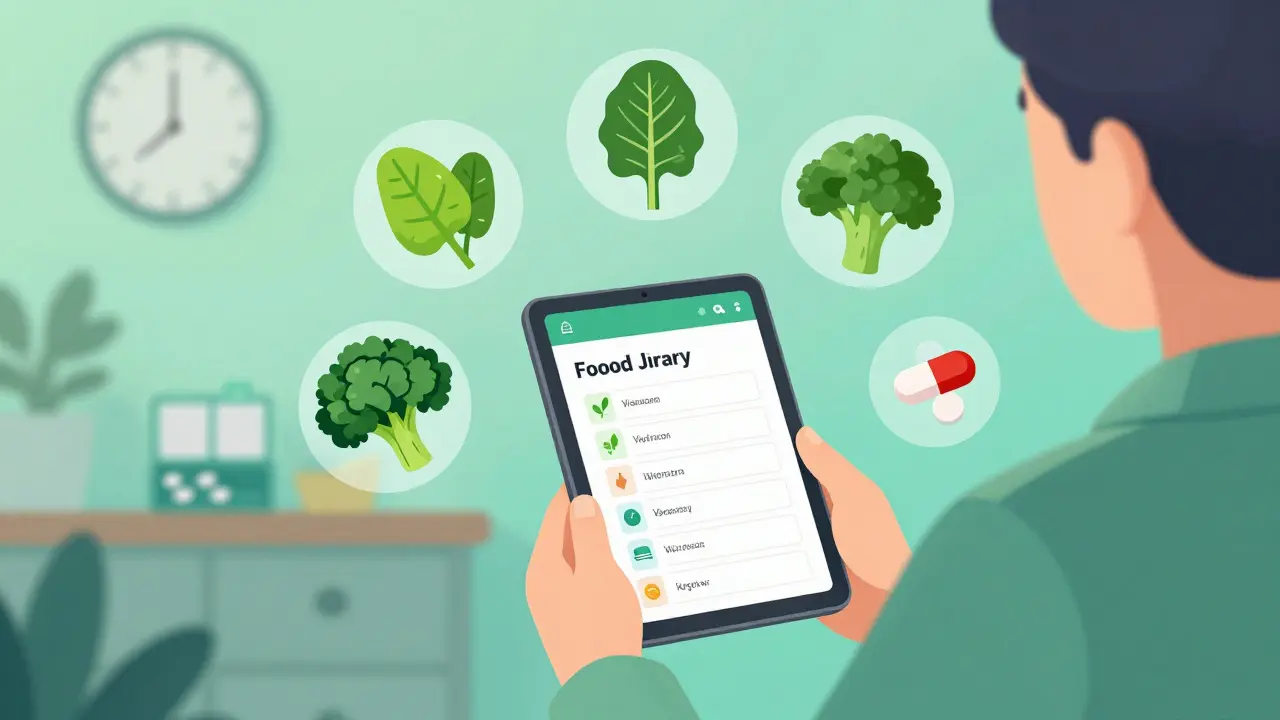
Use a simple food diary. Write down your greens each day. Use a free app like MyMedSchedule to track it. Don’t go on a kale binge because you heard it’s healthy. Your blood thinner doesn’t care about superfoods-it cares about stability.
What You Should Do Right Now
You don’t need to memorize every interaction. But you do need to take action:- Ask your pharmacist: When you get a new prescription, ask: “Does this interact with food? Should I take it with or without meals?” Don’t assume it’s safe.
- Check your supplements: Calcium, iron, magnesium, and even multivitamins can interfere. Take them at a different time of day.
- Use a medication schedule: Write down your pills, times, and whether to take them with food. Stick to it. Studies show visual schedules cut errors by 47%.
- Know your grapefruit risk: If you’re on a statin, blood pressure med, or anti-anxiety drug, avoid grapefruit juice completely.
- Track vitamin K if you’re on warfarin: Eat similar amounts of greens daily. Don’t stop them-just keep them steady.
Most of these interactions are preventable. But they require attention. You’re not being difficult by asking questions. You’re being smart.
What’s Changing in 2025
The system is finally catching up. Starting January 1, 2025, all Medicare Part D beneficiaries starting a high-risk medication must get food-drug interaction counseling. That’s 12.7 million seniors.New drug labels now require clear timing instructions: “Take 1 hour before breakfast,” not just “Take on empty stomach.” That’s because 68% of patients don’t understand what that means.
Apps like MyMedSchedule use AI to build personalized schedules based on your meals, sleep, and medications. In trials, users made 35% fewer mistakes.
This isn’t just about rules. It’s about making safety easier. But until then, you’re still your own best protector.
Common Myths, Busted
- Myth: “All pills should be taken with food to avoid stomach upset.” Truth: Only some. For others, it makes them useless.
- Myth: “I only drink grapefruit juice once a week, so it’s fine.” Truth: One glass can affect your meds for 24 hours.
- Myth: “Natural foods are always safe with meds.” Truth: Vitamin K, tyramine in aged cheese, and even high-fiber meals can interfere.
- Myth: “My doctor would’ve told me if food was a problem.” Truth: Doctors are rushed. Pharmacists are the experts on interactions. Ask them.
Medicines are powerful. Food is powerful. Together, they can save your life-or hurt you badly. You don’t need to be a scientist. Just be informed. Be consistent. And never assume.”
Can I take my medication with coffee?
Caffeine can interact with some medications, especially stimulants like ADHD drugs or certain antidepressants. It can also increase the side effects of bronchodilators like theophylline. For most common pills, coffee is fine-but not if you’re taking thyroid meds. Coffee can reduce levothyroxine absorption by up to 55%. Wait at least 60 minutes after taking it before drinking coffee.
Is it okay to take pills with milk?
No, not with certain antibiotics like tetracycline, doxycycline, or ciprofloxacin. The calcium in milk binds to these drugs and stops your body from absorbing them. You might as well not take them. Wait 2 hours before or 4 hours after dairy. For most other meds, milk is fine, but check with your pharmacist.
What if I forget and take my pill with food?
Don’t panic. If it’s a one-time mistake, it’s unlikely to cause harm. But don’t make it a habit. If you’re on a drug like levothyroxine or an antibiotic, take the next dose correctly. If you’re unsure, call your pharmacist. Never double up on a dose to make up for it.
Do herbal supplements count as food?
Yes. St. John’s wort can cut the effectiveness of birth control, antidepressants, and blood thinners. Garlic supplements can increase bleeding risk with warfarin. Green tea can interfere with blood pressure meds. Treat supplements like medications-they’re not harmless just because they’re “natural.” Always tell your doctor and pharmacist what you’re taking.
Can alcohol make side effects worse?
Absolutely. Alcohol can increase drowsiness from painkillers, anxiety meds, and antihistamines. It can raise blood pressure when taken with certain heart meds. It can damage your liver when mixed with acetaminophen. Even one drink can be risky. If your medication label says “avoid alcohol,” don’t test it.
If you’re on more than one medication, keep a simple list: drug name, dose, time, and whether to take it with food. Review it with your pharmacist every 6 months. It’s the easiest way to avoid a preventable hospital visit.

Anu radha
December 18, 2025 AT 07:24I never knew spinach could mess with my blood thinner. I eat it every day in smoothies. Guess I need to start tracking it like my meds. Thanks for this.
Victoria Rogers
December 19, 2025 AT 04:37lol so now we’re all supposed to be nutritionists? Next they’ll make us count calories in our sleep. This is just fearmongering with a side of corporate pharmacy greed.
CAROL MUTISO
December 20, 2025 AT 12:02Food isn’t the enemy. It’s the silent co-pilot in your body’s drug ride. Grapefruit juice? It’s not a juice-it’s a molecular saboteur. And warfarin? It’s like balancing on a tightrope made of kale. One slip, and you’re not just dizzy-you’re in the ER. But hey, at least we’re not all on antibiotics while bingeing on dairy like it’s 2003.
And let’s be real: if your doctor didn’t explain this, it’s not your fault. It’s the system’s. We need pharmacists on every corner, not just when the bill comes due.
Erik J
December 21, 2025 AT 16:44Does caffeine affect absorption of SSRIs or just thyroid meds? I’ve been taking mine with coffee for years.
BETH VON KAUFFMANN
December 21, 2025 AT 17:4630% of adverse drug reactions due to food? That’s statistically insignificant when you consider the total volume of prescriptions. Also, ‘take on empty stomach’ is standard medical terminology. If patients can’t parse that, maybe they shouldn’t be managing their own meds.
Martin Spedding
December 23, 2025 AT 10:54grapefruit = bad. coffee = bad. milk = bad. now i cant eat anything. who wrote this? a pharmacist with a vendetta?
Jessica Salgado
December 24, 2025 AT 22:19I took my levothyroxine with my morning oatmeal for 3 years. Felt like a zombie. Then I read this. One week of waiting 60 minutes? I have energy again. Like someone turned on a light in my brain. This isn’t just advice-it’s a life reset.
amanda s
December 25, 2025 AT 19:30Of course food messes with meds. That’s why America’s healthcare is a joke. You can’t trust doctors. You can’t trust labels. You can’t even trust your own fridge. Wake up, people. This is all just profit-driven control.
Peter Ronai
December 26, 2025 AT 11:14Anyone who takes supplements without knowing the interactions deserves what they get. You think turmeric is harmless? It’s a blood thinner. You think vitamin D is just sunshine in a pill? It can mess with calcium levels and your heart. You’re not a patient-you’re a walking pharmacy experiment.
Steven Lavoie
December 26, 2025 AT 17:49In India, we’ve always known this. My grandmother would never give antibiotics with yogurt. She didn’t need a PhD to know that. It’s traditional wisdom passed down. Modern medicine just caught up. Maybe we should listen to elders more and algorithms less.
Brooks Beveridge
December 26, 2025 AT 21:17Y’all are doing amazing just by reading this. 💪 Seriously. Most people don’t even know to ask. You’re already ahead. Keep tracking. Keep asking. And if you mess up once? It’s okay. Just reset and keep going. You got this. 🙌
Jigar shah
December 27, 2025 AT 16:42What about herbal teas? I drink ginger tea daily with my BP meds. Is that safe?