
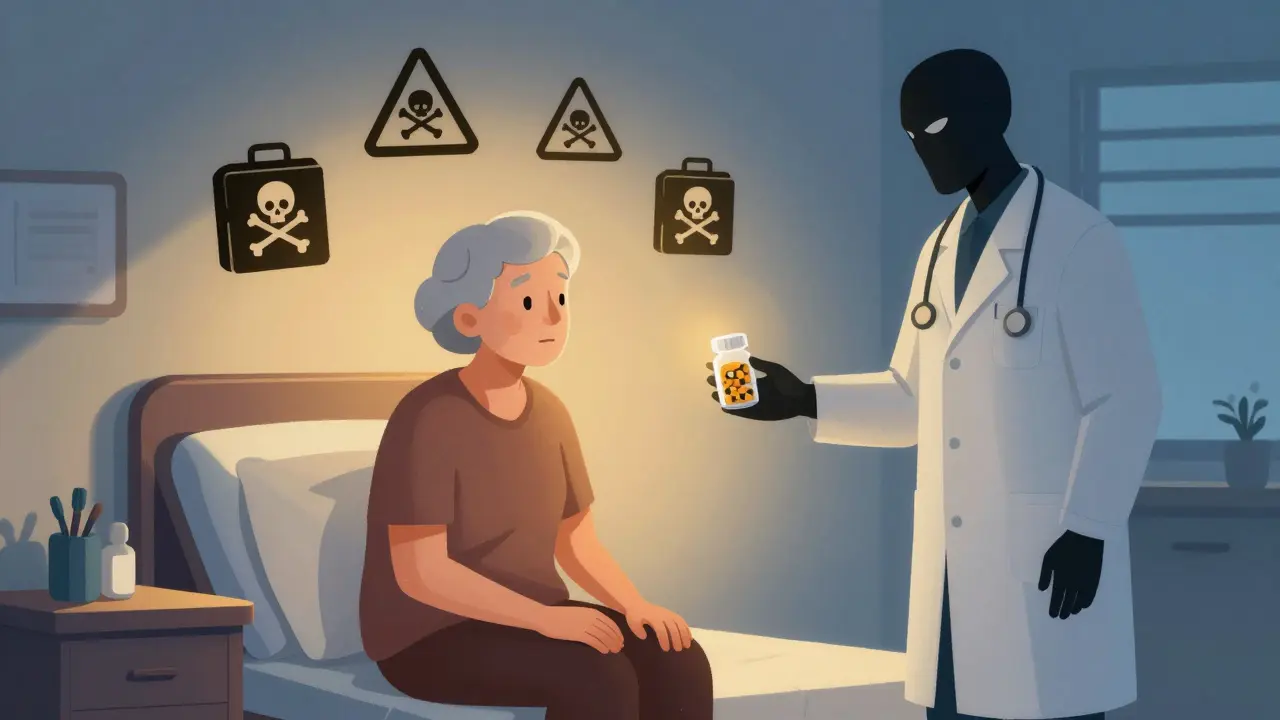
Every year, thousands of seniors with dementia are given antipsychotic drugs to calm agitation, aggression, or hallucinations. It seems like a quick fix-until a stroke happens. Or worse, until the person doesn’t wake up. The truth? These medications aren’t just risky. For many older adults with dementia, they’re deadly. And yet, they’re still prescribed-often without a full discussion of what’s really at stake.
Why Are Antipsychotics Even Used in Dementia?
Dementia doesn’t just cause memory loss. It can turn people into strangers. They may yell at night, hit caregivers, or believe someone is stealing from them. These are called behavioral and psychological symptoms of dementia, or BPSD. Families and staff in nursing homes often feel helpless. When non-drug approaches fail, antipsychotics seem like the only option.
But here’s the catch: antipsychotics were never designed for dementia. They were made for schizophrenia and bipolar disorder. Using them for dementia is off-label. That means it’s legal, but it’s not what the drug was tested for. And the data? It’s alarming.
The FDA Black Box Warning: What It Really Means
In 2005, the U.S. Food and Drug Administration slapped a black box warning on every antipsychotic-both older (typical) and newer (atypical) types. That’s the strongest warning they can give. It says: These drugs increase the risk of death in elderly patients with dementia-related psychosis.
What does that look like in numbers? In 17 studies involving over 3,000 seniors, those on antipsychotics were 1.6 to 1.7 times more likely to die than those on a placebo. That’s not a small risk. That’s a major one. And it’s not just death. Stroke risk jumped too. Even brief use-just a few weeks-was linked to a higher chance of stroke.
How Do Antipsychotics Cause Stroke?
It’s not just one thing. Antipsychotics mess with multiple systems in the body.
- They can cause orthostatic hypotension-sudden drops in blood pressure when standing. That leads to dizziness, falls, and sometimes brain bleeds.
- They trigger metabolic syndrome: weight gain, high blood sugar, bad cholesterol. All of these raise stroke risk.
- They block dopamine and serotonin in the brain, which can disrupt blood flow to the brain’s delicate vessels.
Studies show that stroke risk doesn’t wait for long-term use. Even short-term exposure-less than 30 days-can be dangerous. One study of U.S. veterans found stroke risk jumped 80% within weeks of starting these drugs. That’s not a slow burn. That’s an immediate threat.
Typical vs. Atypical: Which Is Safer?
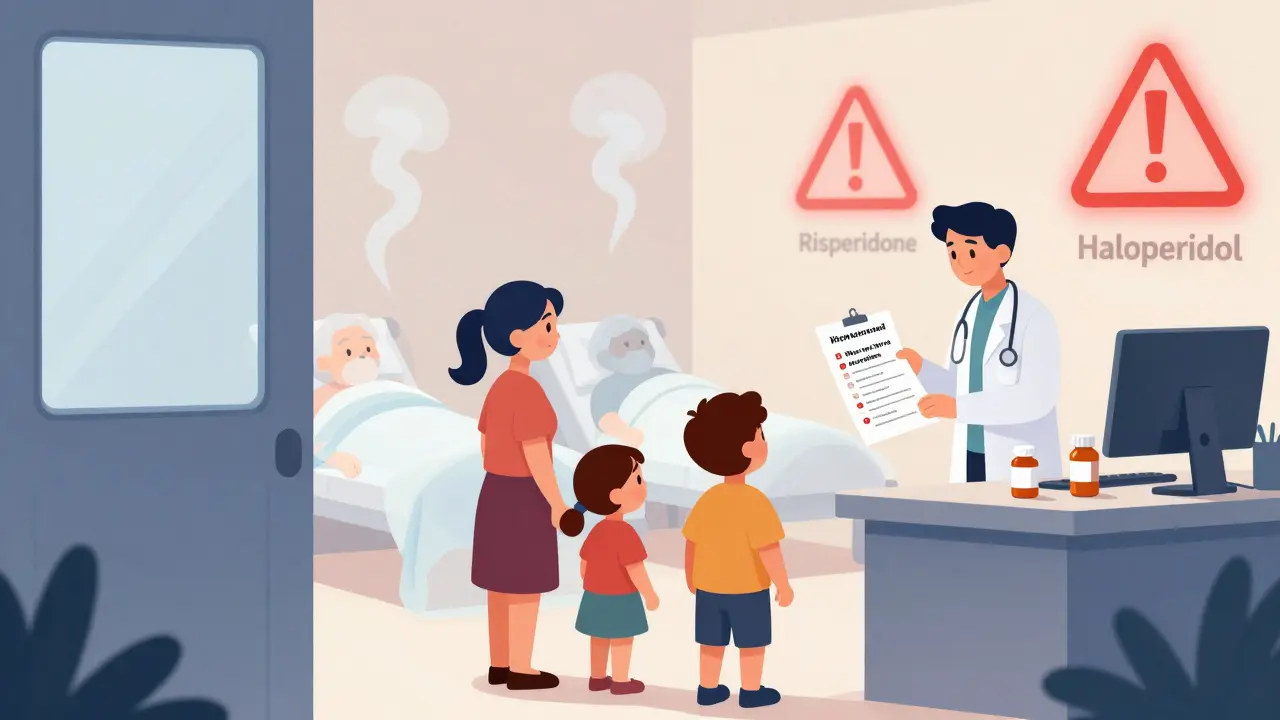
Many doctors think newer antipsychotics-like risperidone, olanzapine, or quetiapine-are safer than older ones like haloperidol. But the data doesn’t back that up.
Early studies suggested atypicals had lower stroke risk. But later, larger studies showed the difference is minimal. A 2023 review in Neurology found that while long-term use of typical antipsychotics carries a higher stroke risk, atypicals aren’t safe either. Both classes increase stroke risk. Both increase death risk. And in real-world use, the mortality gap between them hasn’t closed.
Here’s the hard truth: no antipsychotic is safe for someone with dementia. The only difference is how fast the harm shows up.
Why Are These Drugs Still Prescribed?
If the risks are this clear, why are they still being given out?
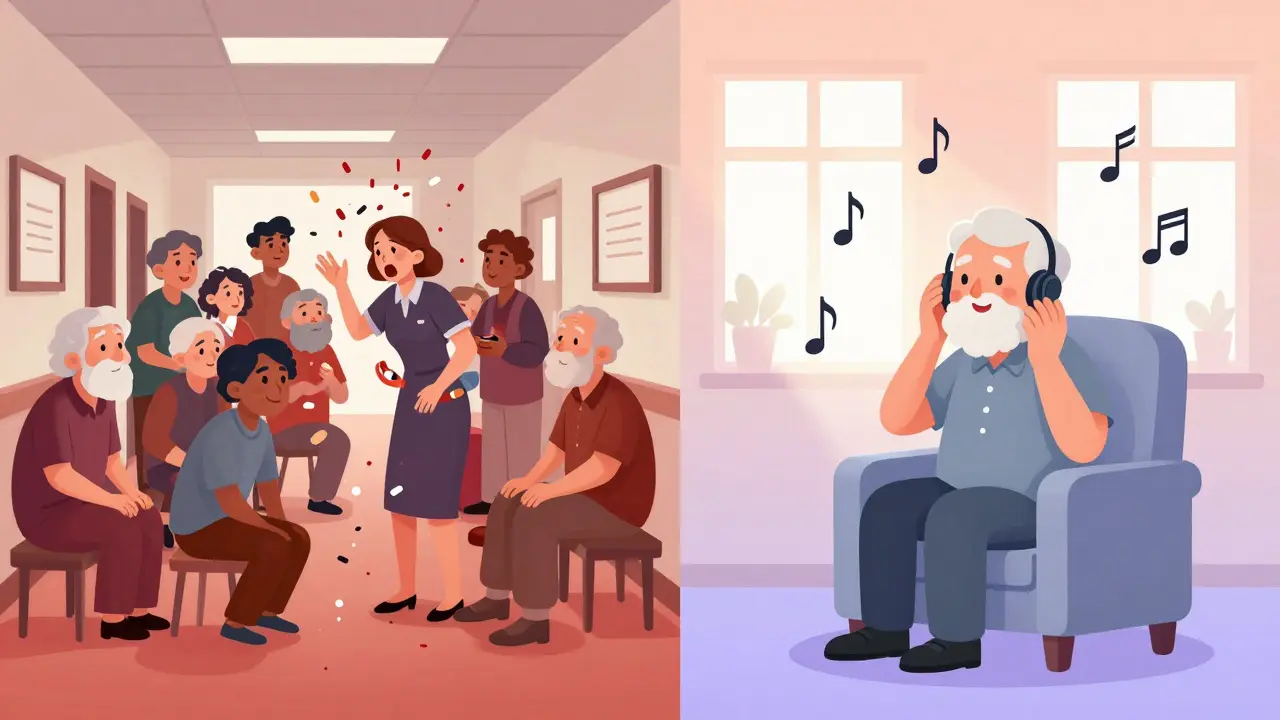
One reason: understaffed nursing homes. When one caregiver is responsible for 15 residents, and one person is screaming at 3 a.m., it’s easier to give a pill than to sit with them, adjust lighting, play music, or change the routine. Antipsychotics are chemical restraints.
Another reason: lack of awareness. Many doctors don’t know the latest guidelines. Or they think, “This patient is so bad, we have to try something.” But the American Geriatrics Society’s Beers Criteria-used by doctors nationwide-says clearly: Do not use antipsychotics for dementia-related behavioral symptoms.
And yet, studies show that nearly 30% of nursing home residents with dementia still get these drugs. In some regions, it’s higher.
What Are the Alternatives?
There are no magic pills. But there are better approaches.
- Environmental changes: Reduce noise, improve lighting, remove mirrors that cause confusion.
- Structured routines: Predictable schedules for meals, walks, and rest reduce anxiety.
- Music therapy: Familiar songs can calm agitation better than any drug.
- Person-centered care: Understanding what triggers the behavior-hunger, pain, loneliness-can stop it before it starts.
- Training for caregivers: Programs like DICE (Describe, Investigate, Evaluate, Create) teach staff how to respond without drugs.
One study in Canada showed that when nursing homes trained staff in non-drug methods, antipsychotic use dropped by 50%-without worsening behavior. That’s not just possible. It’s proven.
The Hidden Cost: More Than Stroke and Death
Antipsychotics don’t just raise stroke risk. They make dementia worse.
Seniors on these drugs often become more sedated, less alert, and more confused. They move slower. They eat less. They withdraw. That’s not calmness-that’s chemical suppression. And it’s mistaken for improvement.
Worse, the drugs can mask underlying problems. Is the person agitated because of a urinary tract infection? Pain from arthritis? Constipation? These are treatable. Antipsychotics hide them.
When Might Antipsychotics Be Justified?
There are rare cases. If someone is actively violent, threatening to hurt themselves or others, and all other options have failed, a short-term trial might be considered. But even then:
- It must be documented as a last resort.
- The lowest possible dose should be used.
- It should be reviewed weekly.
- It must be stopped as soon as possible-even if the person seems “calmer.”
There’s no safe long-term use. No approved duration. No approved dose. Just risk.
What Families Should Ask
If your loved one is being offered an antipsychotic, ask these questions:
- What specific behavior is this drug meant to fix?
- Have we tried non-drug strategies first? Can you show me what was tried?
- What’s the risk of stroke or death here?
- How long will this drug be used? Will we re-evaluate in 2 weeks?
- What signs should I watch for that mean it’s time to stop?
And if the answer is, “It’s just easier this way,” walk out. Find another doctor. Demand better.
The Bottom Line
Antipsychotics for dementia aren’t treatment. They’re a stopgap for a broken system. The science is clear: they increase stroke risk. They increase death risk. They make dementia progress faster. And they’re still being given out like candy.
There is hope. Non-drug approaches work. Caregivers can be trained. Facilities can change. But it takes families to push back. To ask hard questions. To refuse the easy fix.
Because no amount of quiet is worth a life lost.
Are antipsychotics ever safe for seniors with dementia?
No, antipsychotics are not considered safe for seniors with dementia. Even short-term use increases the risk of stroke and death. Major medical guidelines, including the American Geriatrics Society’s Beers Criteria, recommend avoiding them entirely for behavioral symptoms related to dementia. They should only be considered in extreme, life-threatening situations-and even then, only for a few days with close monitoring.
Do atypical antipsychotics have fewer risks than typical ones?
No. While early studies suggested atypical antipsychotics (like risperidone or quetiapine) were safer, larger, more recent analyses show both types carry similar risks of stroke and death in dementia patients. The difference in risk between them is small and not clinically meaningful. Neither is safe.
How soon can antipsychotics cause a stroke in seniors?
Stroke risk can rise within days to weeks of starting antipsychotics. A 2012 study from the American Heart Association found that even brief exposure-less than 30 days-was linked to an 80% higher risk of stroke. This contradicts the old belief that only long-term use was dangerous.
What should I do if my loved one is already on an antipsychotic?
Don’t stop the drug suddenly-it can cause dangerous withdrawal. Talk to the doctor about a slow, supervised taper. Ask for a full review of why it was started, whether non-drug strategies were tried, and whether the medication is still needed. Many seniors improve once the drug is reduced, becoming more alert and engaged.
Are there legal or ethical concerns with prescribing antipsychotics for dementia?
Yes. Prescribing antipsychotics for convenience-rather than medical necessity-is considered chemical restraint and is ethically questionable. In many places, it may violate patient rights guidelines. Families have the right to refuse these drugs and demand alternatives. Informed consent is required, but too often, it’s not truly obtained.

Frank SSS
December 31, 2025 AT 12:03Man, I saw my grandma go from yelling at the TV to zombied-out in two weeks after they put her on risperidone. No one told us about the stroke risk. Just said ‘it’ll make her easier to handle.’ Guess we were too grateful to ask questions.
Paul Huppert
January 2, 2026 AT 01:28This is so important. My mom’s facility tried to push this on her too. We said no. Now she’s calmer without drugs. Just music, walks, and someone sitting with her when she’s scared.
Hanna Spittel
January 2, 2026 AT 06:06Big Pharma’s latest money grab 🤡💊
John Chapman
January 2, 2026 AT 22:18YES. My uncle died after 11 days on quetiapine. They said he ‘went peacefully.’ Turns out his brain bled. No one warned us. This needs to be front-page news.
Urvi Patel
January 4, 2026 AT 10:37Western medicine is a scam. In India we use turmeric and yoga for everything. Why are you poisoning your elders with chemicals? You don’t even know what real care is
anggit marga
January 5, 2026 AT 03:07Who even cares about stroke risk? In Nigeria we just let elders be elders. If they scream at night, we sing to them. No pills. No hospitals. You guys overcomplicate everything
Martin Viau
January 6, 2026 AT 07:18The pharmacokinetic burden of CNS dopaminergic antagonism in geriatric populations with neurodegenerative comorbidities is a clinically significant confounder. The FDA’s black box warning is underpowered for real-world polypharmacy interactions, and most nursing homes lack pharmacogenomic screening protocols. This is systemic failure, not negligence.
Bennett Ryynanen
January 8, 2026 AT 02:46STOP THE PRESSES. This is the most important thing I’ve read this year. If you’re reading this and your loved one is on one of these drugs-GO TALK TO THEIR DOCTOR TODAY. You can save a life. I’m crying right now.
Chandreson Chandreas
January 8, 2026 AT 06:15It’s not about the drugs. It’s about how we treat our elders. We turn them into problems to be fixed, not people to be held. The real medicine is presence. 🙏
Jenny Salmingo
January 9, 2026 AT 05:08My grandma used to dance to old Bollywood songs. After the meds, she just sat. I miss her laugh. I wish someone had told us sooner.
Aaron Bales
January 9, 2026 AT 21:31Non-drug approaches work. I’ve trained staff at three facilities. It takes time, but families who push back? They win. You’re not being difficult-you’re being a good advocate.
Lawver Stanton
January 11, 2026 AT 07:37Look, I get it. You’re all upset. But let’s be real-how many of you have actually worked in a nursing home? I’ve been a CNAs for 18 years. You think it’s easy to clean up someone who’s screaming and peeing on the floor at 3 a.m.? You think music therapy is gonna fix that? I’ve seen dementia. It’s not a TED Talk. It’s blood, sweat, and tears. And yeah, sometimes a pill is the only thing that lets us sleep at night. Don’t judge us from your couch.
Sara Stinnett
January 12, 2026 AT 21:40How quaint. You presume to know what ‘safe’ means when you’ve never held a shaking hand as it slips away. The real tragedy isn’t the drug-it’s the moral bankruptcy of a society that would rather chemically mute its elders than confront the unbearable truth: they are dying, and we are powerless to stop it. This isn’t negligence. It’s elegy.
linda permata sari
January 13, 2026 AT 19:29My mom was on these for 6 months. She didn’t speak for 4 of them. When we finally stopped them? She looked at me and said ‘I missed you.’ I’ll never forgive myself for waiting so long. Please. Ask the questions. Even if it’s hard.