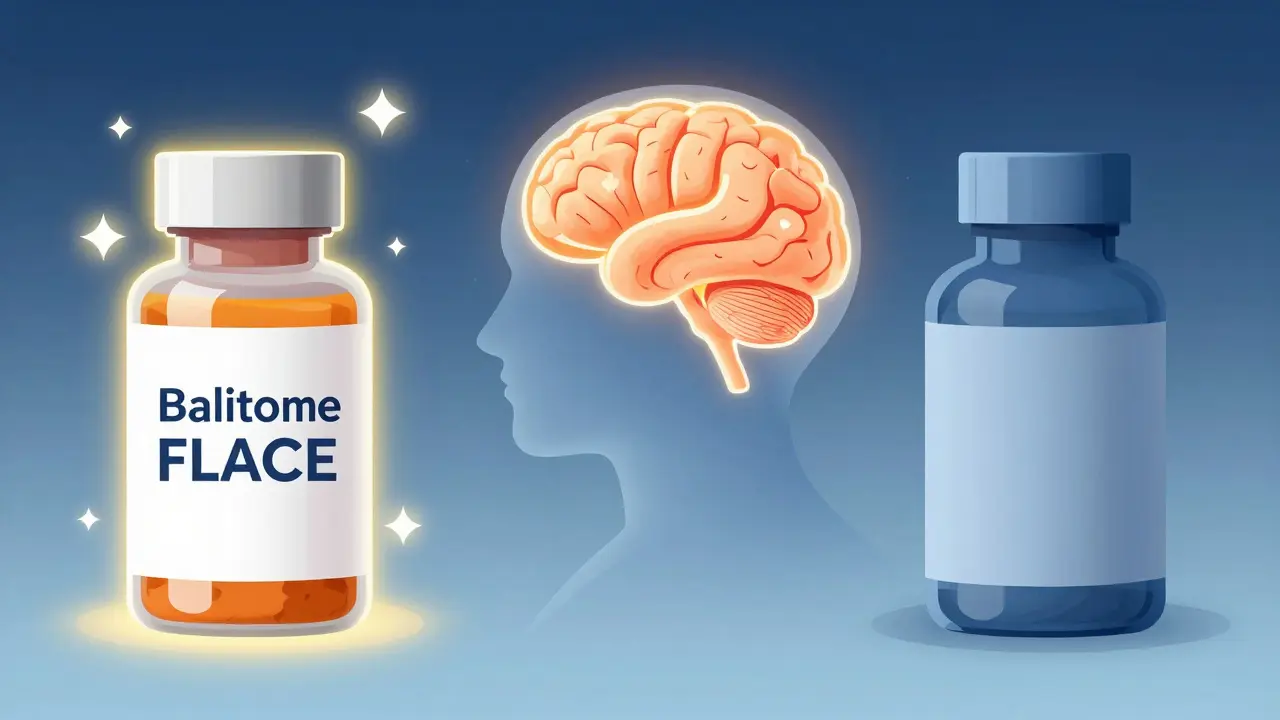
Ever wonder why some people swear their brand-name painkillers work instantly, but the generic version feels like a sugar pill? You aren't imagining it, and it isn't just about the chemicals in the tablet. It's about what's happening in your head. When you take a pill, your brain isn't just reacting to the active ingredient; it's reacting to the label, the price, and the reputation of the drug. This is the placebo effect in action, and it can actually change how your body processes a medication.
For most of us, a generic drug is just a cheaper version of a brand name. But for your brain, that distinction can be the difference between feeling better and feeling nothing at all. The gap between a brand-name's perceived power and a generic's perceived "cheapness" creates a psychological ripple effect that can physically alter your recovery process.
The Brain on Brands: How Labels Trigger Healing
When we see a famous brand name on a medicine bottle, our brain starts preparing for a specific result. This isn't just "wishful thinking"; it's a neurobiological event. Placebo Effect is a psychological and physiological response to a treatment that has no active pharmacological component, driven by the patient's expectation of healing.
Take the case of a study by researcher Julia Faasse. She gave students placebo painkillers. Some were labeled as "Nurofen" (a well-known brand) and others as "Generic Ibuprofen." Even though both were just inert sugar pills, those who thought they were taking Nurofen reported pain relief almost identical to people taking real ibuprofen. Meanwhile, those with the generic labels felt significantly less relief. In pain management, branding can boost the placebo response by as much as 30-40%.
This happens because your brain's expectation-processing centers-specifically the dorsomedial prefrontal cortex-fire up when you trust a brand. When these regions activate, they can trigger the release of natural painkillers like endorphins, meaning the brand name literally helps your body numb the pain before the drug even hits your bloodstream.
The Dark Side: The Nocebo Effect and Generic Fear
While a positive expectation helps you heal, a negative one can actually make you sick. This is known as the Nocebo Effect, where the belief that a drug will cause side effects actually creates those symptoms in the body. This is a huge hurdle for Generic Medications, which are pharmaceutical drugs that are chemically equivalent to brand-name drugs but sold under the chemical name of the active ingredient.
Research in statin trials has shown a startling trend: up to 26% of people in placebo groups stopped taking their meds because they "felt" muscle pain. They weren't taking any active drug, but because they knew statins were linked to muscle aches, their brains amplified every tiny twinge into a symptom. For generic users, this often manifests as a feeling that the drug is "lower quality" or "not as pure," leading them to report more side effects than they would with a brand-name equivalent.
Does the Price Tag Change the Pill?
You might think the active ingredient is all that matters, but the cost of a drug influences how it works. In a study by Professor Karin Tinnermann, participants used a skin cream. One group was told the cream was expensive, and the other was told it was a cheap generic. Both were identical.
| Perception Factor | Reported Pain/Side Effects | Brain Activity (Prefrontal Cortex) | Clinical Outcome |
|---|---|---|---|
| Expensive/Branded | Lower pain (in some cases) / Higher side effects | High Activation | Higher perceived efficacy |
| Cheap/Generic | Higher pain / Lower side effects | Lower Activation | Lower perceived efficacy |
Interestingly, the "expensive" group actually experienced more intense pain responses in spinal cord recordings in certain scenarios. This proves that the perception of value doesn't just change how we describe our feelings-it changes how our nervous system reacts. If you believe a drug is cheap and ineffective, your body may actually be less responsive to its benefits.
Why Some Meds Are More Susceptible Than Others
Not every drug is affected by this psychological tug-of-war. The impact depends heavily on what you're treating. Conditions based on subjective feelings-like pain, anxiety, or depression-are hotspots for the placebo effect. For example, in antidepressants, as much as 40% of the response can be attributed to the placebo effect. If a patient switches to a generic and feels it's "lesser," they may stop seeing improvement simply because their expectation of success has dropped.
On the other hand, "hard" metrics like blood pressure or heart rate are much less influenced. If you're taking a beta-blocker for your heart, a study by Charlotte Blease found that whether the packaging was fancy or plain didn't significantly change your actual blood pressure. The drug does the heavy lifting there, regardless of how you feel about the box.
How to Bridge the Gap: Making Generics Work Better
So, how do we stop our brains from sabotaging our health? The key is expectation management. When patients are educated on the actual standards of generic drugs, the negative aversions often vanish. In the US, the FDA requires generics to deliver the same amount of active ingredient within a very tight range (usually 8-13% of the brand), which is well within the therapeutic window.
Healthcare providers can make a massive difference by spending just a few extra minutes explaining this equivalence. When a doctor says, "This is the exact same molecule as the brand name, just without the marketing budget," it shifts the patient's perception from "cheap alternative" to "smart value." This simple shift in framing can increase medication adherence by over 20%.
Some researchers are even experimenting with "expectation priming." By showing patients short videos that explain how the placebo effect works and confirming the efficacy of generics, they've seen treatment success rates jump by 28%. It turns out that knowing your brain can be tricked is the best way to stop it from tricking you.
Are generic drugs actually less effective than brand names?
Pharmacologically, no. Generics must contain the same active ingredient and meet the same rigorous standards for strength, quality, and purity as the brand-name version. However, because of the placebo and nocebo effects, some people *perceive* them as less effective, which can lead to poorer real-world outcomes.
Can a placebo effect actually cause real side effects?
Yes, this is called the nocebo effect. If you strongly believe a medication will cause nausea or muscle pain, your brain can trigger those sensations even if the pill contains no active medicine. This is why some people report side effects from generic drugs that they didn't experience with brands, or vice versa.
Why does branding affect pain medication more than heart medication?
Pain is a subjective experience processed heavily by the brain's reward and expectation systems. Since the brain can release its own pain-killing chemicals (endorphins) based on expectations, branding has a huge impact. Heart rate and blood pressure are objective physiological measures that are less dependent on a person's beliefs about the drug's brand.
How can I make sure my generic medication works as well as a brand name?
The best approach is to focus on the facts of therapeutic equivalence. Remind yourself that the active ingredient is identical. Talking to your pharmacist about the specific standards the generic must meet can help shift your mindset from a "cheap" perception to a "confident" one, which optimizes the placebo response.
Does the price of the medication influence how it feels?
Yes. Research shows that when people believe a drug is expensive, they often report a stronger effect (positive placebo) or, in some cases, more intense side effects (negative nocebo). The perceived value of the treatment changes how the prefrontal cortex processes the experience.
Next Steps for Patients and Providers
If you're currently switching from a brand-name drug to a generic and feeling uneasy, start by documenting your symptoms objectively. Instead of saying "it feels different," track specific metrics like the time it takes for a headache to fade. This moves the experience from the emotional brain to the analytical brain.
For those who feel a strong "nocebo" response-where you're suddenly noticing new side effects after a generic switch-be honest with your doctor. Ask them to explain the bioequivalence of the drug. Understanding that your body is reacting to a perception rather than a chemical change is the first step in neutralizing the effect and getting the full benefit of your treatment.