
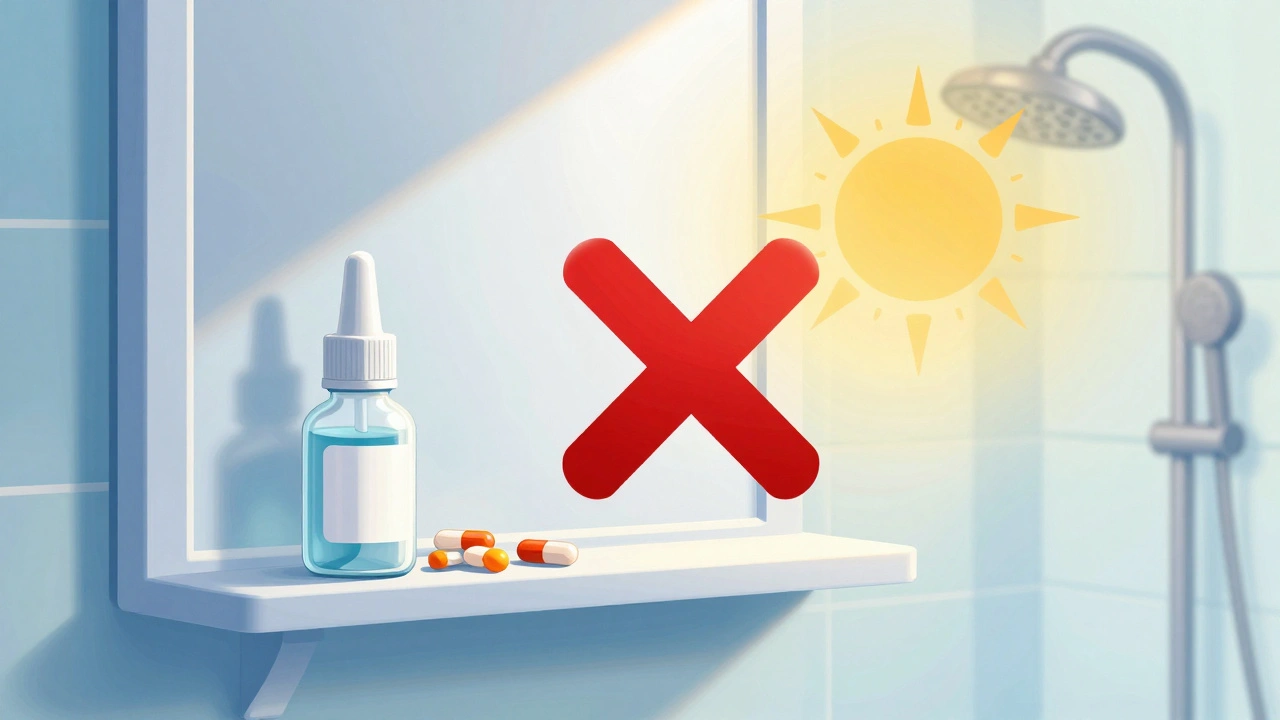
Why Light Matters for Your Medications
Most people store pills and eye drops in the bathroom cabinet, near the window, or on a nightstand. But if your medication says "protect from light"-and many do-those spots could be ruining it. Light isn’t just about visibility; it’s a chemical threat. Exposure to sunlight or even bright indoor lighting can break down active ingredients, making your medicine weaker or, in rare cases, creating harmful byproducts.
Take eye drops, for example. A 2021 study from Alcon showed that when stored in clear bottles under normal room light, some glaucoma medications lost up to 35% of their potency in just 14 days. That’s not a small drop-it’s the difference between controlling your eye pressure and risking vision loss. The same goes for antibiotics like tetracycline, chemotherapy drugs, birth control pills, and even vitamin D drops. They don’t just lose strength-they can become unpredictable.
The science behind this isn’t new. Pharmacists noticed this back in the 1920s when nitroglycerin, used for heart conditions, turned useless when left in clear glass bottles. Today, the U.S. Pharmacopeia (USP) lists over 470 medications that need light protection. And it’s not just about the bottle-it’s about how you handle it every day.
What Does "Protect from Light" Actually Mean?
"Protect from light" isn’t a suggestion. It’s a requirement. The FDA and USP define it as keeping medications away from wavelengths below 470 nanometers-essentially, blue and ultraviolet light. That’s the kind that comes from sunlight, LED bulbs, and even fluorescent ceiling lights.
Medications come in different protective packaging:
- Amber glass bottles: These block 98% of harmful light. They’re the gold standard for eye drops, insulin, and injectables.
- Opaque plastic containers: These block about 85% of UV light. They’re cheaper and lighter, but not quite as reliable as glass.
- Aluminum foil pouches: These block 100% of light, but you have to remove the medication to use it. That’s why they’re mostly used in hospitals, not homes.
Look at your medicine bottle. If it’s clear or light-colored, and the label says "protect from light," you’re at risk. Don’t assume the pharmacy gave you the right container. Some bulk or generic versions come in clear plastic unless you specifically ask for amber.
Where to Store Them-And Where Not To
The bathroom is the worst place for most medications. Humidity from showers, heat from the dryer, and light from overhead fixtures? That’s a triple threat. A 2022 survey by the National Community Pharmacists Association found that 68% of people store meds in the bathroom-and 42% reported visible changes like discoloration or odd smells.
Here’s where to store them instead:
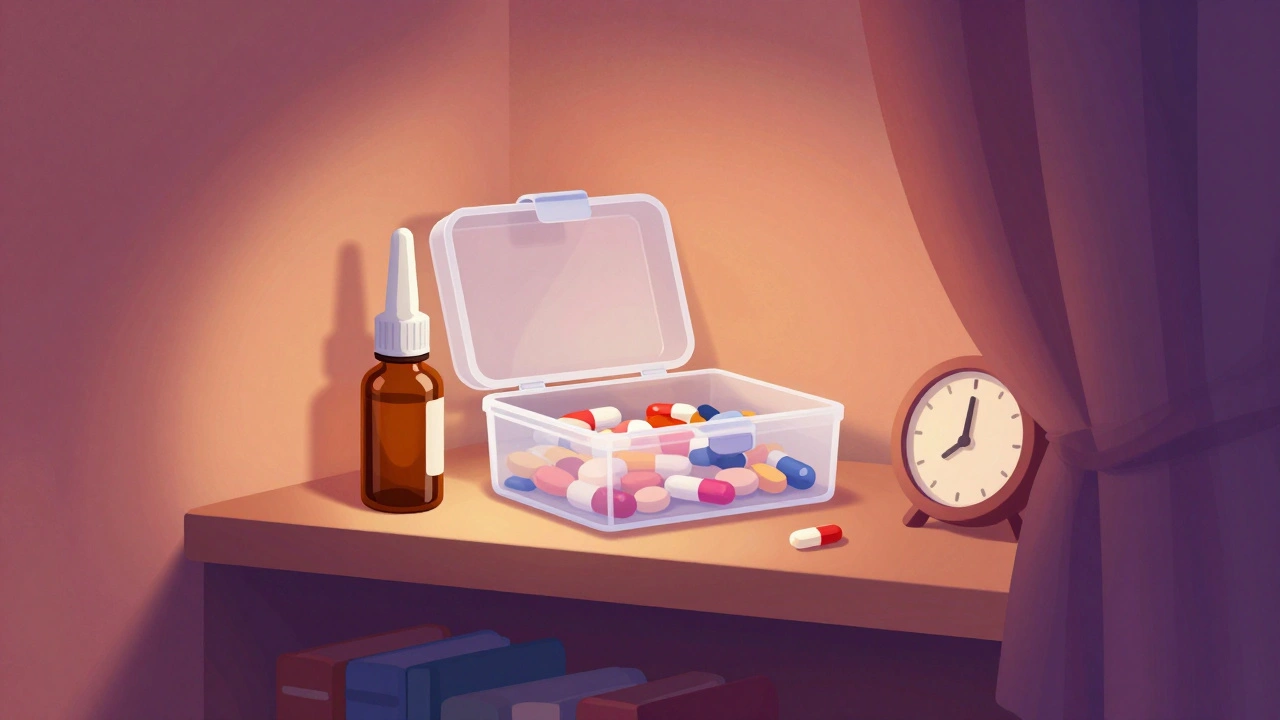
- Kitchen cabinet: Away from the stove, sink, and windows. Pick a spot that’s consistently cool and dry.
- Dedicated medicine box: A small, opaque container with a lid, kept on a shelf in a bedroom or closet.
- Refrigerator: Only if the label says so. Most eye drops and insulin need to be kept cold (36-46°F), but not frozen. Keep them in the main compartment, not the door.
Temperature matters too. Most medications are fine between 59°F and 77°F. But if your home hits 86°F in summer-or drops below 58°F in winter-you’re risking damage. That’s especially true for biologics like insulin or rheumatoid arthritis drugs. A 2023 study from Baystate Health showed that even a few hours above 86°F can reduce effectiveness by up to 50%.
Eye Drops: A Special Case
Eye drops are among the most light-sensitive medications. Why? They’re liquid, sterile, and meant to go directly into your eye. Any breakdown in the solution can cause irritation, infection, or worse.
After opening, most eye drops last 4-6 weeks. But if they’re not stored in an amber or opaque bottle, they can degrade in half that time. Dr. Emily Chew from the National Eye Institute warns that some formulations lose 40% potency after just 7 days in clear containers.
Here’s what to do:
- Never transfer eye drops to another container-even if it’s clean. The original bottle is designed for protection.
- If your drops come in a clear bottle, ask your pharmacist for an amber one. Many pharmacies will swap them for free.
- After opening, keep them in their original box. The outer carton adds a second layer of protection.
- Don’t leave them on the bathroom counter. Even if you use them daily, store them in your bedroom or kitchen.
Some newer eye drops, like those from Bausch + Lomb, use dual-layer packaging: amber glass inside, opaque plastic outside. These last 25% longer than standard amber bottles. If you’re on long-term treatment, it’s worth asking if your prescription is available in this format.
What to Do If Your Medication Looks Off
Medications don’t always tell you when they’ve gone bad. But they often show signs:
- Color change: White cream turning yellow? Tetracycline turning dark? That’s degradation.
- Cloudiness: Clear eye drops becoming hazy? Don’t use them.
- Strange smell: Aspirin that smells like vinegar? It’s broken down.
- Texture change: Pills crumbling or ointments separating? Throw them out.
One Reddit user, "MedTechRN," reported throwing out $120 worth of tretinoin cream after it turned yellow from being stored in a steamy bathroom. That’s not rare. The FDA’s MedWatch program recorded over 300 reports in 2022 where light exposure was listed as a cause of reduced effectiveness or side effects.
If you notice any of these signs, stop using the medication. Don’t guess. Call your pharmacist or doctor. It’s better to replace it than risk it not working-or worse, harming you.
Traveling with Light-Sensitive Medications
Going on vacation? Packing meds for a road trip or flight? Light and heat are your enemies here too.
Here’s how to keep them safe:
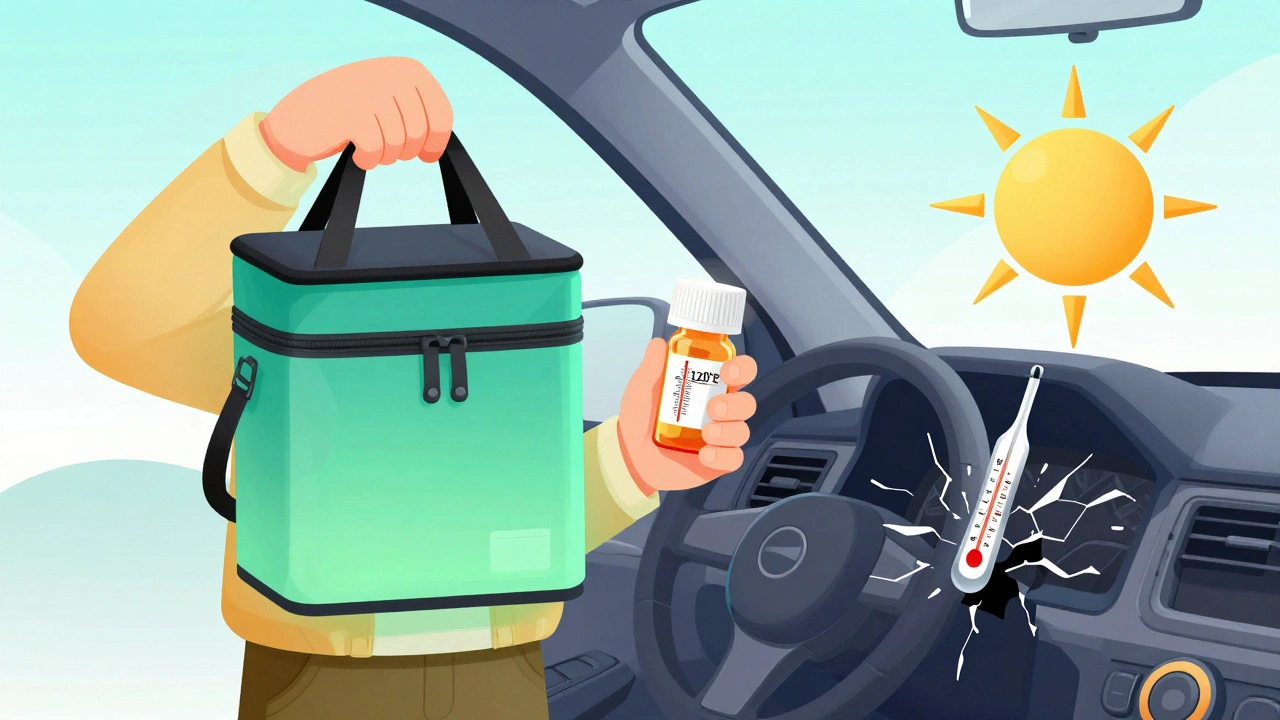
- Use a small insulated bag with UV-blocking lining. These cost $20-$40 and keep meds stable for 8-12 hours.
- Never leave pills or eye drops in the car. Even on a 60°F day, a car can hit 120°F in the sun.
- If you need refrigeration (like insulin), use a portable cooler with ice packs. Don’t let them freeze.
- Keep them in your carry-on, not checked luggage. Temperatures in cargo holds can drop below freezing or rise dangerously high.
Some companies now make smart containers with UV sensors that flash a warning light or send a phone alert if the medication has been exposed to too much light. These are still in testing, but they’re coming fast. For now, a simple insulated bag is your best bet.
What About Disposal?
Never flush medications down the toilet or toss them in the trash. Light-degraded meds still contain chemicals that can pollute water and harm wildlife.
Use a drug take-back program. Most pharmacies, hospitals, and police stations have drop-off boxes. The FDA’s website has a locator tool.
If that’s not available:
- Mix pills or eye drops with an unappealing substance like coffee grounds or cat litter.
- Put them in a sealed container (like a plastic bag or jar).
- Throw the container in your household trash.
Remove or black out your name and prescription info from the bottle before tossing it. This protects your privacy and prevents misuse.
How to Make This Routine
Storing light-sensitive meds right isn’t hard-it just takes one habit change. Start by checking every medication you take. Look for the words "protect from light" or a sun-with-a-line-through-it symbol.
Then:
- Group all light-sensitive items together.
- Move them to a cool, dark spot-like a kitchen cabinet or bedside drawer.
- Use amber containers if yours aren’t adequate.
- Check them monthly for changes in color, smell, or texture.
It takes less than five minutes a month. But it can mean the difference between your treatment working-and failing silently.
What You Can Do Today
Don’t wait for a problem to happen. Here’s your quick action plan:
- Look at every bottle you take. Find the "protect from light" label.
- Check if your eye drops are in amber glass. If not, ask your pharmacist for a swap.
- Move all light-sensitive meds out of the bathroom and away from windows.
- Buy an inexpensive UV-blocking storage box if you’re unsure where to keep them.
- Set a monthly reminder on your phone to check for changes in color or smell.
Medications are powerful tools. But they’re only as good as how you store them. A little attention now can save you from a bigger health risk later.




nina nakamura
December 12, 2025 AT 16:16Constantine Vigderman
December 14, 2025 AT 01:07Cole Newman
December 15, 2025 AT 14:27Tom Zerkoff
December 17, 2025 AT 01:04Furthermore, the assertion that 470 nanometers constitutes the critical threshold for photolytic degradation is empirically validated across multiple peer-reviewed studies, including those published in the Journal of Pharmaceutical Sciences. Patients should be educated not merely on storage, but on the underlying photochemical mechanisms that render such practices non-negotiable.
Alvin Montanez
December 17, 2025 AT 06:04Lara Tobin
December 18, 2025 AT 16:17Jamie Clark
December 19, 2025 AT 10:26Keasha Trawick
December 20, 2025 AT 02:14Sheldon Bird
December 21, 2025 AT 12:22Karen Mccullouch
December 22, 2025 AT 06:18Michael Gardner
December 23, 2025 AT 09:06