
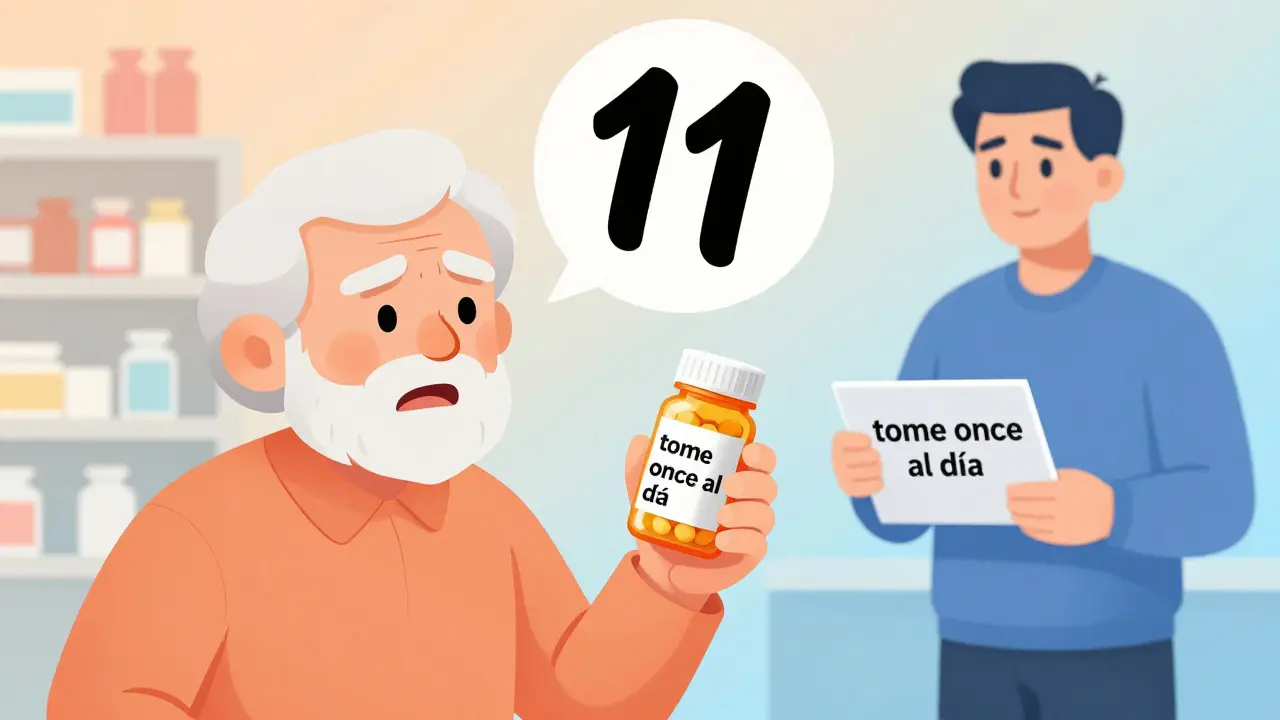
Imagine you’re given a pill bottle with instructions in a language you barely understand. The label says "tome dos tabletas dos veces diario" - but what does that really mean? Was it supposed to say "twice daily" or "twice weekly"? If you take it wrong, you could be underdosing - or overdosing. For millions of Americans who don’t speak English fluently, this isn’t a hypothetical scenario. It’s daily life.
Why Prescription Labels Get Translated Wrong
Most pharmacies don’t hire real translators. They use software. Computer programs like Google Translate or automated pharmacy systems spit out translations without context, cultural understanding, or medical training. In the Bronx, a 2010 study found that 86% of pharmacies relied entirely on these systems for Spanish labels. Half of those labels had dangerous mistakes. One classic error? The word "once." In English, it means "one time." In Spanish, "once" means "eleven." So if a label says "take once daily," a computer might translate it as "tome once al día" - which literally tells patients to take eleven pills a day. That’s not a typo. That’s a life-threatening mistake. Even worse, the same English phrase can be translated differently depending on which pharmacy you visit. One chain might say "take after meals," another says "take with food." These aren’t just wording differences - they change how your body absorbs the drug. Medical terms vary by region too. In Latin America, "alcohol" on a label usually means rubbing alcohol. In Spain, it means drinking alcohol. If you’re told to avoid "alcohol" while on a medication, which one are you supposed to avoid? Most systems don’t account for this.Who’s Affected and How Bad Is It?
About 25.5 million Americans have limited English proficiency. That’s one in eight people. Spanish speakers make up the majority - over 15 million - but Chinese, Vietnamese, Arabic, and other languages are growing fast. Yet only two states - California and New York - have laws requiring accurate, human-translated prescription labels. A 2023 survey by the National Health Law Program found that 63% of non-English speakers felt confused about their medication instructions. Nearly 3 in 10 admitted they’d taken the wrong dose because of bad translations. One Reddit user shared how their parent’s blood pressure pill was labeled "twice weekly" at one pharmacy and "twice daily" at another - causing dangerous fluctuations. Another user’s child was given a wrong dosage because "every 6 hours" became "every 6 days." The consequences aren’t just inconvenient. They’re deadly. Dr. Yaffa Rashewsky from New York-Presbyterian says a single mistranslated word can turn medicine into poison. The American Pharmacists Association has called for national standards because right now, your safety depends on which pharmacy you walk into.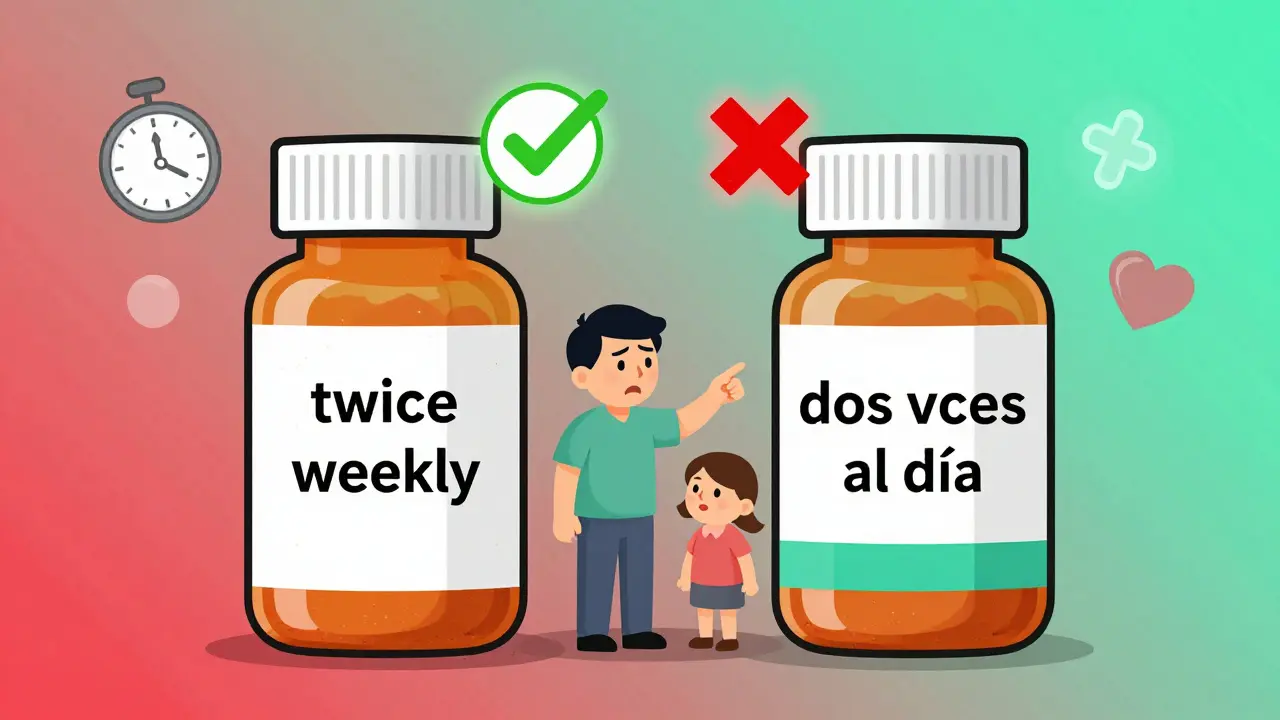
What’s Being Done - And What’s Not
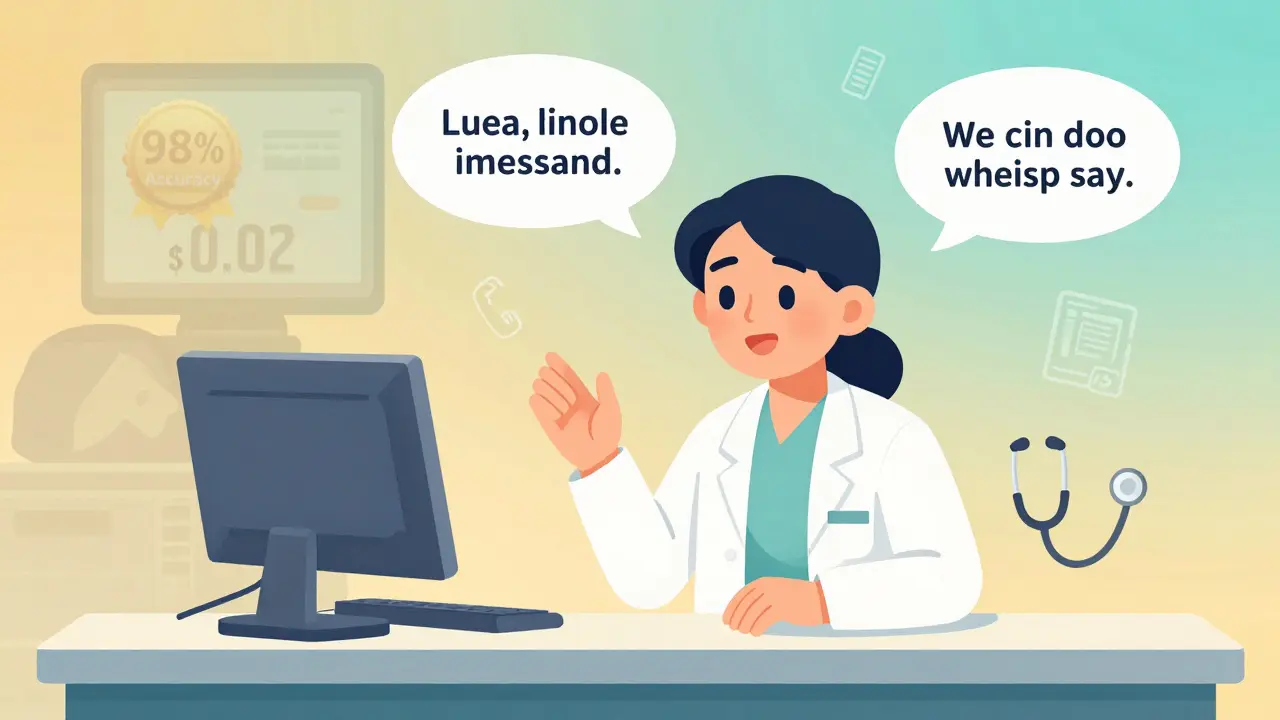
Some places are getting it right. California passed a law in 2016 requiring certified medical translators for all non-English prescription labels. Since then, medication errors among Spanish-speaking patients dropped by 32%. ER visits due to translation mistakes fell by 27%. That’s not luck - it’s policy. Pharmacies using professional translators get 98-99% accuracy. Computer-only systems? Only 65-75%. That’s a huge gap. But most pharmacies stick with software because it costs pennies per label - $0.02 to $0.05 - while human translation runs $0.15 to $0.30. For big chains, that’s millions in savings. But cost isn’t the only barrier. Many pharmacy systems are outdated. They pull translations from third-party databases that aren’t updated or standardized. One pharmacy might use one translation service, another uses a different one. The result? Inconsistent, confusing labels even within the same chain.How to Get Help - Right Now
You don’t have to wait for laws to change. Here’s what you can do today:- Ask for a human translator. Most major pharmacies - CVS, Walgreens, Rite Aid - have bilingual staff or phone interpretation services. Just ask: "Can I speak to someone who speaks [language]?"
- Request a printed copy in your language. If they say no, ask for a phone call with a professional interpreter. You have a legal right under Title VI of the Civil Rights Act.
- Double-check with your doctor. When you get a new prescription, ask your doctor to explain the dosage in your language. Write it down. Compare it to the label.
- Use trusted translation tools. Apps like MedTranslate (Walgreens) or LanguageBridge (CVS) now use AI with pharmacist verification. They’re not perfect, but they’re better than old systems.
- Report bad labels. If a label is wrong, tell the pharmacy. File a complaint with your state’s board of pharmacy. Public pressure drives change.
The Future Is Coming - But You Don’t Have to Wait
New technology is helping. In late 2023, Walgreens launched MedTranslate AI, which cuts translation errors by 63%. CVS rolled out LanguageBridge in early 2024. The FDA is pushing for plain-language labels that are easier to translate. The federal government just launched a $25 million grant program to help pharmacies afford better systems. But here’s the truth: these changes are slow. And they won’t reach every pharmacy overnight. If you or a loved one relies on prescription medication and speaks a language other than English, don’t wait for the system to fix itself. Be your own advocate. Ask questions. Demand clarity. Don’t be afraid to say, "I don’t understand this." That simple phrase could save a life.What to Do If You’re Confused
If you’re unsure about your prescription:- Call the pharmacy and ask to speak with a bilingual pharmacist.
- Ask for the label to be read aloud to you in your language.
- Take a photo of the label and show it to a trusted friend or family member who speaks English.
- If you still don’t understand, contact your doctor’s office. They can clarify the instructions.
- Keep a written record of what you were told - by doctor and pharmacist - and compare it to the label.
Medication safety isn’t about language skills. It’s about clear communication. And you deserve that.
Why do pharmacy labels sometimes say "once" when they mean "one time"?
This happens because computer translation systems don’t understand context. In English, "once" means "one time." In Spanish, "once" means the number eleven. So if a label says "take once daily," an automated system might translate it as "tome once al día," which tells patients to take eleven pills a day. This is a dangerous false cognate error that’s common in machine-translated labels.
Which states require accurate prescription label translations?
As of 2026, only California and New York have laws requiring pharmacies to use certified medical translators for non-English prescription labels. California’s law, effective since 2016, has reduced medication errors by 32% among Spanish-speaking patients. Other states have no such requirements, even though millions of residents speak languages other than English.
Can I get my prescription label translated for free?
Yes. Under Title VI of the Civil Rights Act, pharmacies that receive federal funding must provide language assistance services at no cost to patients. This includes phone interpretation, printed translated labels, or in-person interpreters. Just ask the pharmacy staff - you have a legal right to this service.
Why don’t all pharmacies use professional translators?
Cost and outdated systems are the main reasons. Professional translation costs about $0.15-$0.30 per label, while automated systems cost only $0.02-$0.05. For large pharmacy chains, that adds up to millions in savings. Many pharmacy management systems also can’t easily integrate with professional translation services, making adoption slow and complex.
What should I do if I think my prescription label is wrong?
Don’t guess. Call your pharmacy and ask to speak with a bilingual pharmacist or request an interpreter. Compare the label to what your doctor told you. If the label still doesn’t make sense, contact your doctor’s office for clarification. You can also file a complaint with your state’s board of pharmacy - reporting errors helps improve systems for everyone.

Korn Deno
March 22, 2026 AT 06:48Jefferson Moratin
March 23, 2026 AT 21:51rebecca klady
March 24, 2026 AT 22:52Alex Arcilla
March 25, 2026 AT 02:32Brandon Shatley
March 25, 2026 AT 23:25Blessing Ogboso
March 26, 2026 AT 18:34Caroline Dennis
March 28, 2026 AT 06:36Marissa Staples
March 28, 2026 AT 17:57Pat Fur
March 28, 2026 AT 19:22Anil Arekar
March 29, 2026 AT 06:13peter vencken
March 31, 2026 AT 02:00Chris Crosson
March 31, 2026 AT 16:33Linda Foster
April 2, 2026 AT 08:45